 Alexander Kostinwww.instagram.com
Sculptor, graphic artist, and painter Alexander Vladimirovich Kostin was born on April 26, 1955, in Donetsk. He studied sculpture in Kyiv at the Department of Sculpture of the National Academy of Fine Arts and Architecture (NAOMA), graduating in 1980, completed postgraduate studies at the Academy of Arts in 1986, and is currently a member of the Moscow Union of Artists (since 1985). He is the recipient of the Grand Prix of the Light Biennale in Paris (1995), co-chairman of the jury of the Moscow International Forum Gifted Children, the author of the statuette-award National Environmental Prize (2003–2011), and of the commemorative medal of the V. I. Vernadsky International Association of Geochemists and Geophysicists. He is also the author of prize-winning competition projects for monuments to Ivan Turgenev and Vladimir Vernadsky.
Alexander Vladimirovich is the creator of memorial monuments and exterior sculpture in Ukraine, Russia, France, Canada, Italy, and Switzerland.
He works in the fields of monumental and easel sculpture, as well as easel and book graphics. He has been exhibiting since 1980. Works by Alexander Kostin are held in the State Tretyakov Gallery, the State Museum of Ukrainian Art, and in other public and private collections in Russia, Ukraine, the USA, Canada, France, Italy, Switzerland, Japan, and other countries.
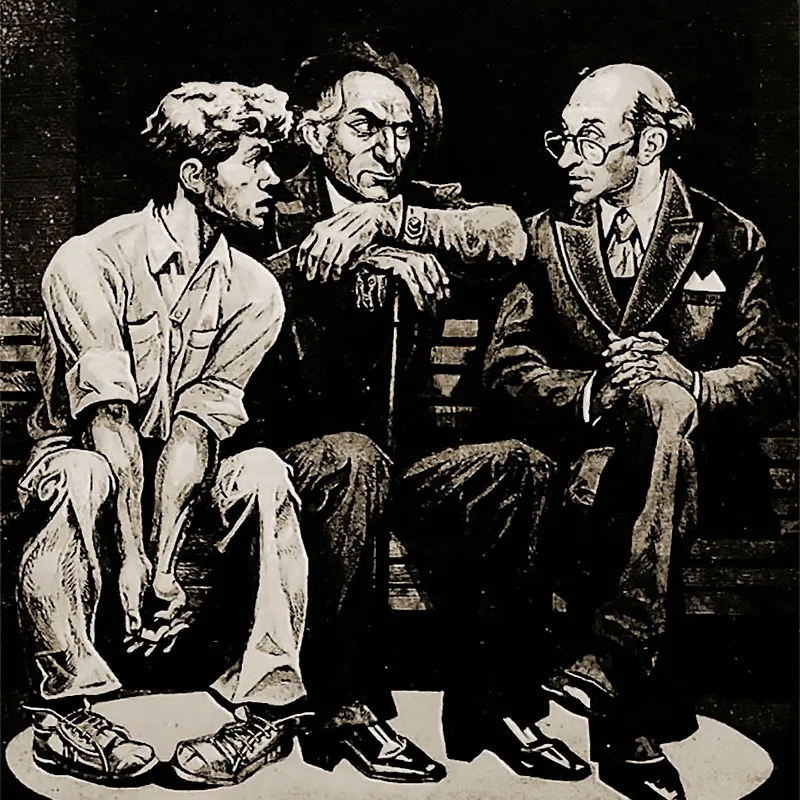
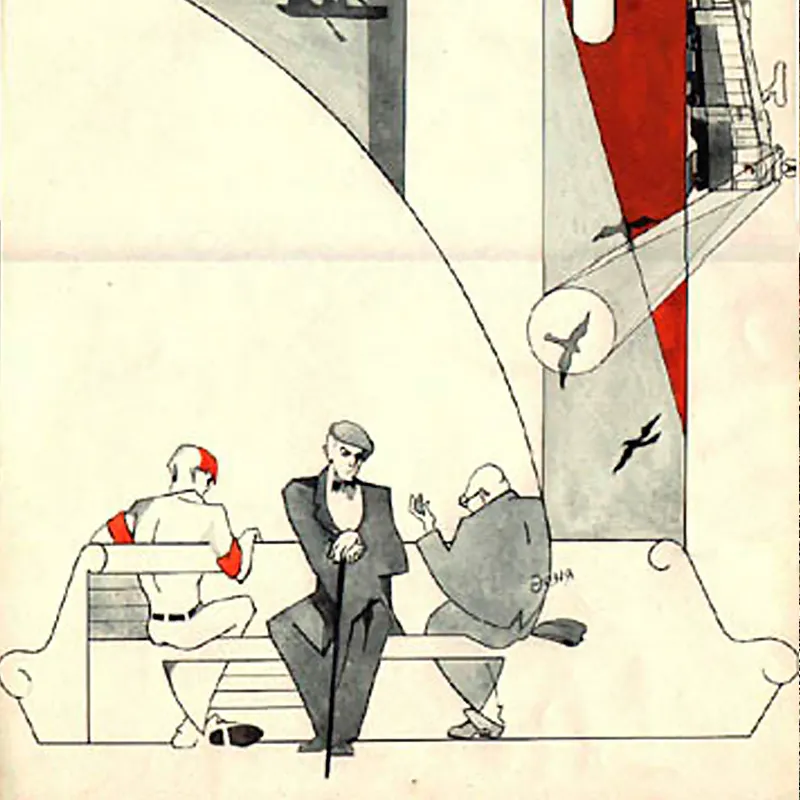
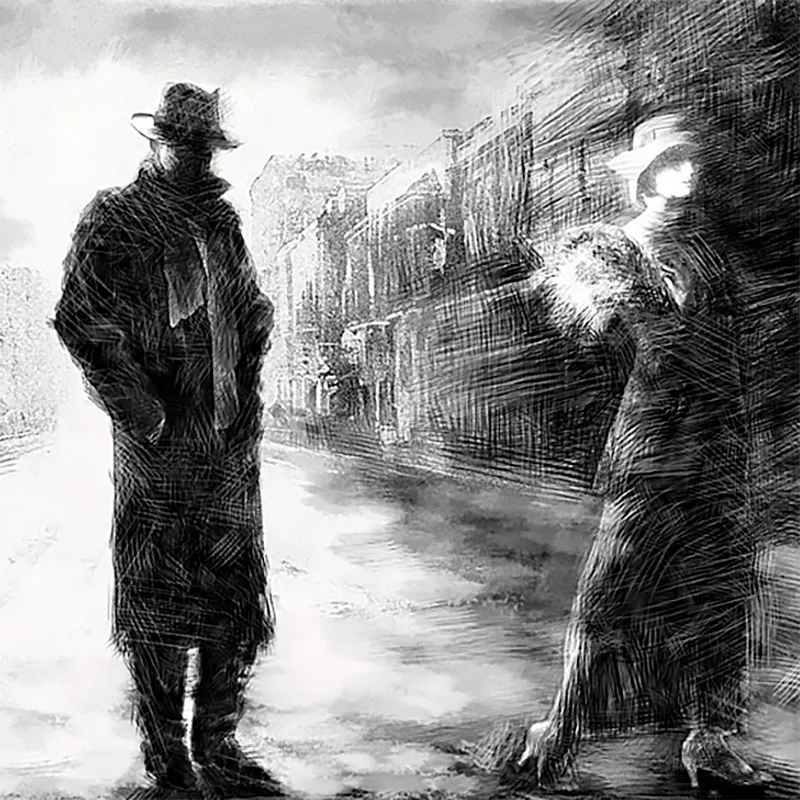
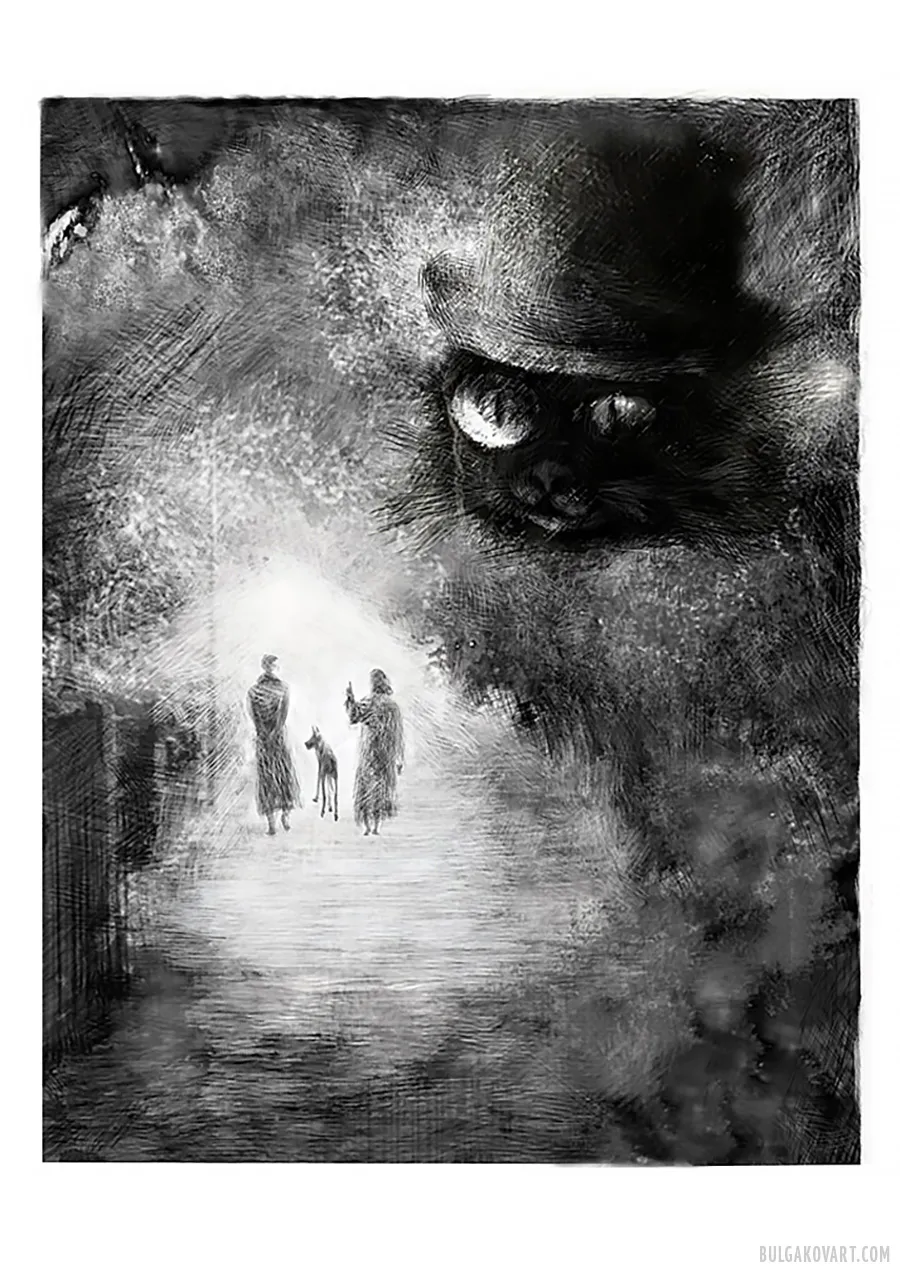
And it was precisely at the moment when Mikhail Alexandrovich was telling the poet about how the Aztecs molded a figurine of Vitzliputzli out of dough that the first man appeared in the alley…
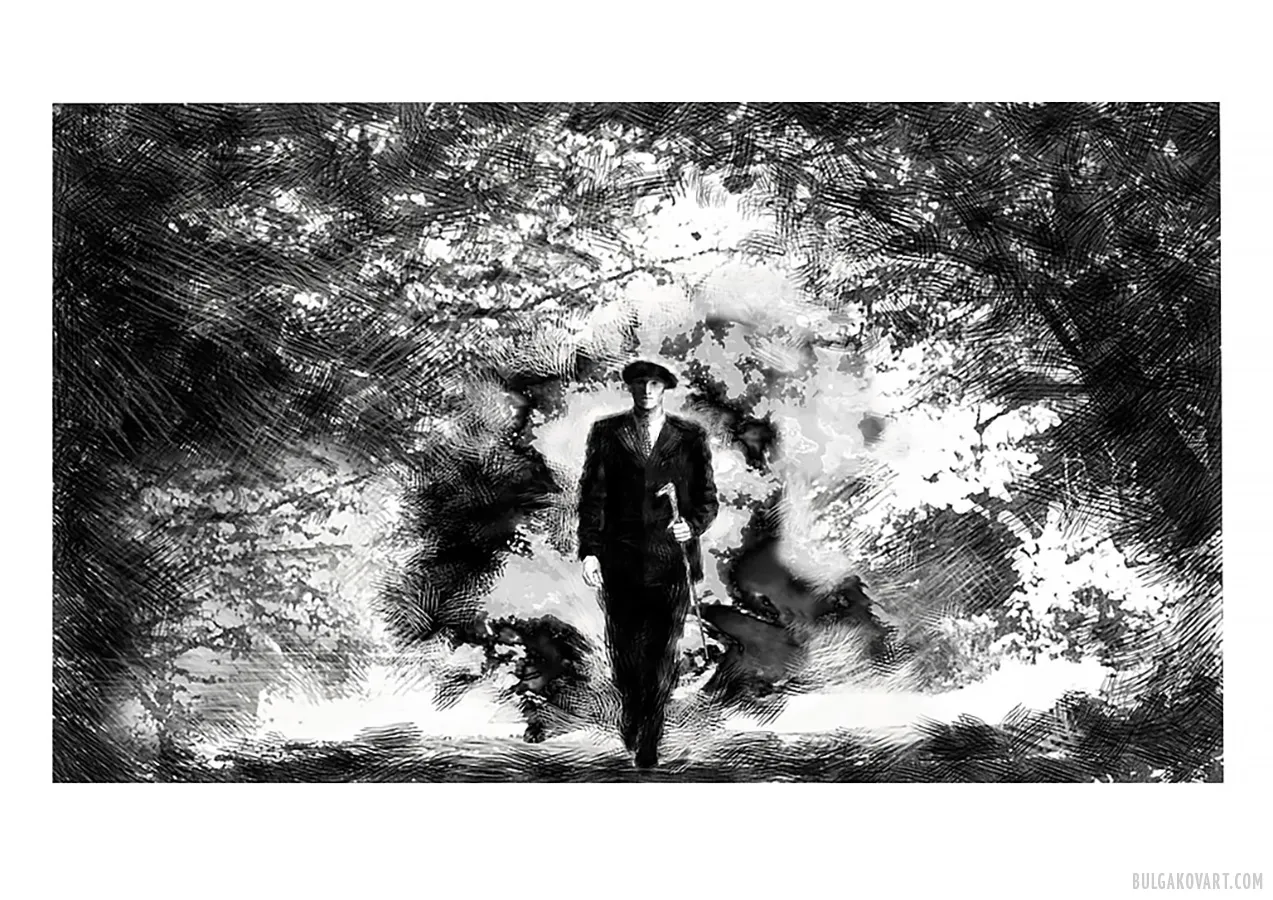
“And no proofs are required,” replied the professor and began to speak softly, and for some reason his accent disappeared. “It is all quite simple: in a white cloak…”
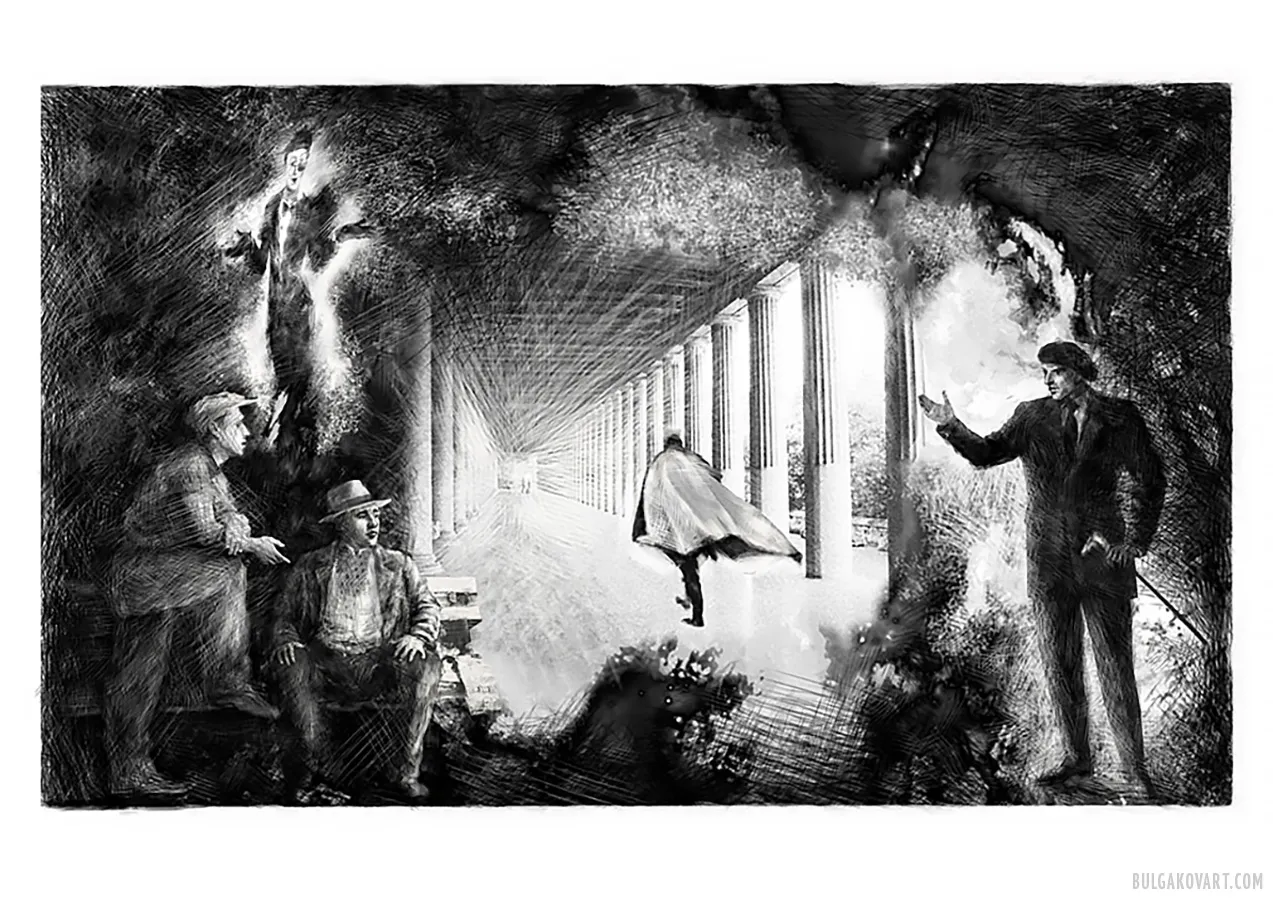
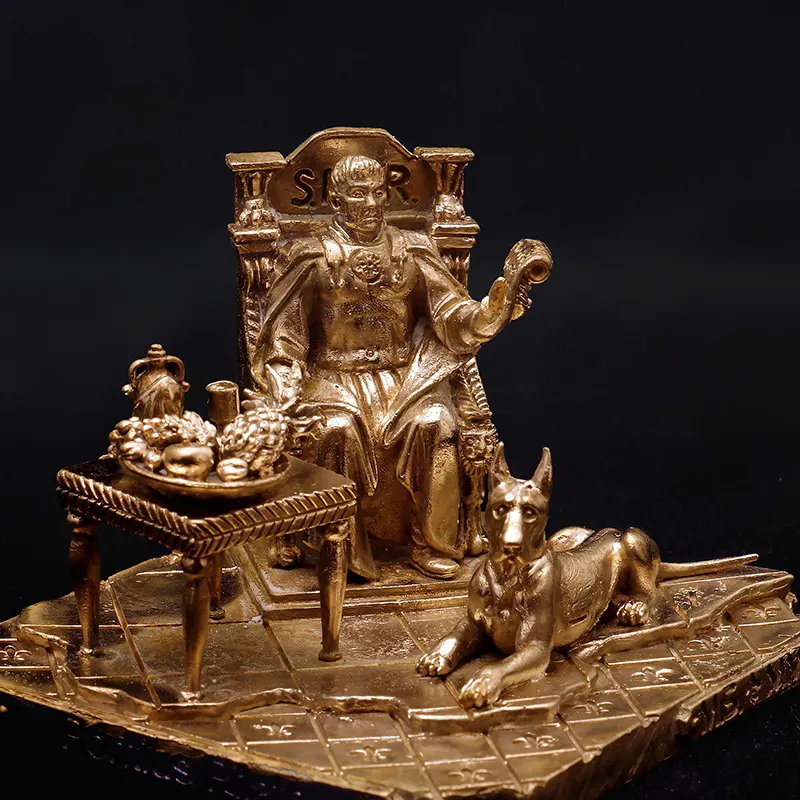
At that moment a swallow flew swiftly into the colonnade, made a circle beneath the golden ceiling, descended, almost touching with its sharp wing the face of the bronze statue in the niche, and disappeared behind the capital of the column.
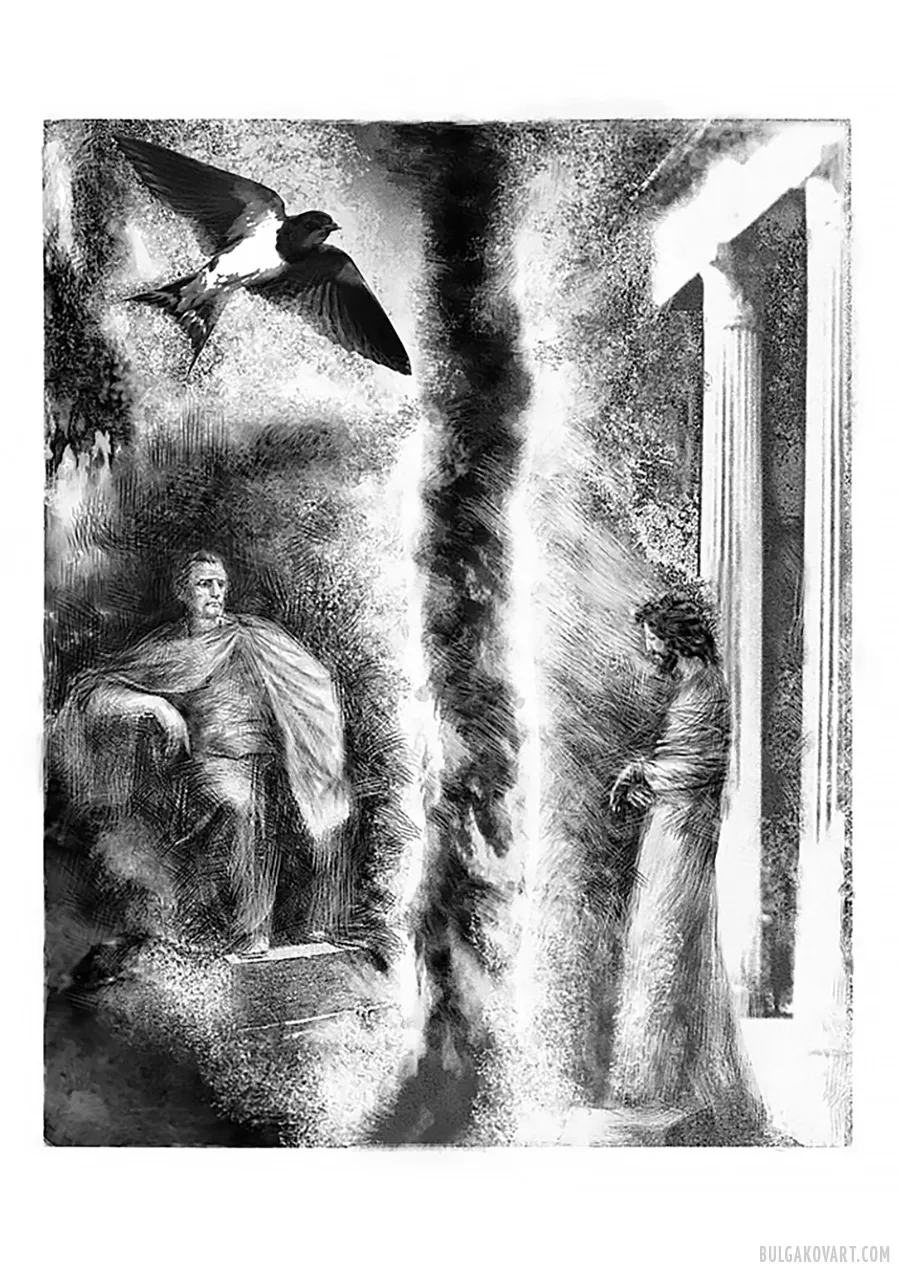
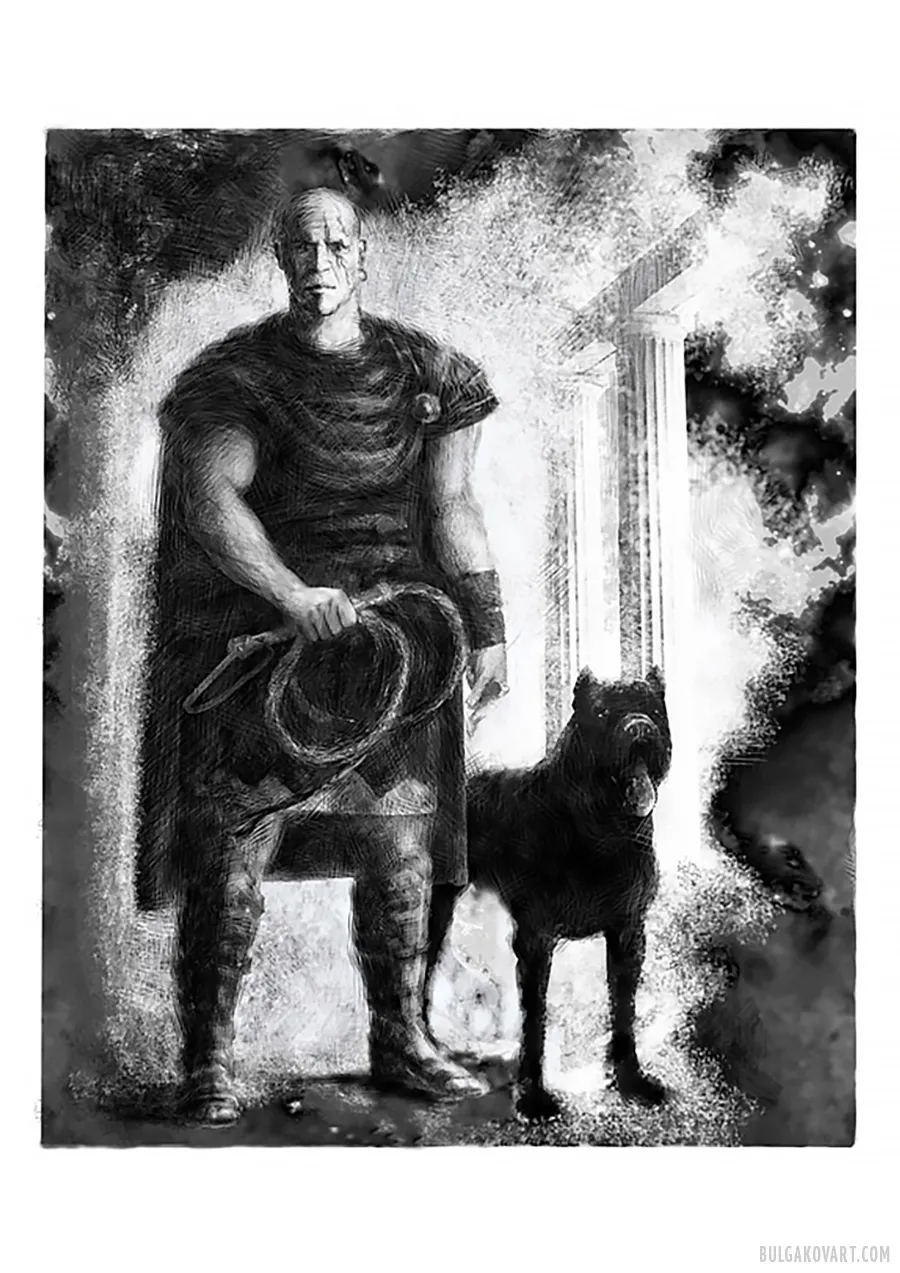
It seemed to everyone that the balcony darkened when the centurion of the first century, Mark, nicknamed Mark Ratslayer, appeared before the procurator.
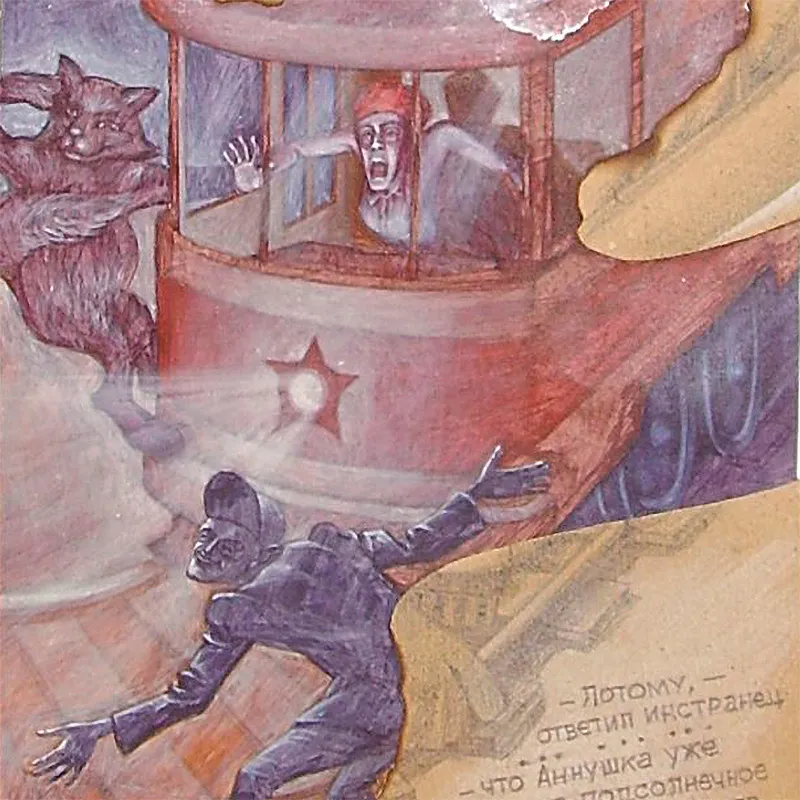
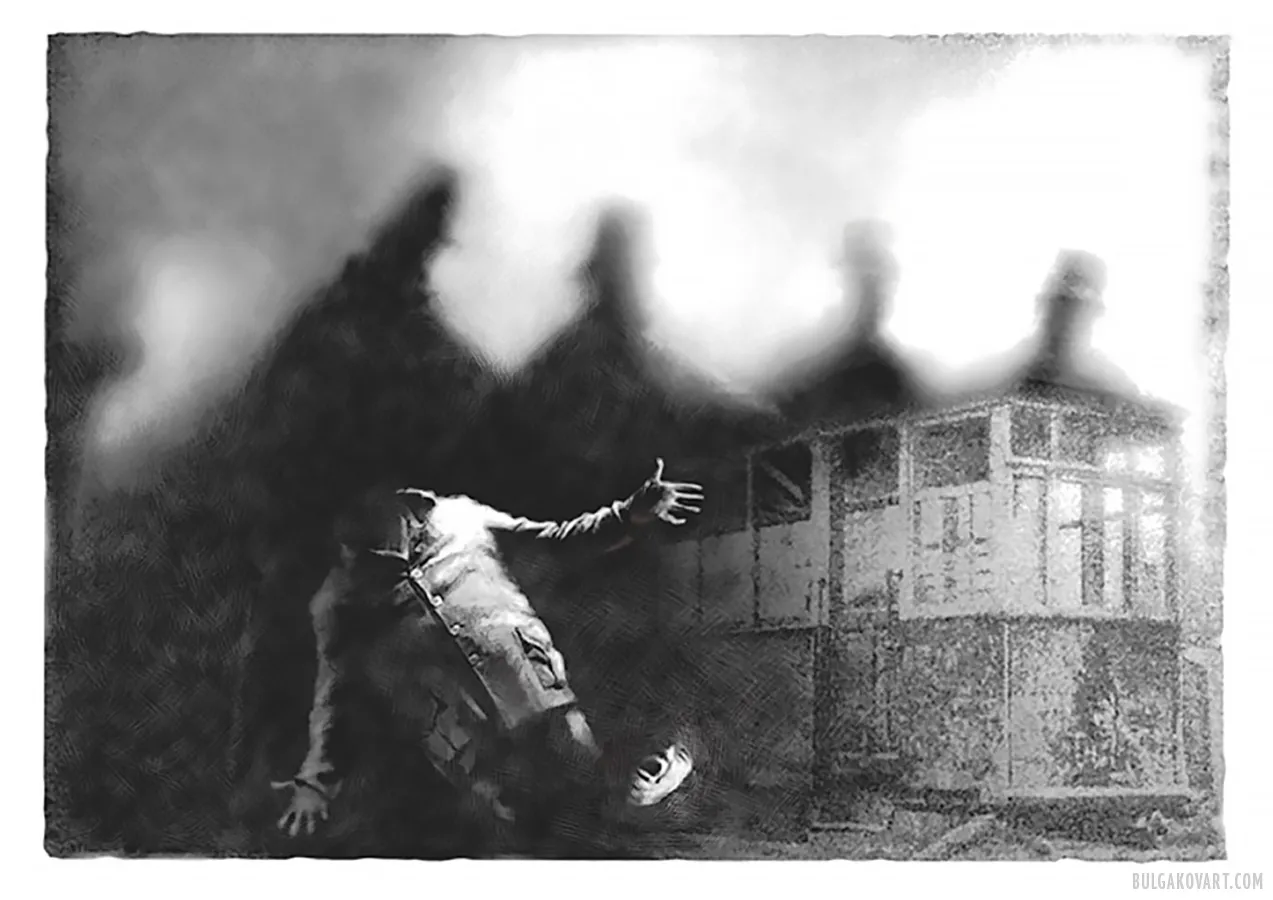
The tram ran over Berlioz, and under the grating of Patriarch’s Alley a round dark object was thrown onto the cobbled slope. Rolling down this slope, it began to bounce along the cobblestones of Bronnaya.
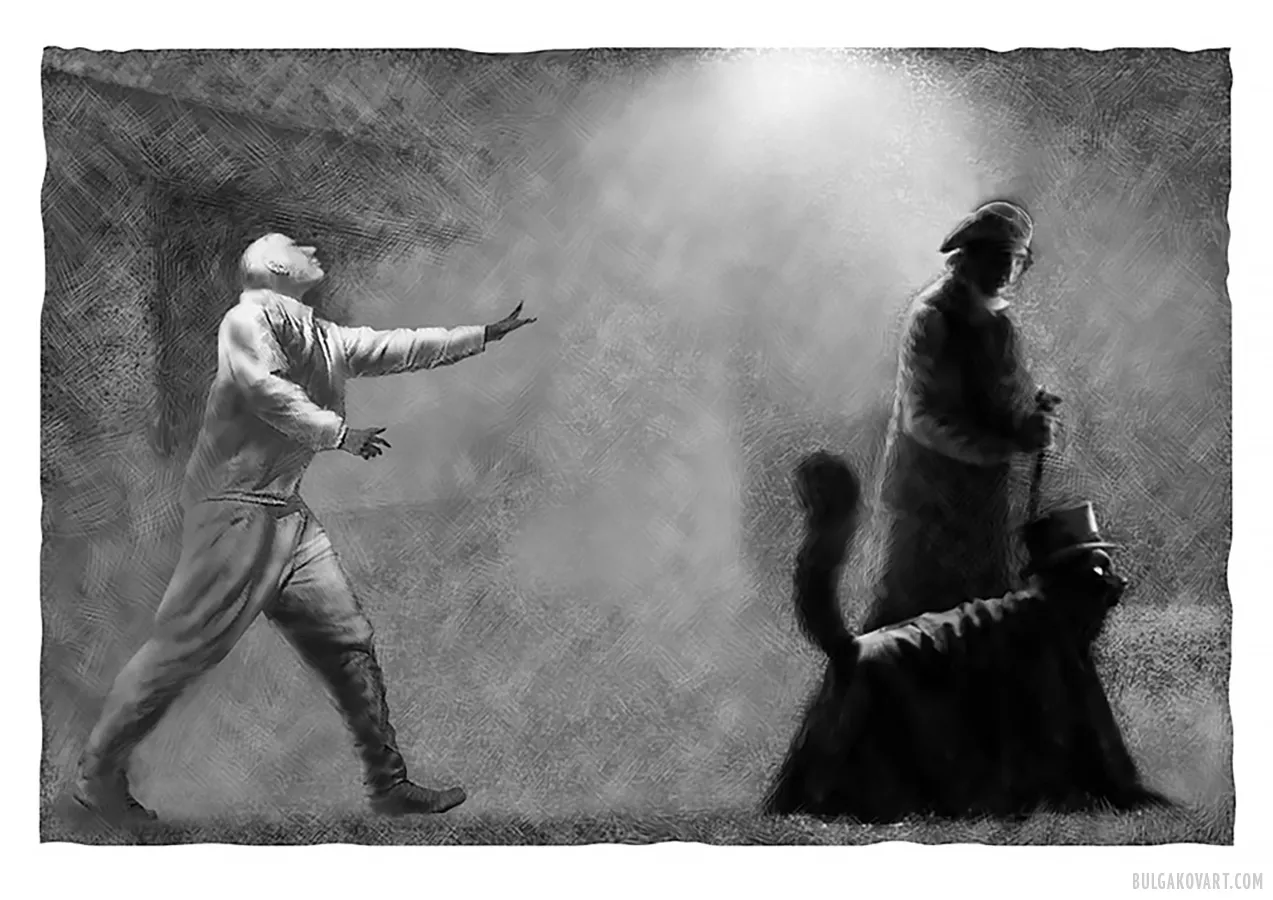
Ivan rushed after the villains and immediately realized that it would be very difficult to catch up with them.
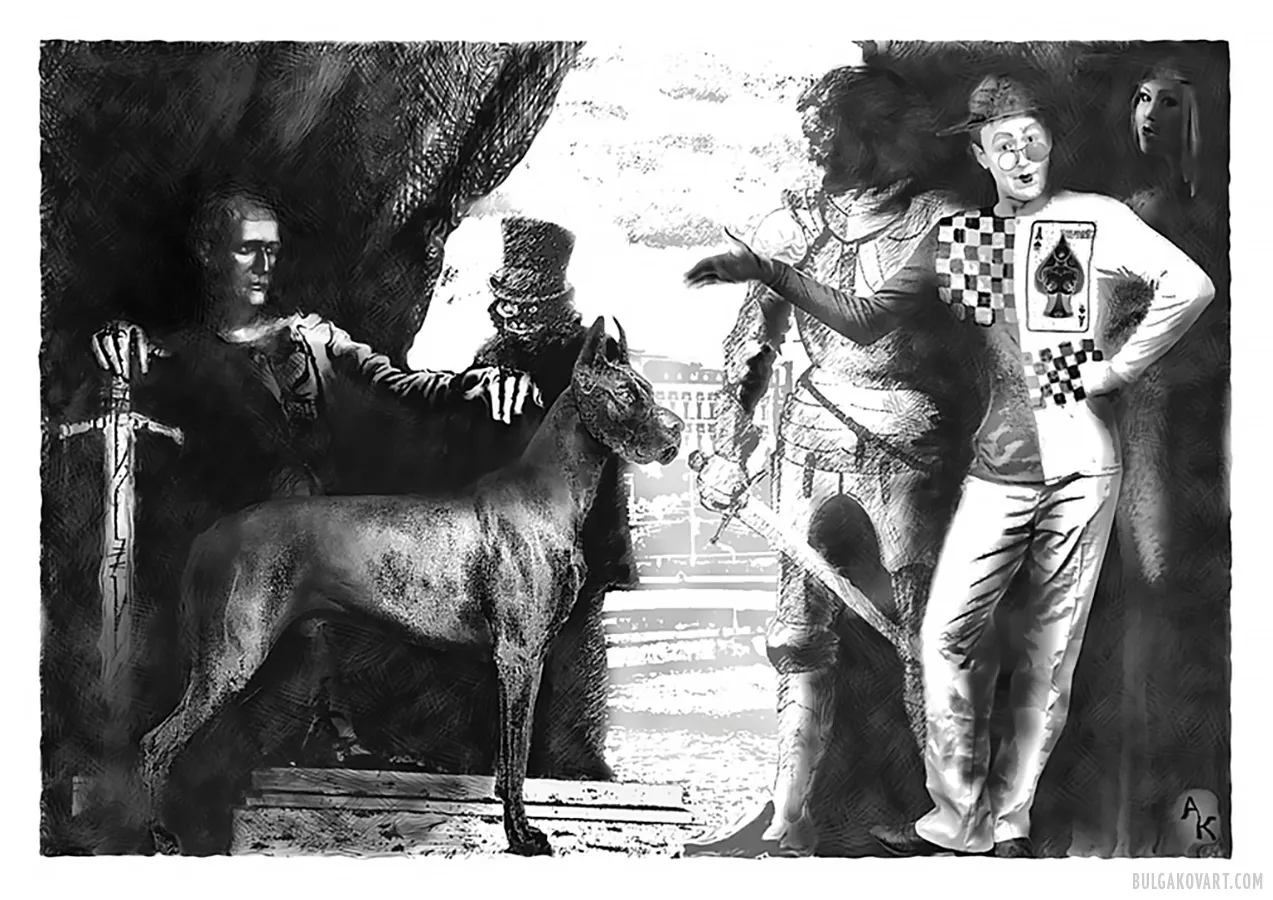
“A chair for me,” Woland ordered softly, and at that very second, somehow and from nowhere, a chair appeared on the stage, into which the magician sat down. “Tell me, my dear Fagott,” Woland asked the checkered jester, who apparently bore another name besides ‘Koroviev,’ “in your opinion, has the population of Moscow changed much?”
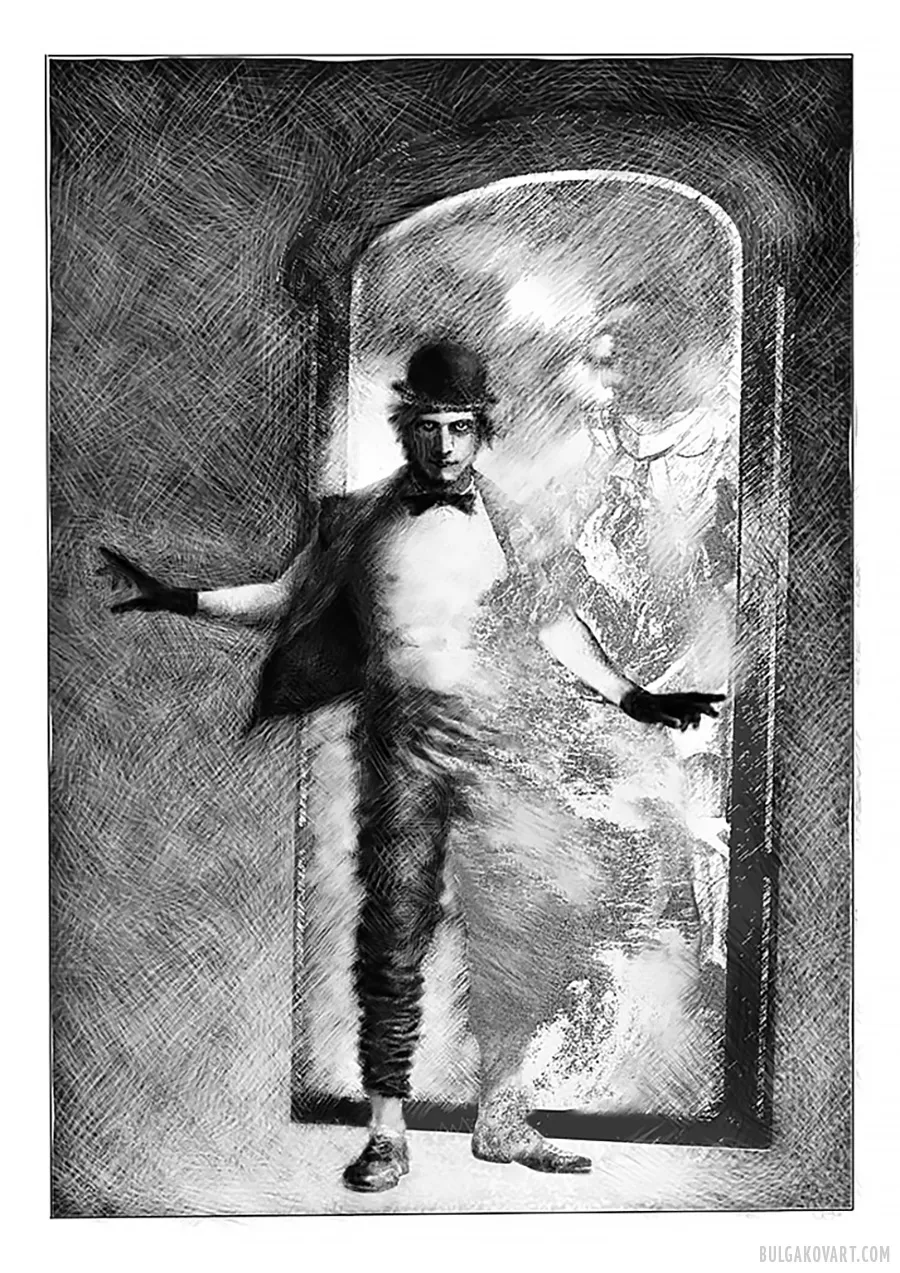
Straight out of the dressing-table mirror stepped a small but extraordinarily broad-shouldered man, wearing a bowler hat and with a fang protruding from his mouth, disfiguring an already unprecedentedly repulsive face.
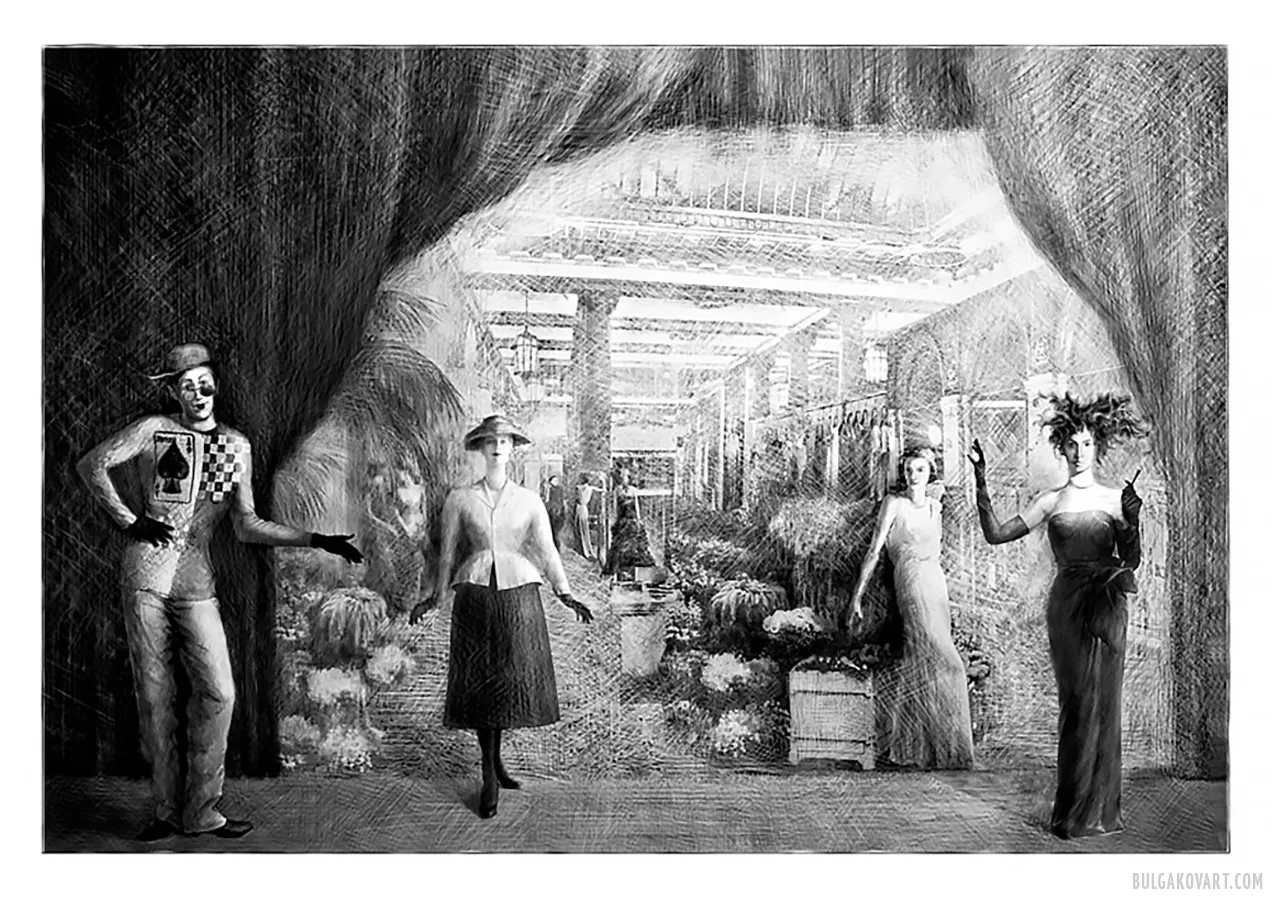
And Fagott, having escorted the injured master of ceremonies away, announced to the audience as follows: “Now that we’ve got rid of that bore, let’s open a ladies’ shop!”
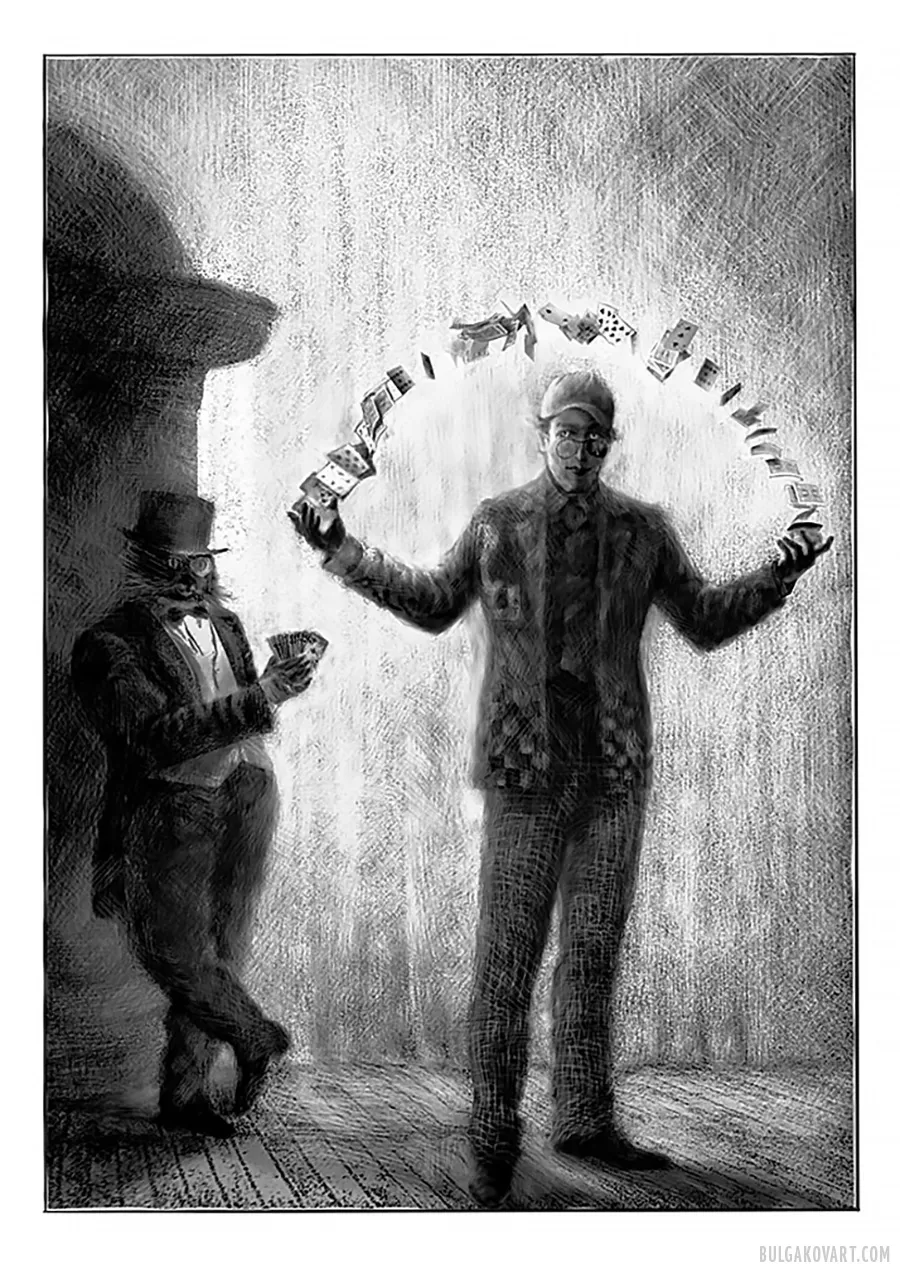
Fagott snapped his fingers, shouted jauntily, “Three, four!”—caught a deck of cards out of the air, shuffled it, and sent it ribboning toward the cat.
“For example, I wanted to travel all around the globe. Well, it turns out that this is not destined to be. I see only an insignificant piece of this globe. I think it is not the best thing on it, but I repeat, it is not so bad. Summer is coming to us; ivy will curl on the balcony…”
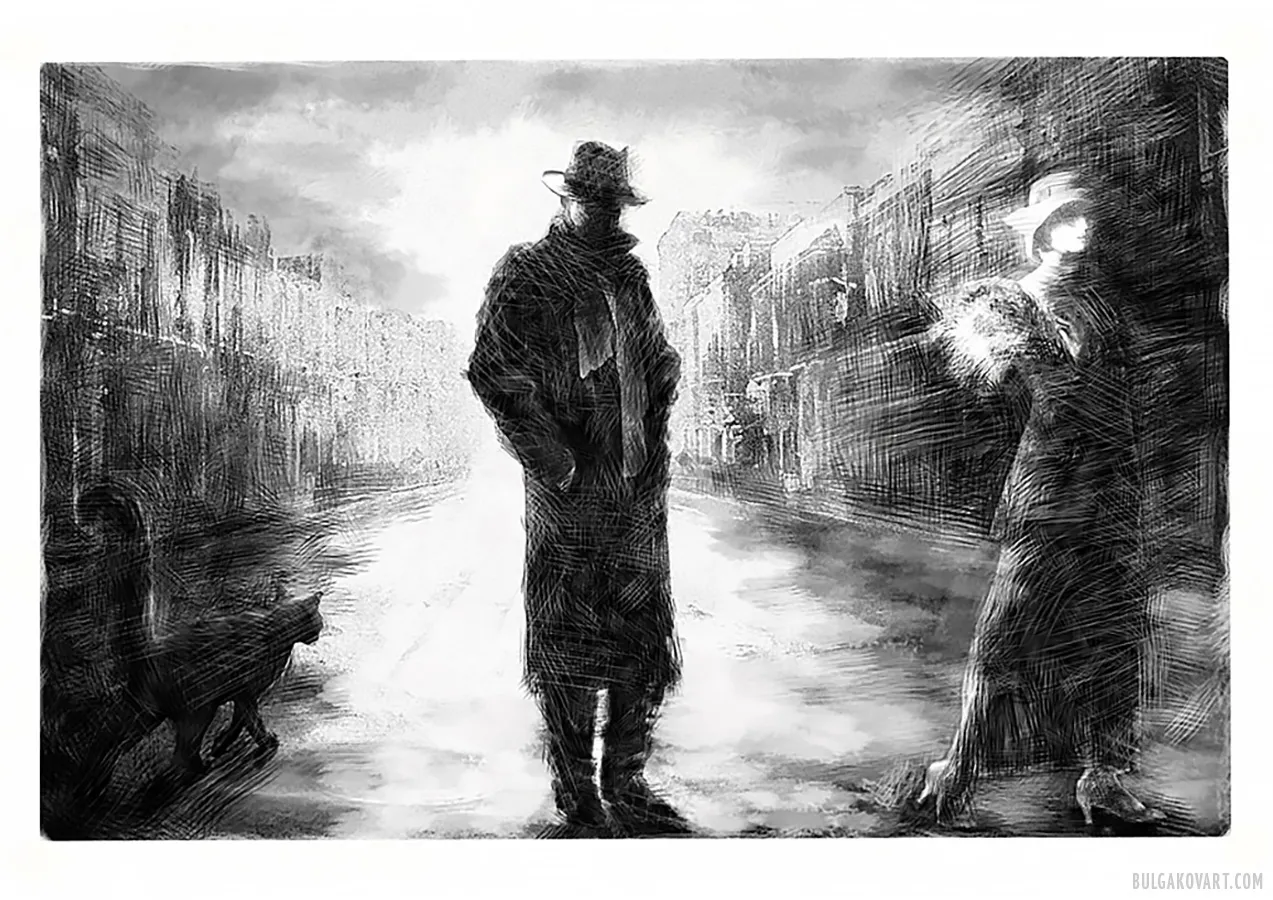
Thousands of people were walking along Tverskaya, but I assure you that she saw only me and looked at me not so much anxiously as even, it seemed, painfully. Obeying this sign, I too turned into a side street and followed her.
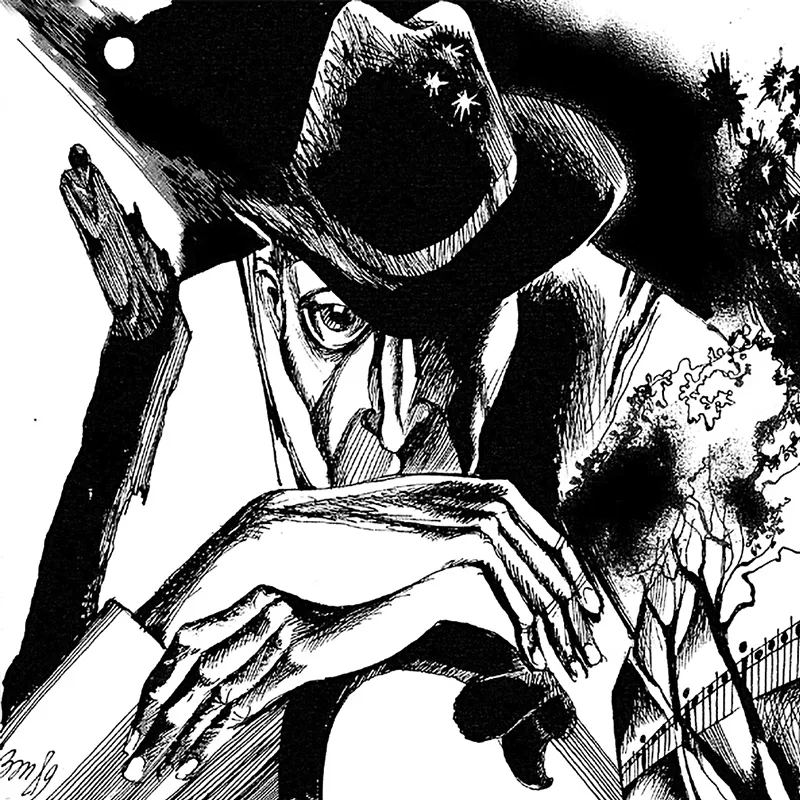
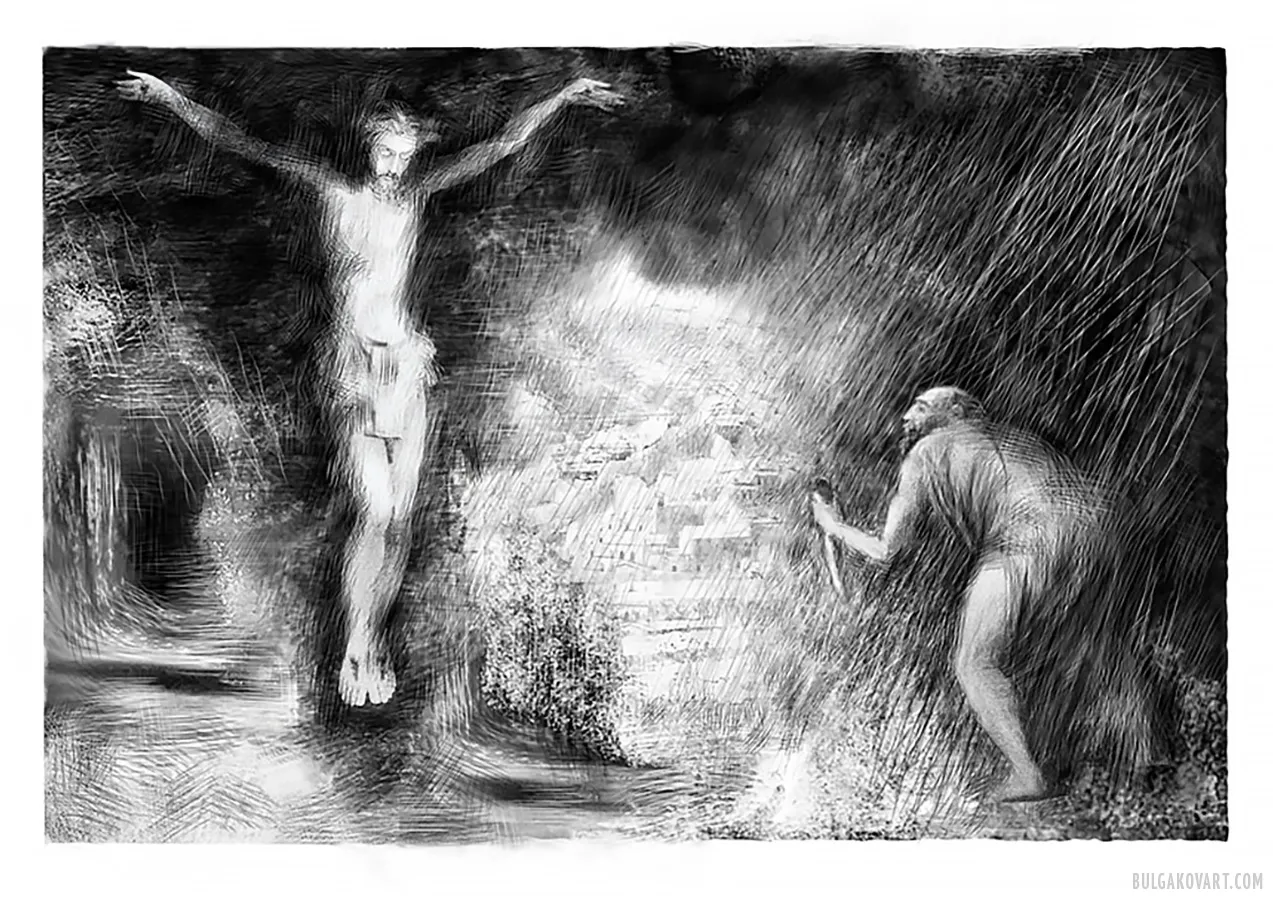
After a few minutes, in the smoky brew of storm, water, and fire, only one man remained on the hill. Brandishing the stolen knife not in vain, slipping on the slick ledges, clinging to anything he could, sometimes crawling on his knees, he strove toward the pillars.
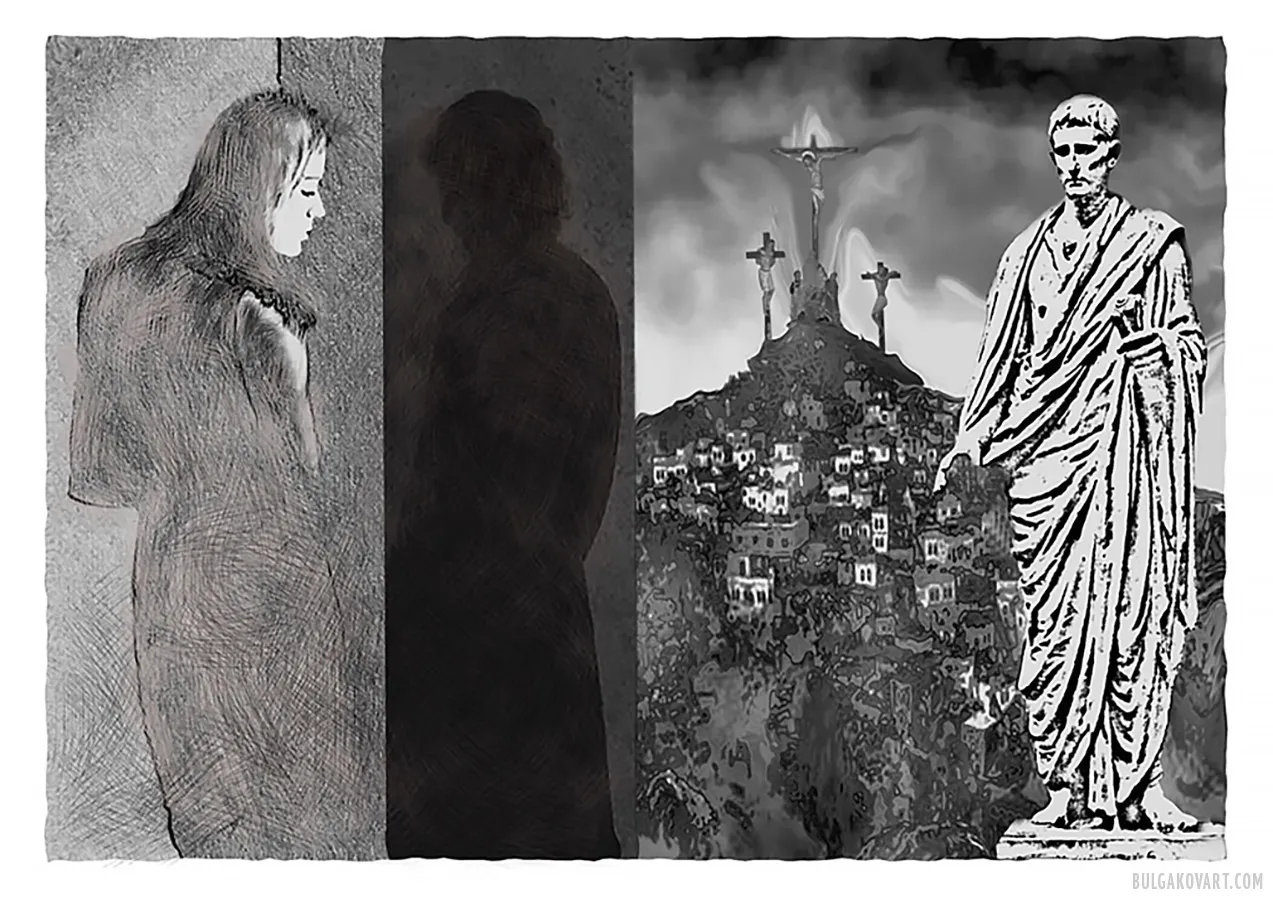
All the more terrible was the awakening of the hegemon. He closed his eyes, and the first thing he remembered was that there had been an execution.
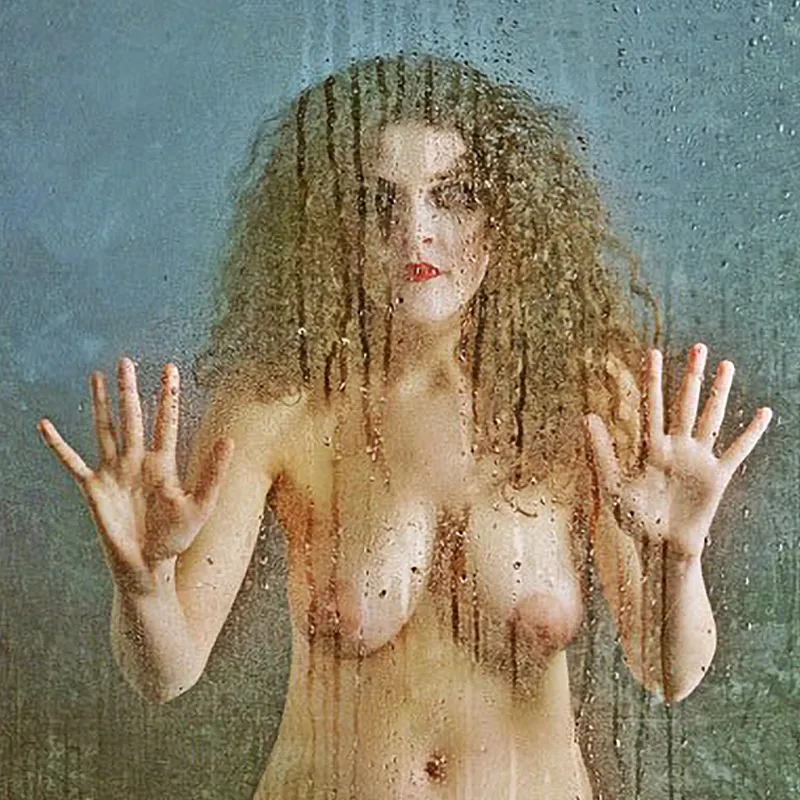
A completely naked girl appeared in the anteroom—red-haired, with blazing phosphorescent eyes.
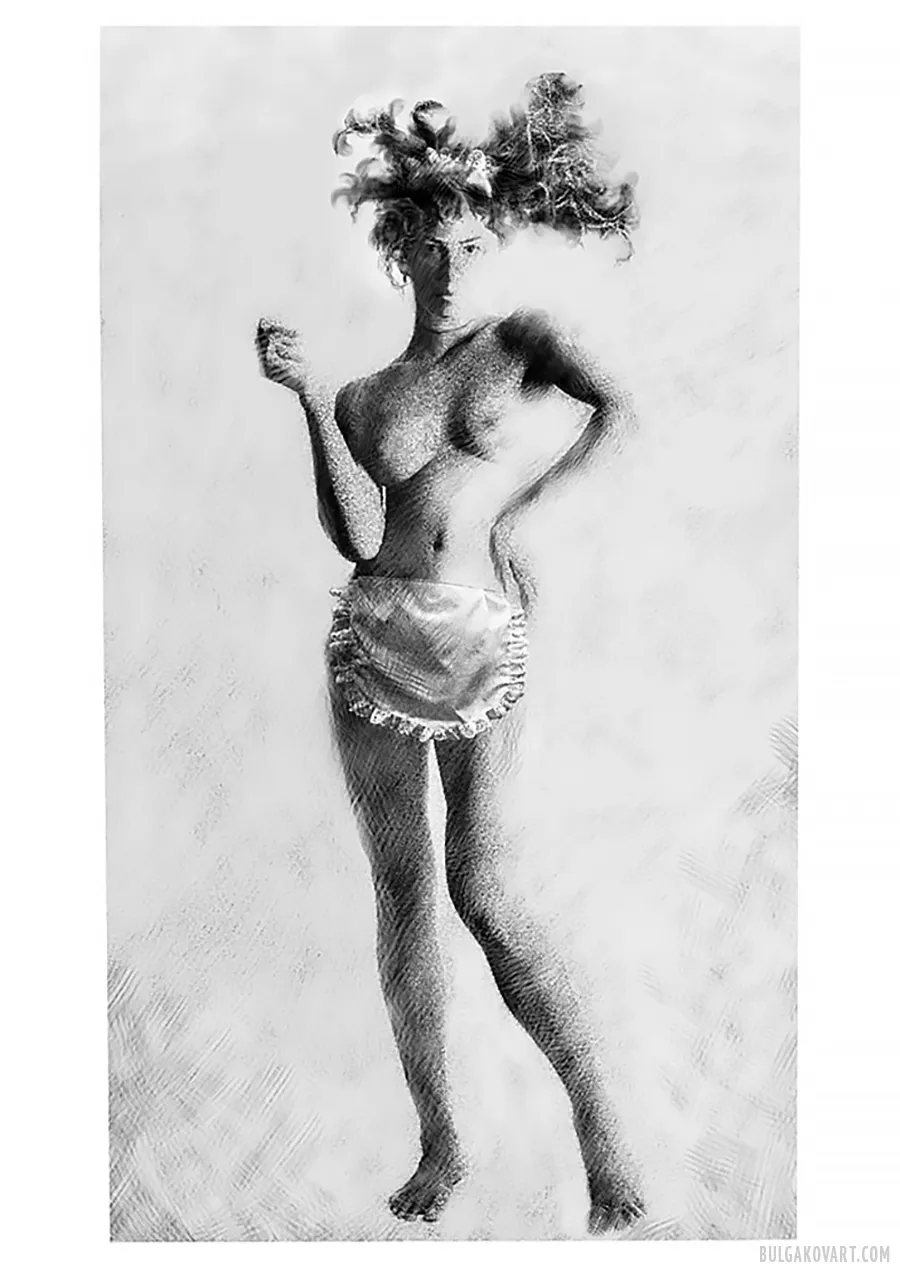
First of all, let us reveal the secret that the Master did not wish to disclose to Ivanushka. His beloved’s name was Margarita Nikolaevna. Everything the Master told the poor poet about her was the pure truth.
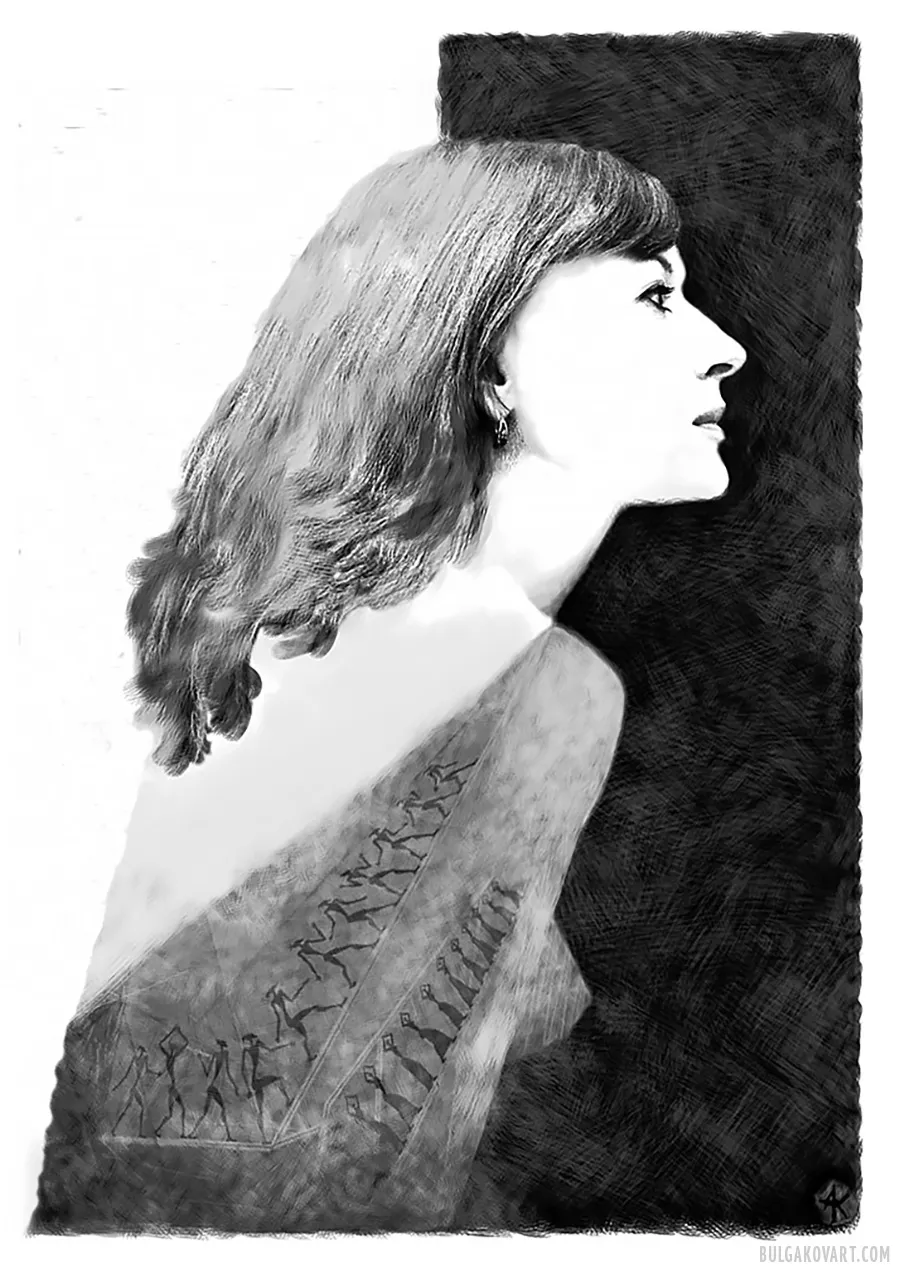
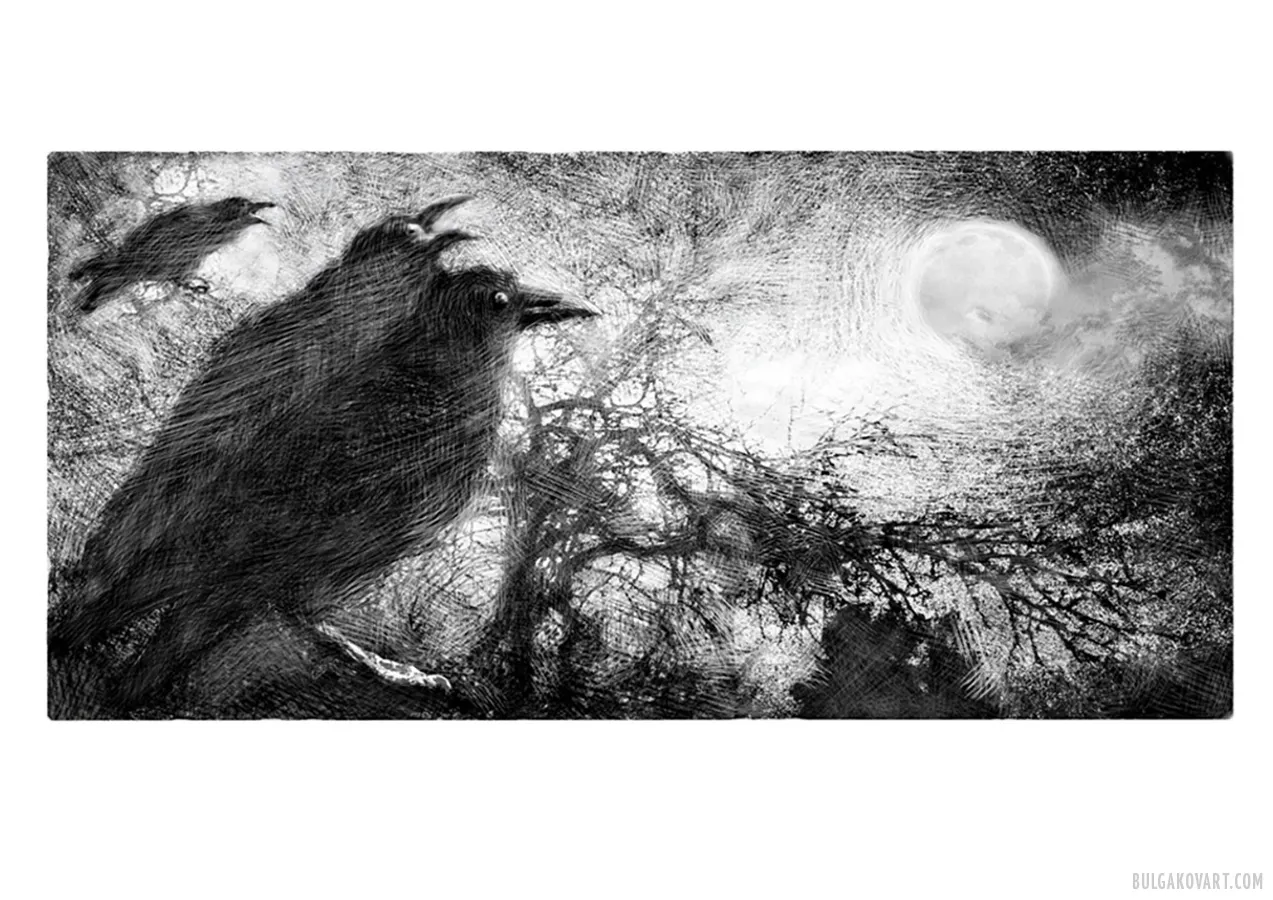
Margarita dreamed of an unknown place—hopeless and bleak, under the overcast sky of early spring. She dreamed of this tattered, scudding gray sky, and beneath it a silent flock of rooks. Everything around was somehow lifeless and so dreary that it made one want to hang oneself from that aspen by the little bridge.
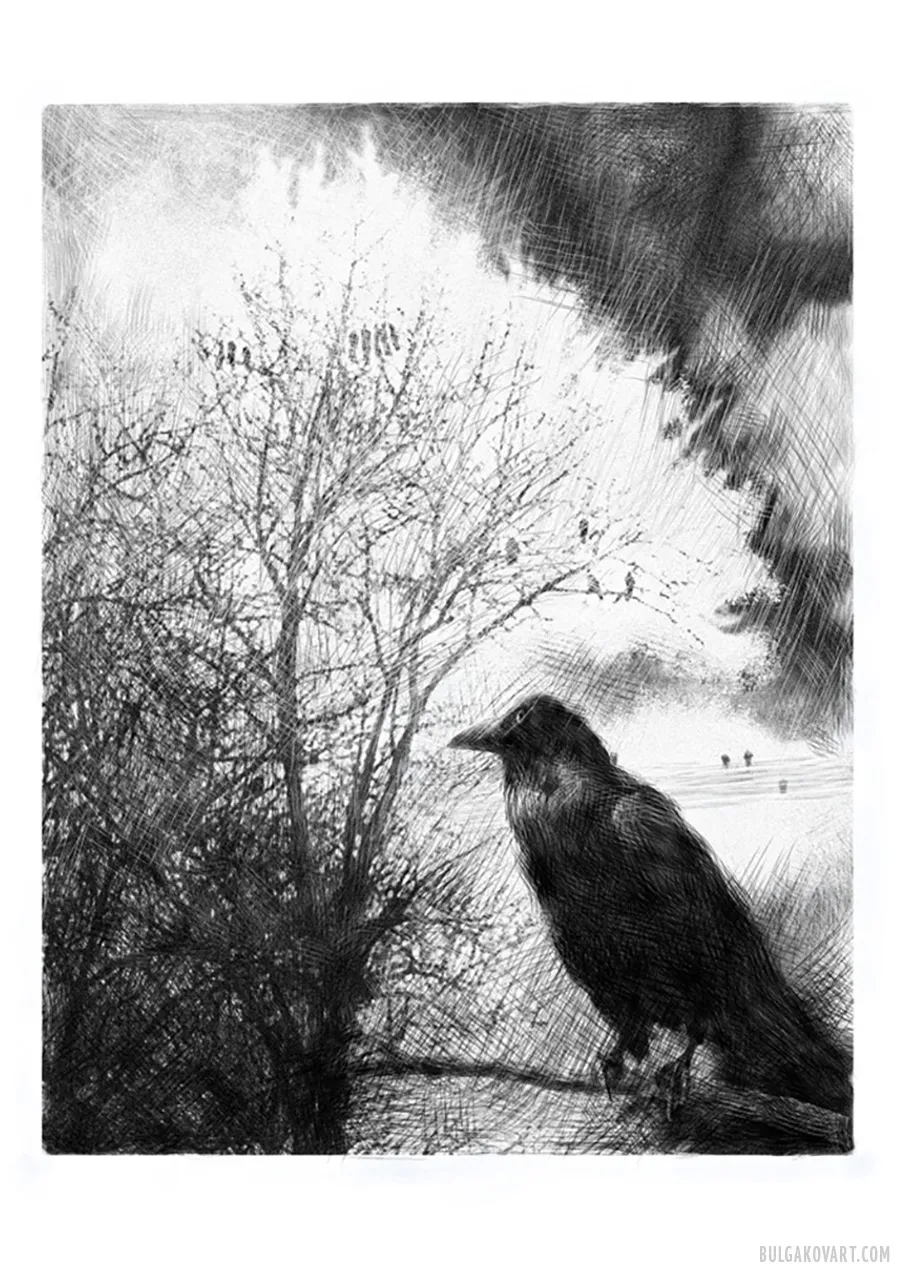
The third alley led straight to the Arbat. Here Margarita fully mastered the control of the broom, understood that it obeyed the slightest movement of her hands or feet, and that, flying over the city, one must be very careful and not too reckless.
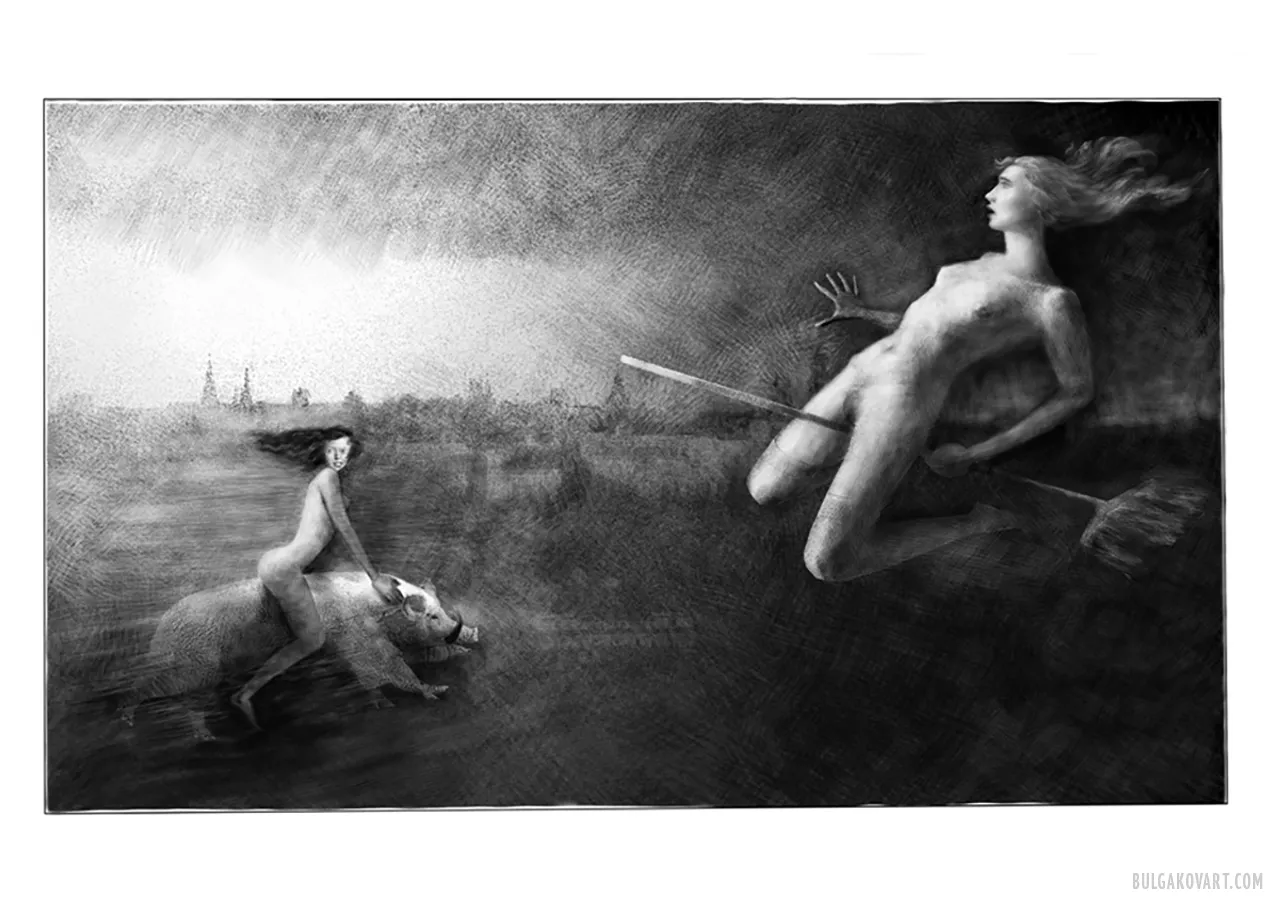
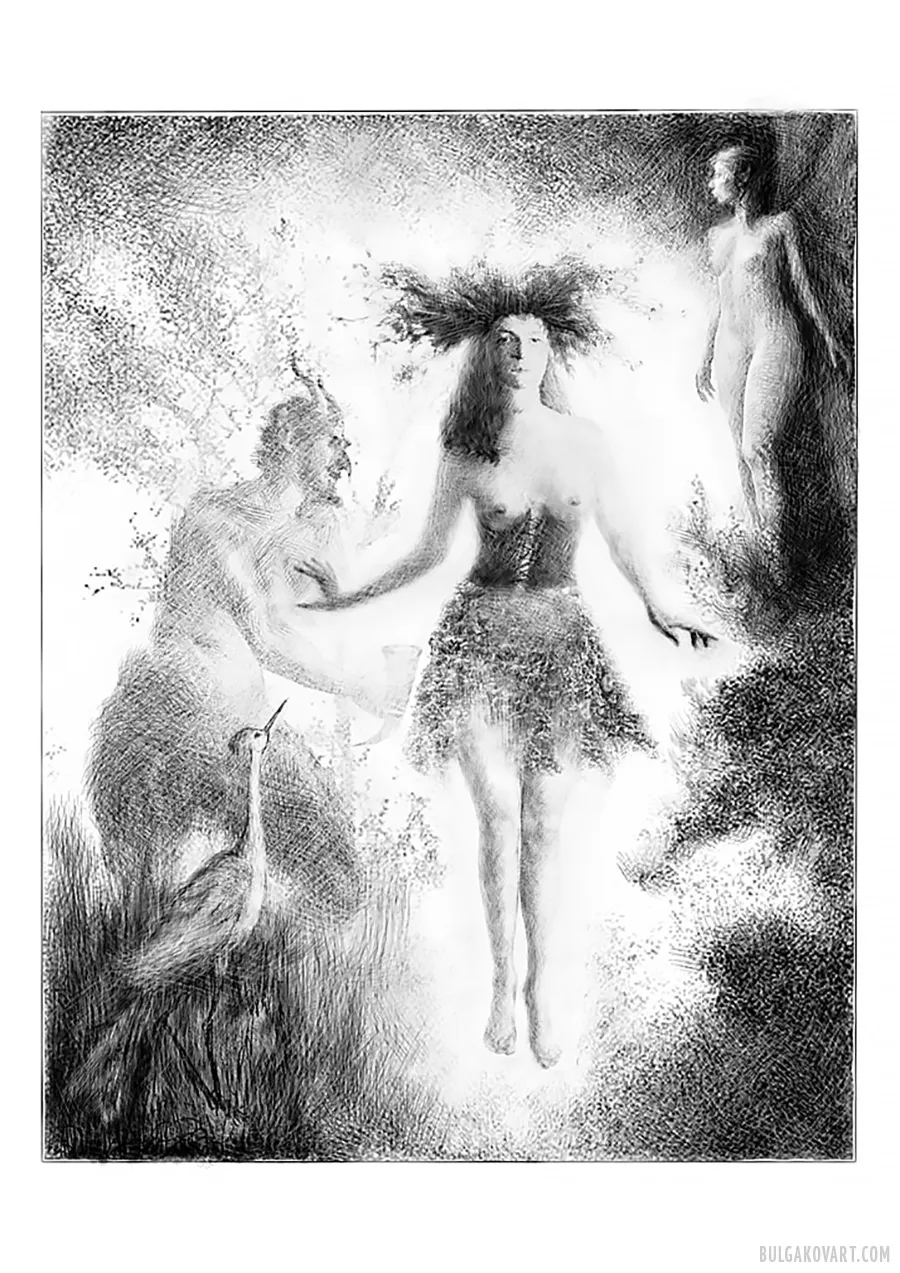
Naked witches, darting out from behind the willows, lined up and began to squat and bow with courtly bows. Someone goat-legged flew up and kissed her hand, spread silk on the grass, inquired whether the queen had bathed well, and suggested that she lie down and rest.
A dun-colored open car crashed onto the island, but in the driver’s seat sat not an ordinary chauffeur, but a black long-nosed rook wearing an oilcloth cap and gloves with flared cuffs.
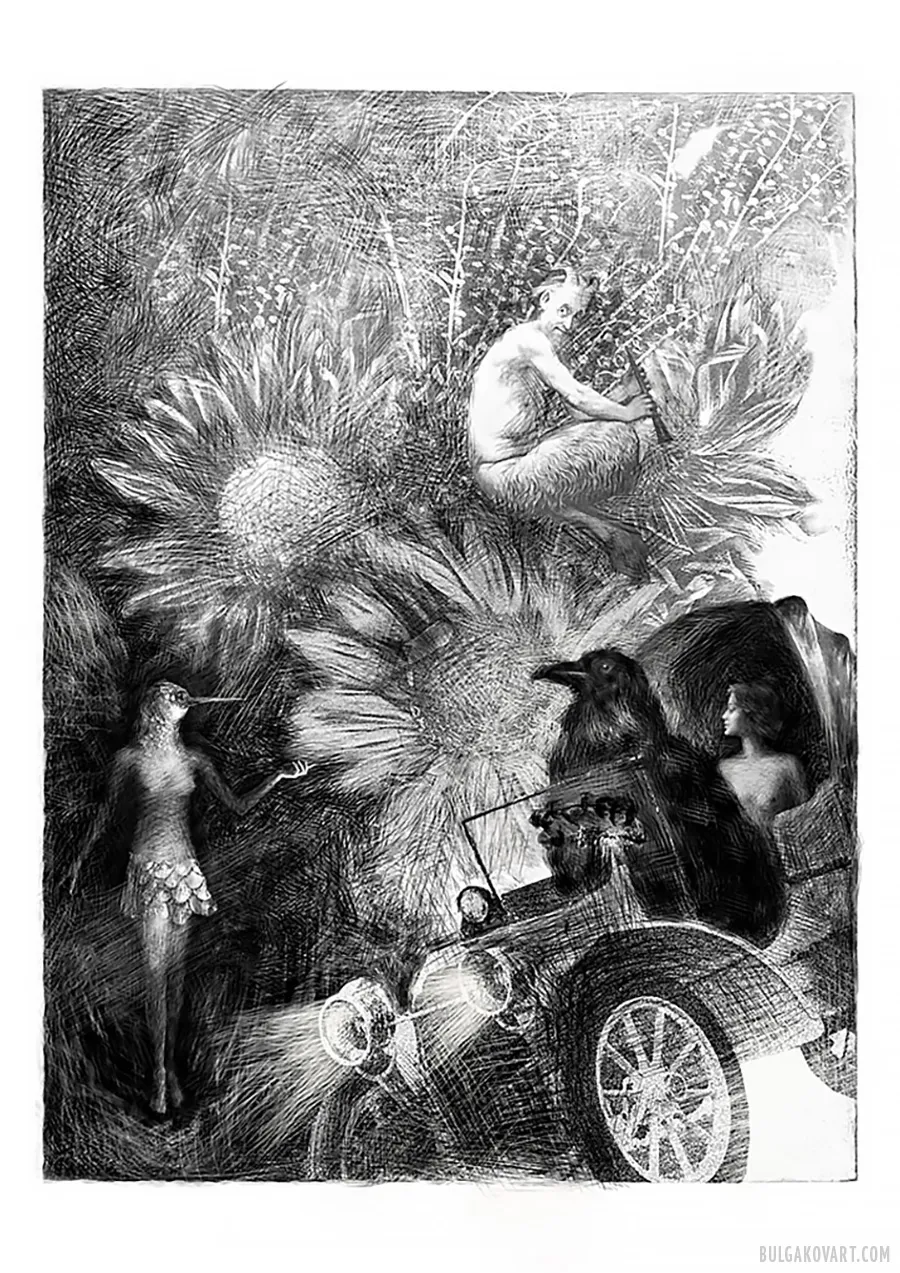
The rook respectfully saluted, mounted the wheel astride, and flew away. Immediately a black cloak appeared from behind one of the monuments. A fang flashed in the moonlight, and Margarita recognized Azazello.

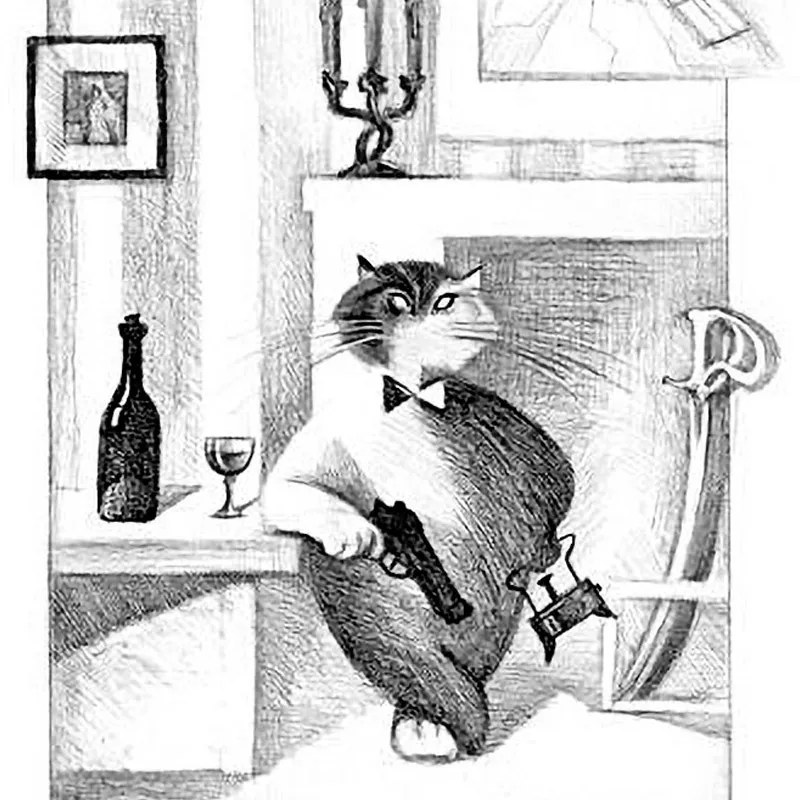
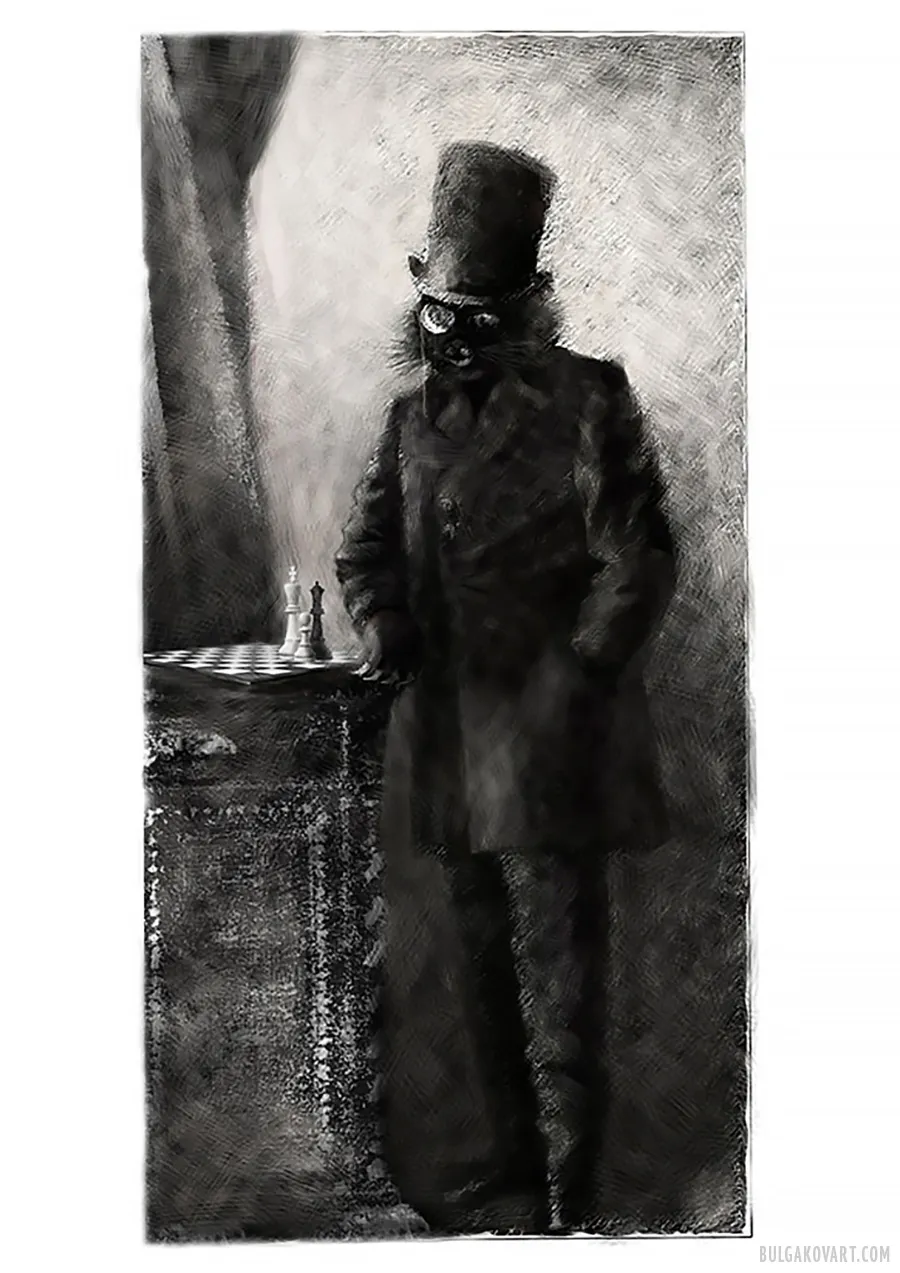
“Trousers are not prescribed for a cat, messire,” the cat replied with great dignity. “You wouldn’t order me to put on boots as well? A cat in boots exists only in fairy tales, messire. But have you ever seen anyone at a ball without a tie?”
Something flashed in Azazello’s hands, something clapped softly as if hands had struck together, the baron fell backward, scarlet blood spurted from his chest and flooded his starched shirt and waistcoat. Koroviev held out a bowl under the gushing stream and handed the filled bowl to Woland.
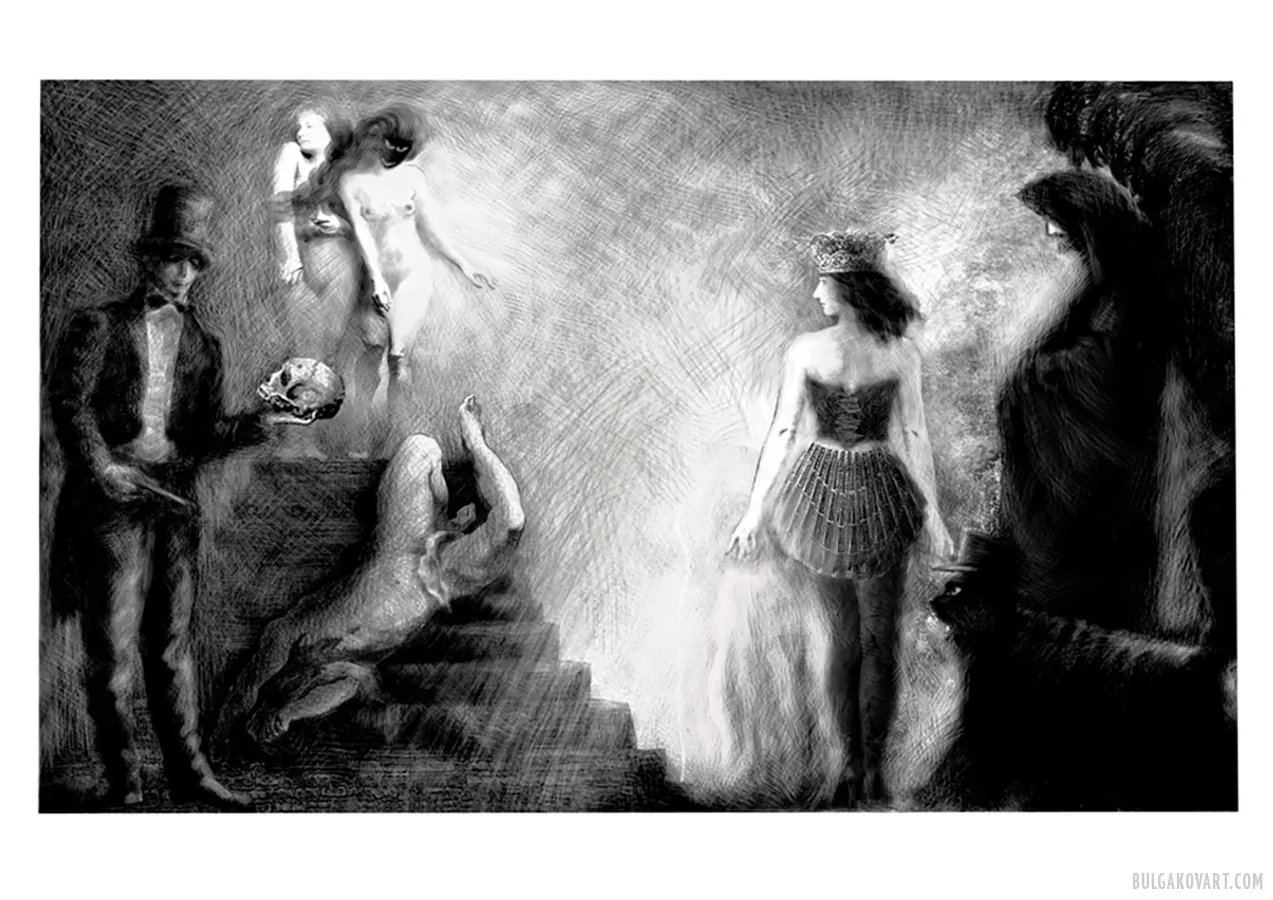
“Frieda, Frieda, Frieda! My name is Frieda, my Queen.”

Something made Woland turn away from the city and direct his attention to the round tower that stood behind him on the roof. From its wall emerged a ragged, clay-smeared, gloomy man in a chiton, in homemade sandals, black-bearded.
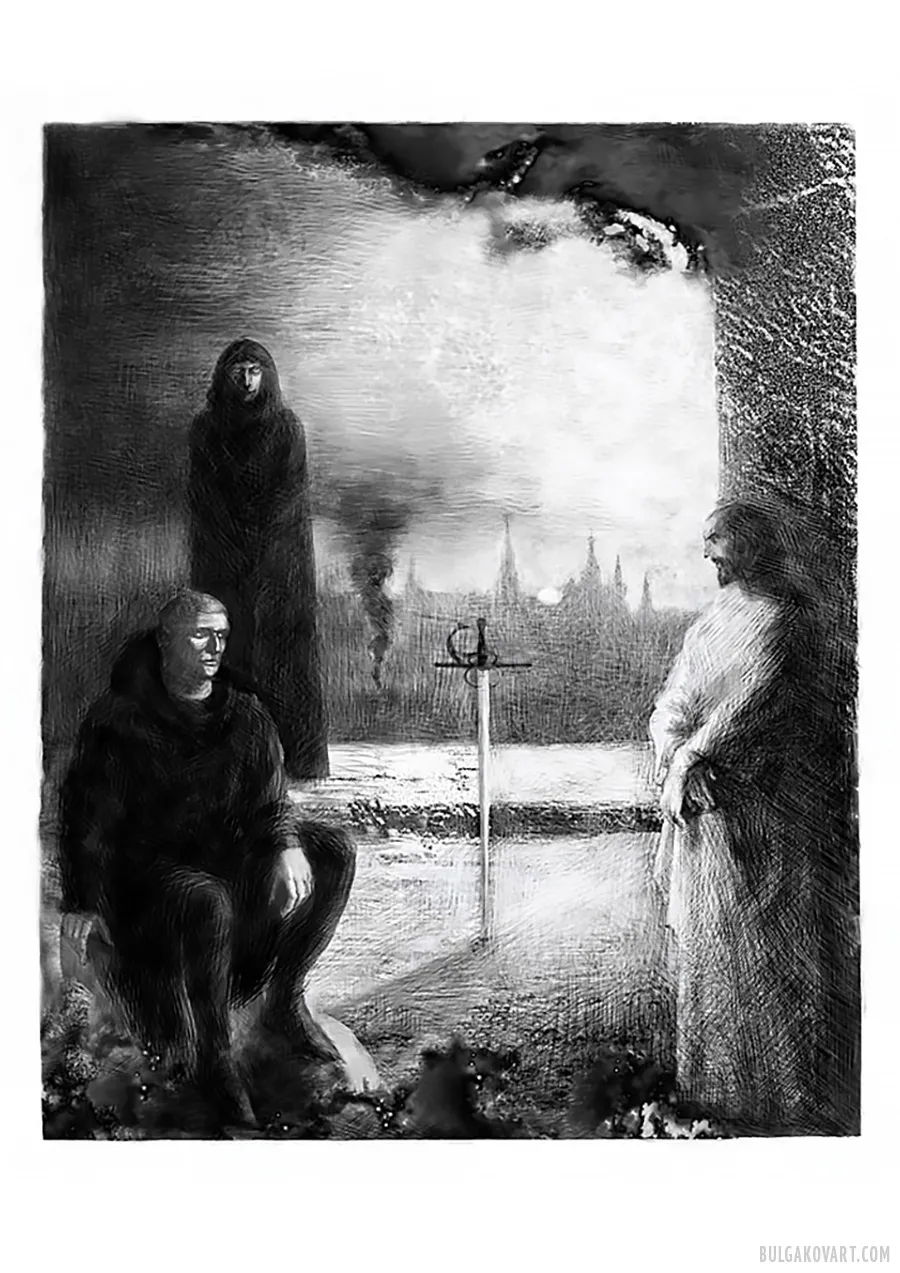
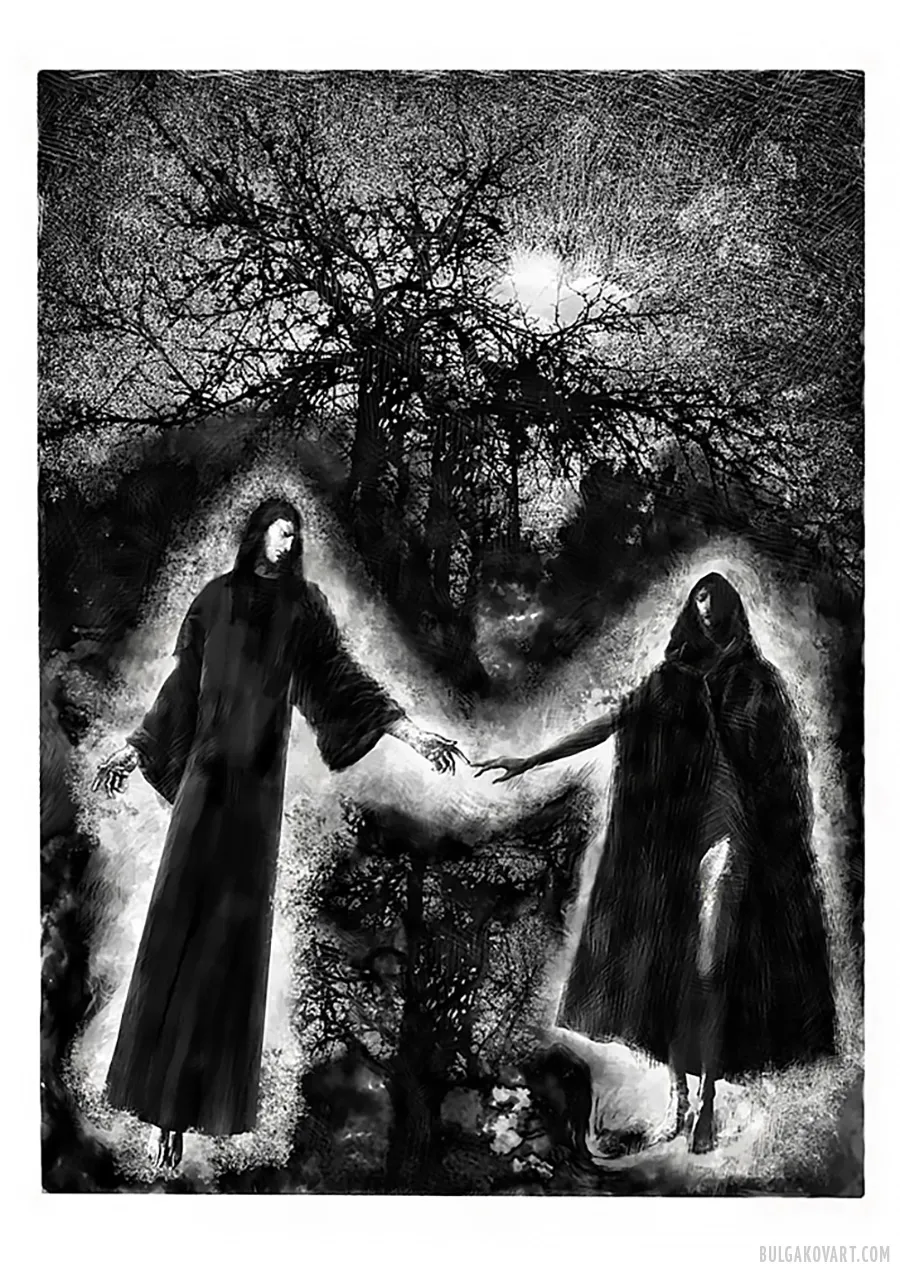
“Listen to the silence,” Margarita was saying to the Master, and the sand rustled beneath her bare feet. “Look, there ahead is your eternal home, which has been granted to you as a reward. I already see the Venetian window and the climbing vine rising to the very roof. This is your home, this is your eternal home.”
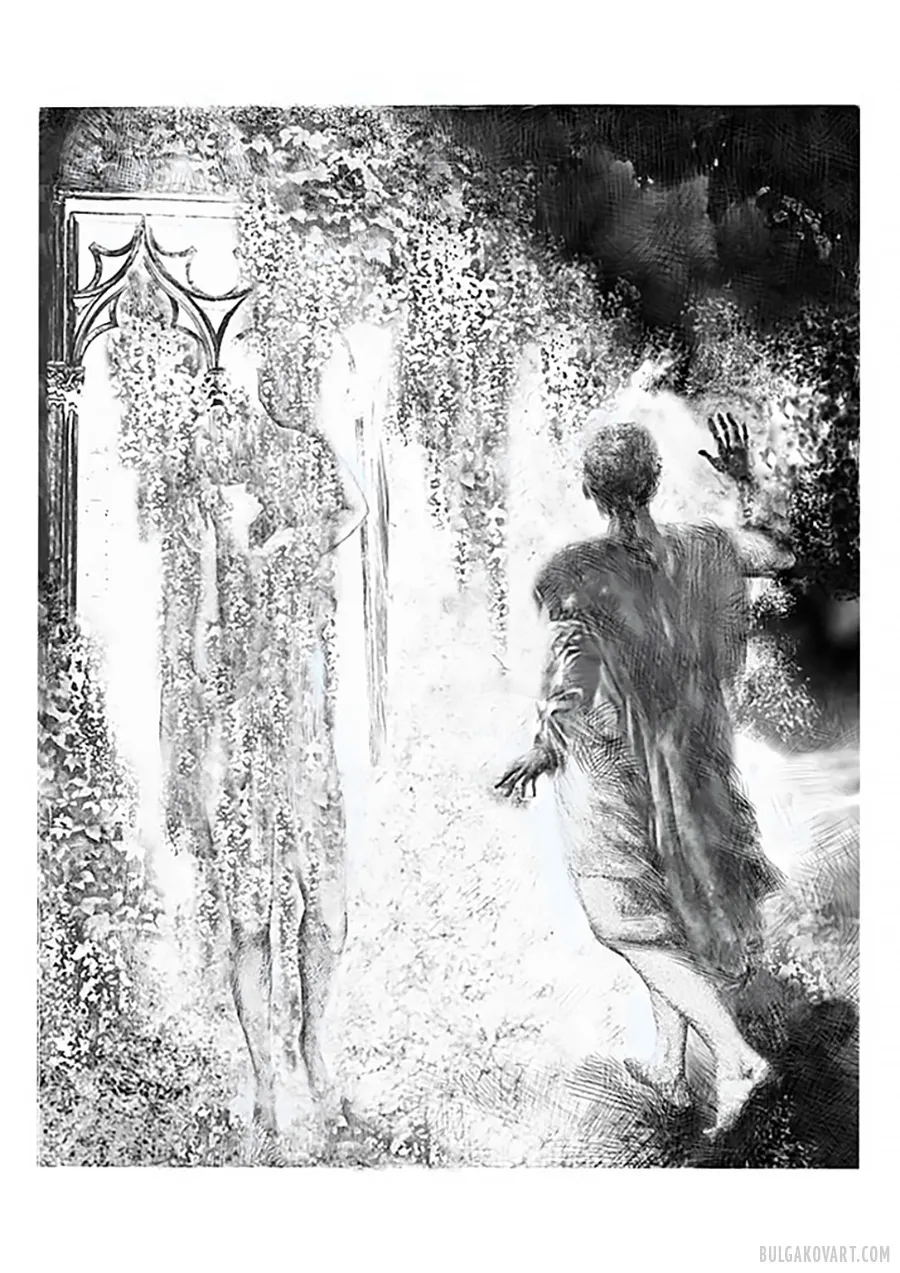
There was as much free time as one could wish, and the storm would come only in the evening, and cowardice is undoubtedly one of the most terrible vices. So said Yeshua Ha-Notsri. No, philosopher, I disagree with you: it is the most terrible vice.
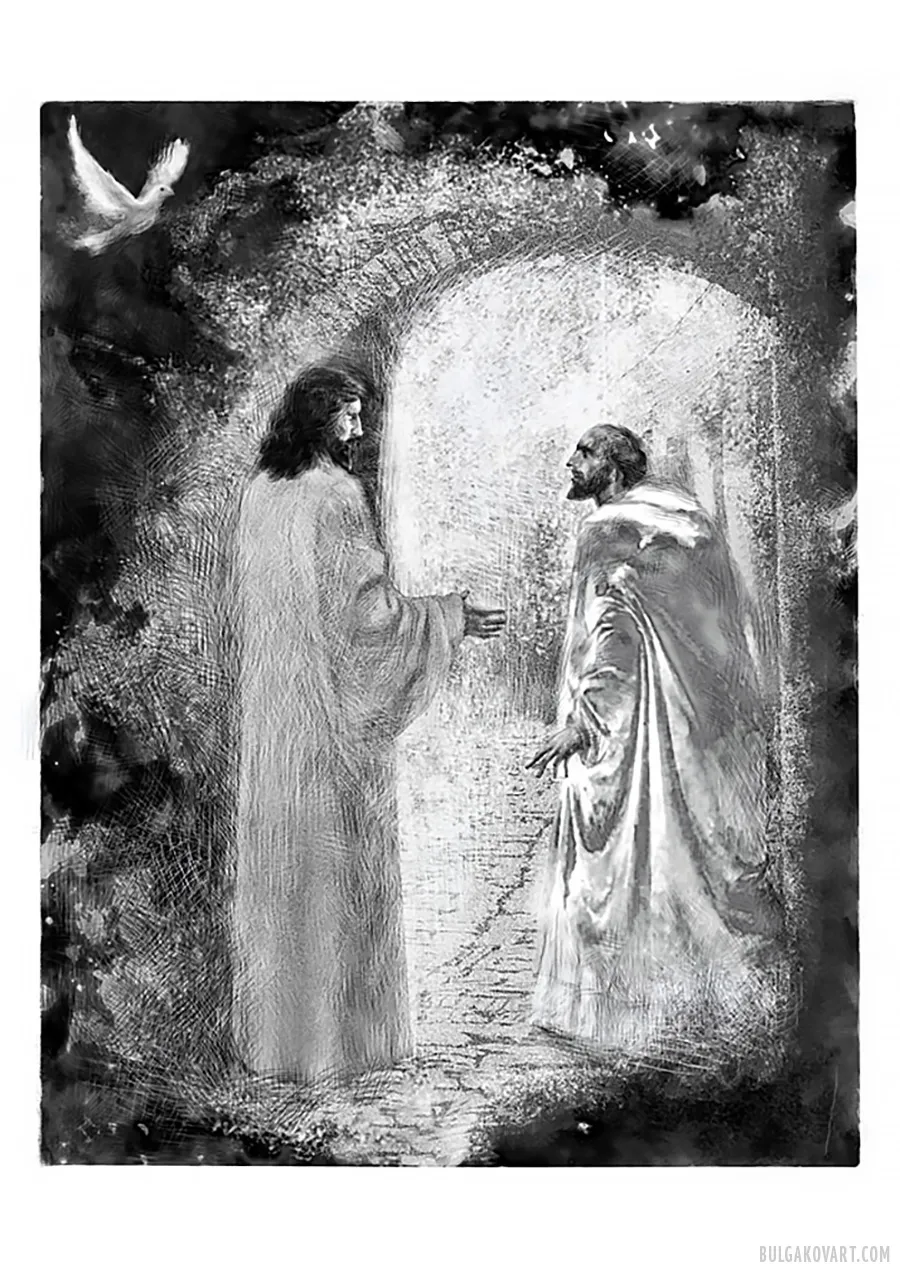
“Leave them alone together,” Woland was saying, bending from his saddle toward the Master’s saddle and pointing after the departing procurator. “Let us not interfere with them. Perhaps they will come to some agreement.”
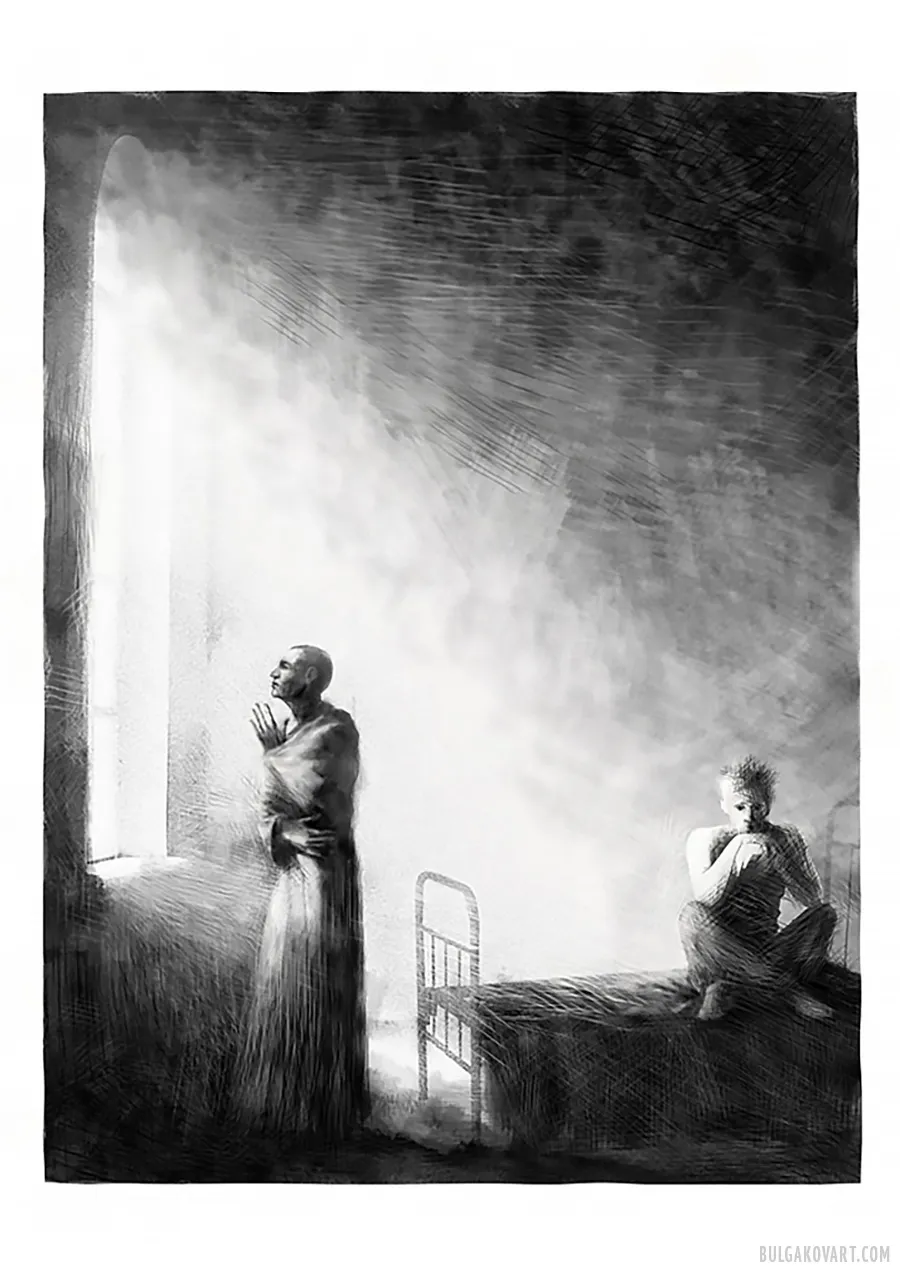
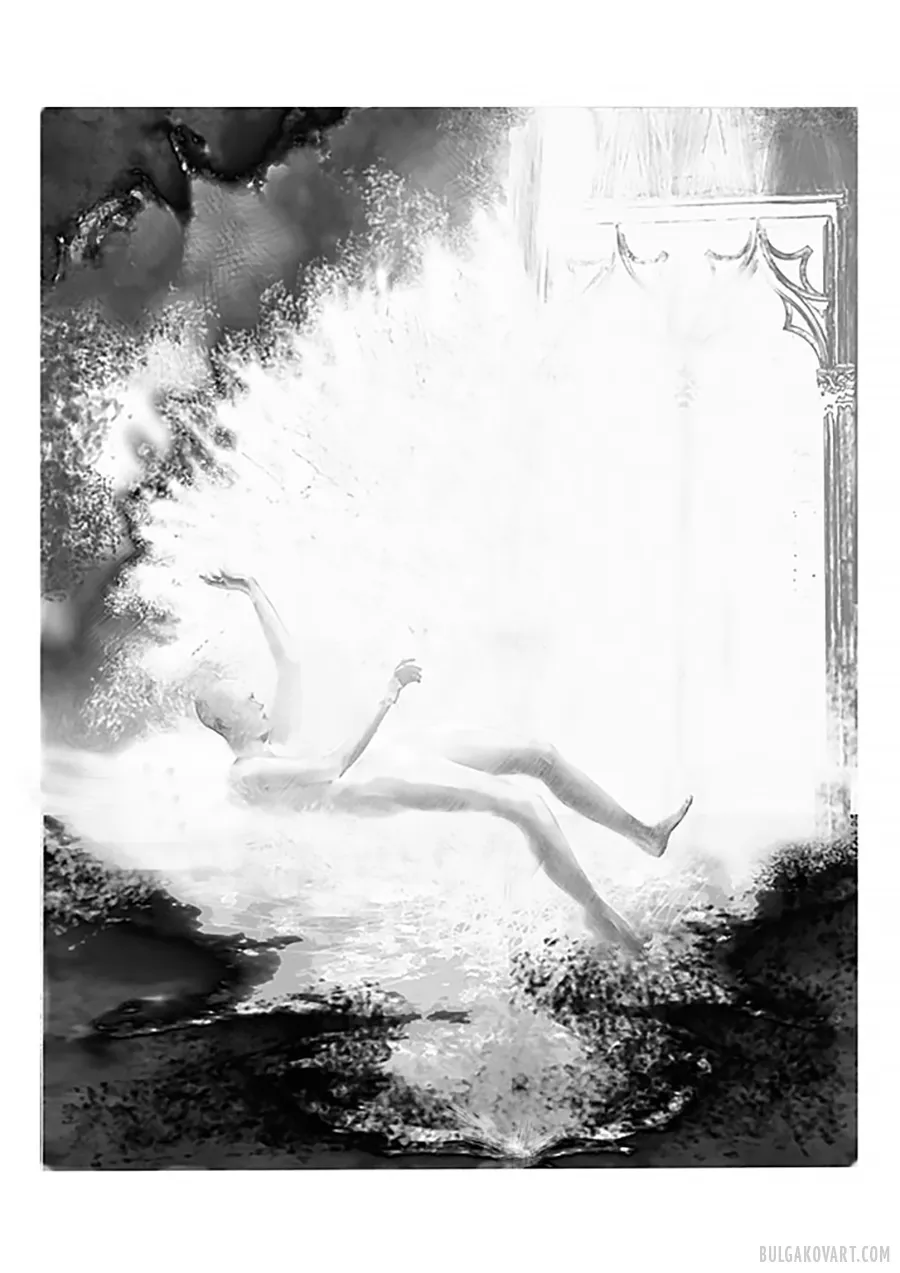
The moon begins to rage, it pours streams of light straight onto Ivan, it splashes light in all directions, a lunar flood begins in the room, the light sways, rises higher, and inundates the bed.
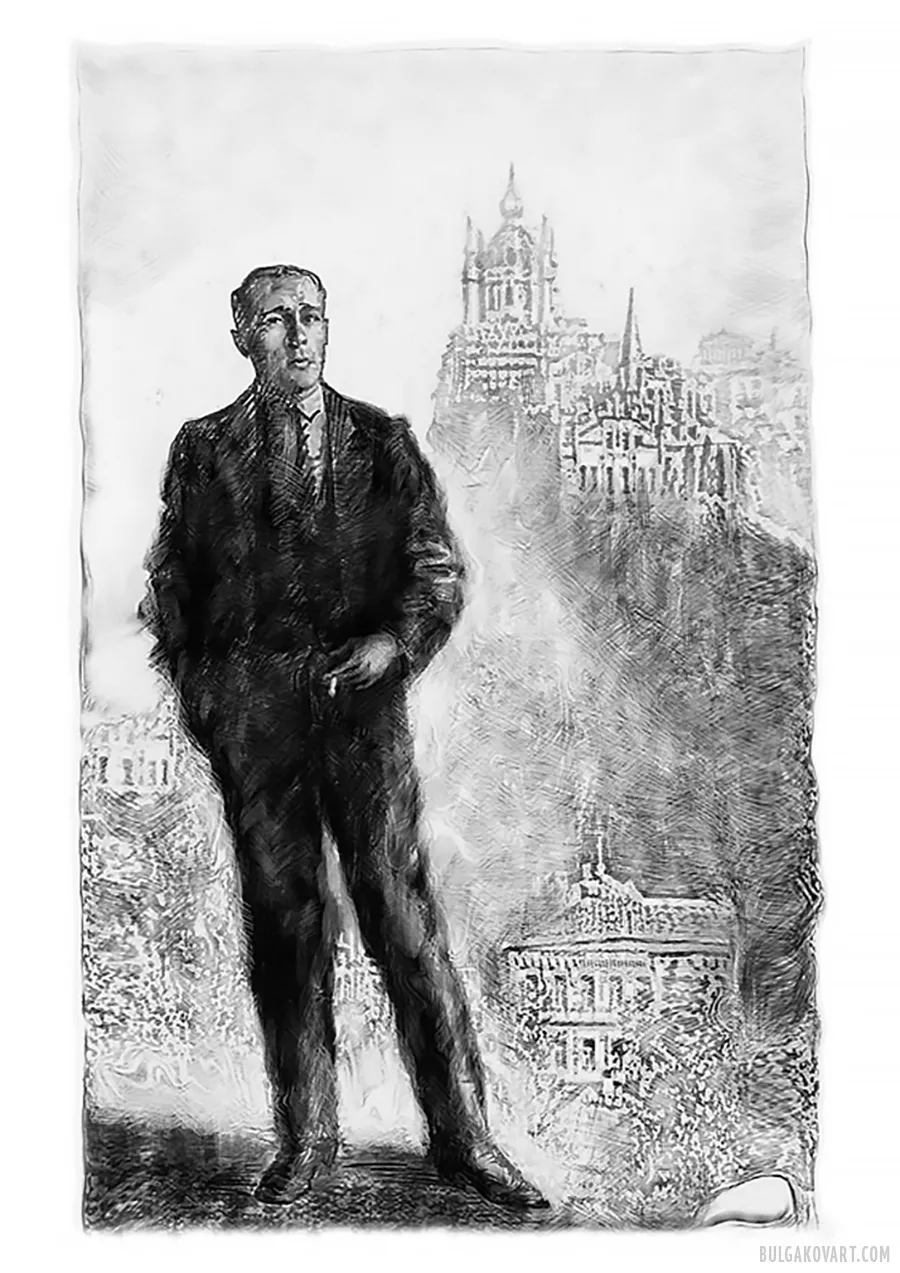
And in conclusion—a portrait of Bulgakov himself. In the background is Volodymyrska Hill (Mikhail Afanasyevich’s favorite place) with Andriyivskyi Descent, the street on which Bulgakov grew up. Below, one can even make out his house.