 Alexander Rukavishnikovarukav.com
If, while walking along Novy Arbat in Moscow, you decide to go behind the House of Books, you can discover a small courtyard separated from the street by a lattice fence. It is the yard of the workshop of hereditary sculptor Alexander Rukavishnikov, of interest to us because here the sculptural figures of the heroes of The Master and Margarita are gathered.
Originally Rukavishnikov wanted to place them in the most Bulgakov place in Moscow—at Patriarch’s Ponds: the pond was supposed to be turned into a complex sculptural‑architectural ensemble. In addition to Korovyev, Behemoth, the Master, Margarita, and the magic automobile (which we will speak of below), it was planned to adorn the pond with Pontius Pilate, Yeshua walking along the surface of the water, and even a gigantic primus stove (reportedly as tall as a four‑story building). In truth, the project did not come to life—either through the efforts of the Moscow administration, which had its own designs on Patriarch’s Ponds, or through the efforts of the Orthodox public, unwilling for the ponds to turn into a monument to a not entirely Orthodox writer. So, while the place for installing the sculptures has not been determined, they are kept here.
Bulgakov’s admirers come to look at them through the fence and all complain in unison that the fence prevents not only approaching the sculptures but even photographing them properly. I was lucky. Setting out to look at the sculptures, I unexpectedly found the gates to the yard of the workshop open, something I did not fail to take advantage of (the owner, who came out of the workshop, looked at me with surprise, but did not interfere). Let us see what I managed to find there.
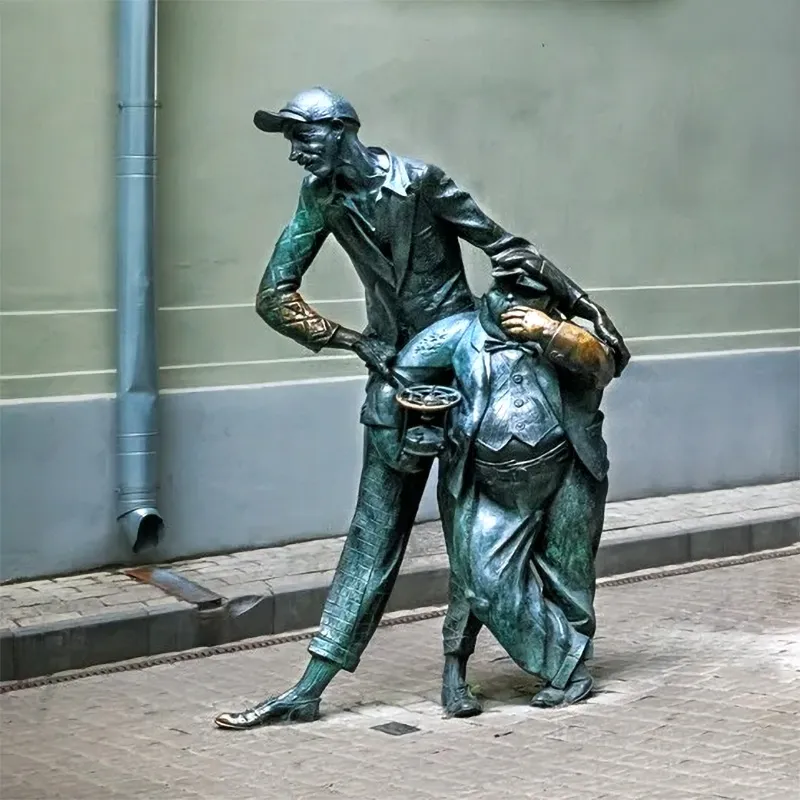
Here is the inseparable pair: the checkered citizen in a jockey cap and the short fat man with the primus stove.
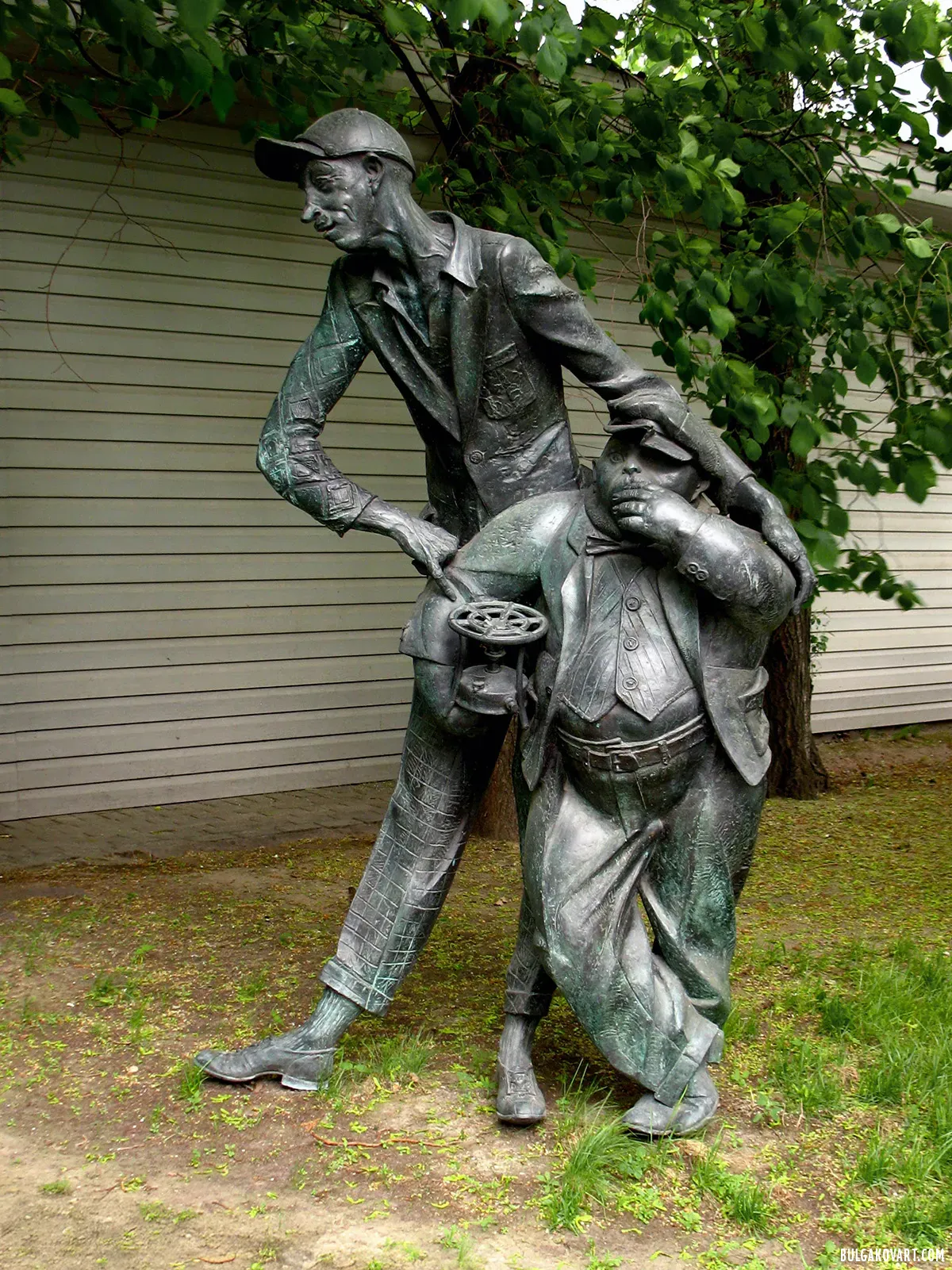
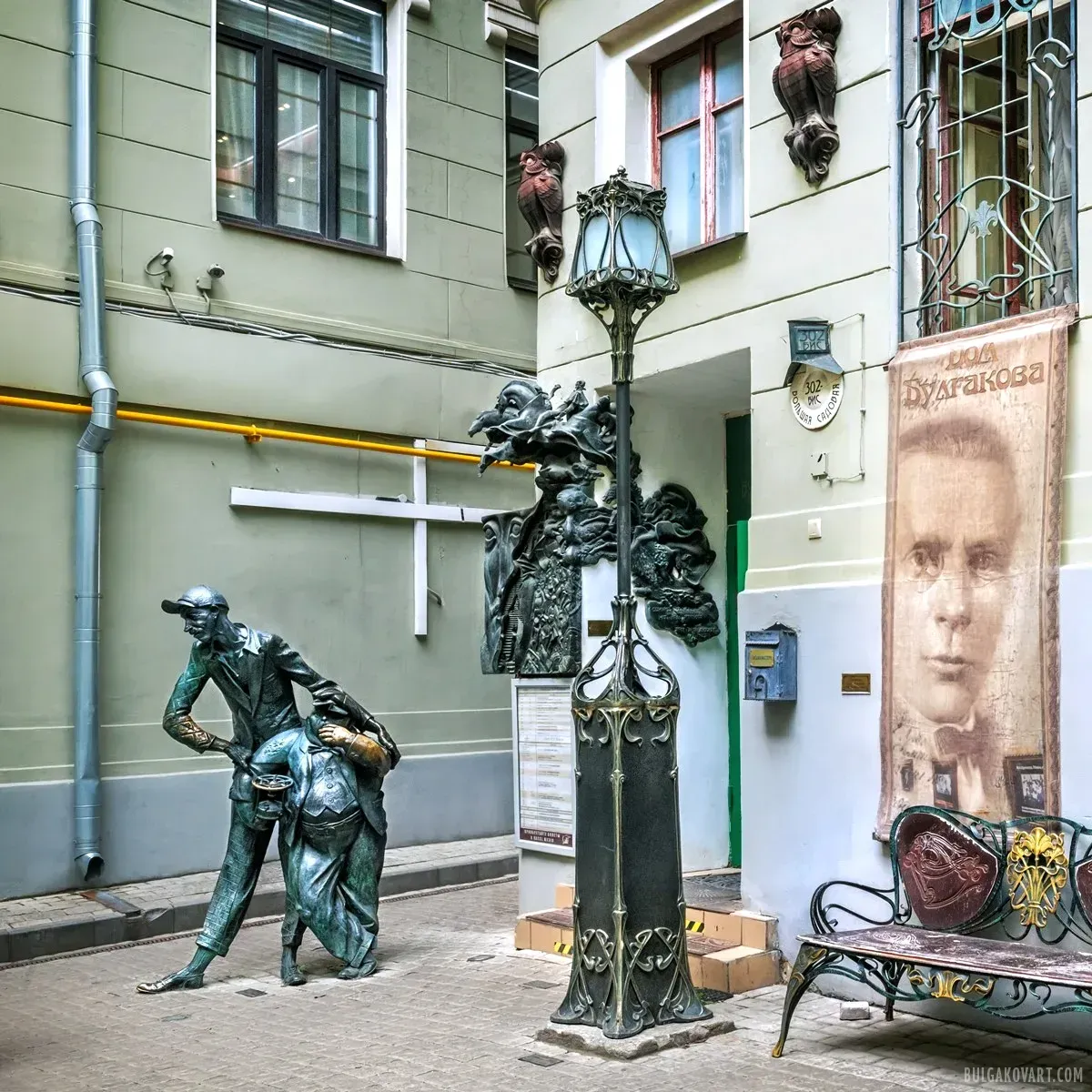
This sculpture, incidentally, was luckier than the others: it did in the end find its place in Moscow—it was installed in the courtyard of the Bulgakov museum at Sadovaya 10.
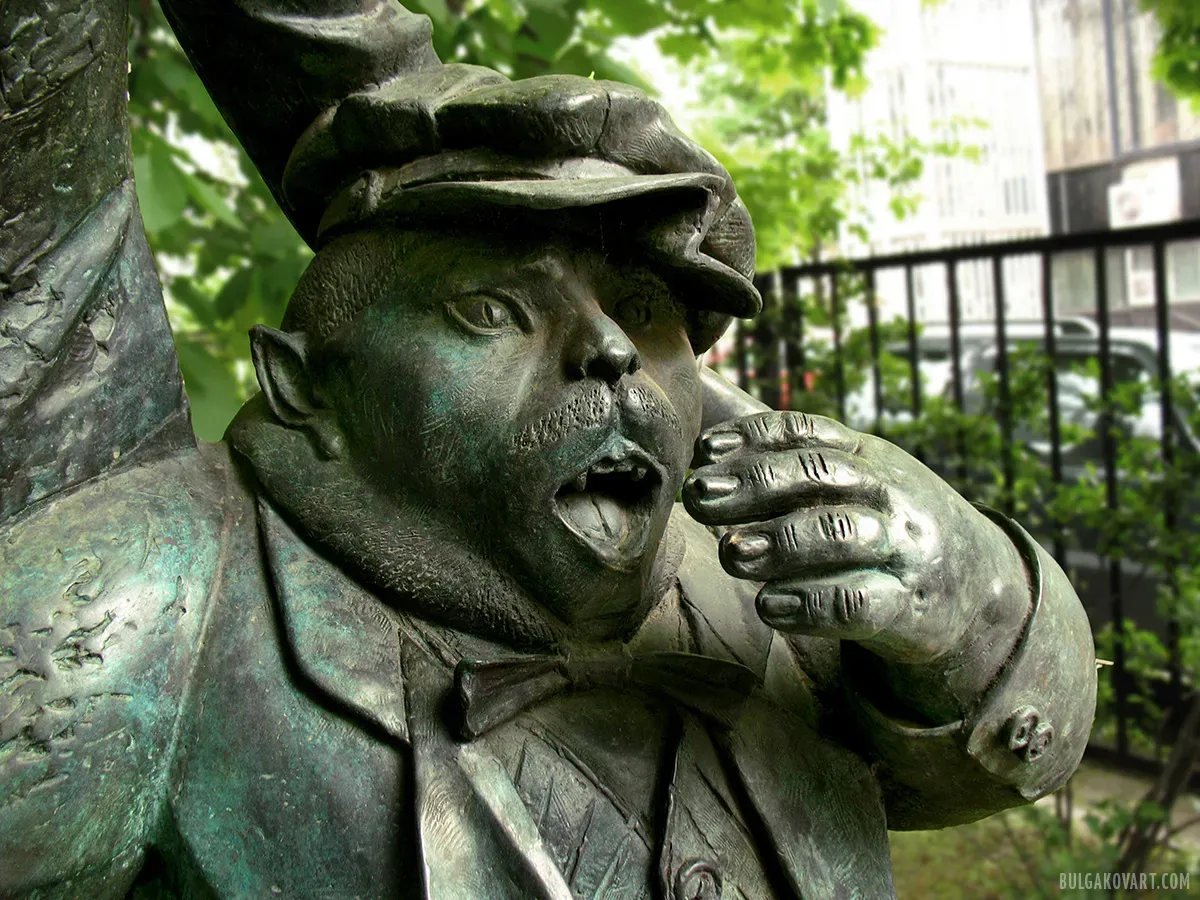
As the polished bronze shows, museum guests photograph themselves to the fullest with their favorite heroes, grabbing Fagott under the invitingly extended elbow. It seems the sculptor counted on this and fashioned the composition with intent: in the photographs it turns out that Fagott looks at yet another uninventive visitor with open mockery, while Behemoth has turned away and is yawning.
His mug, by the way, really is catlike.
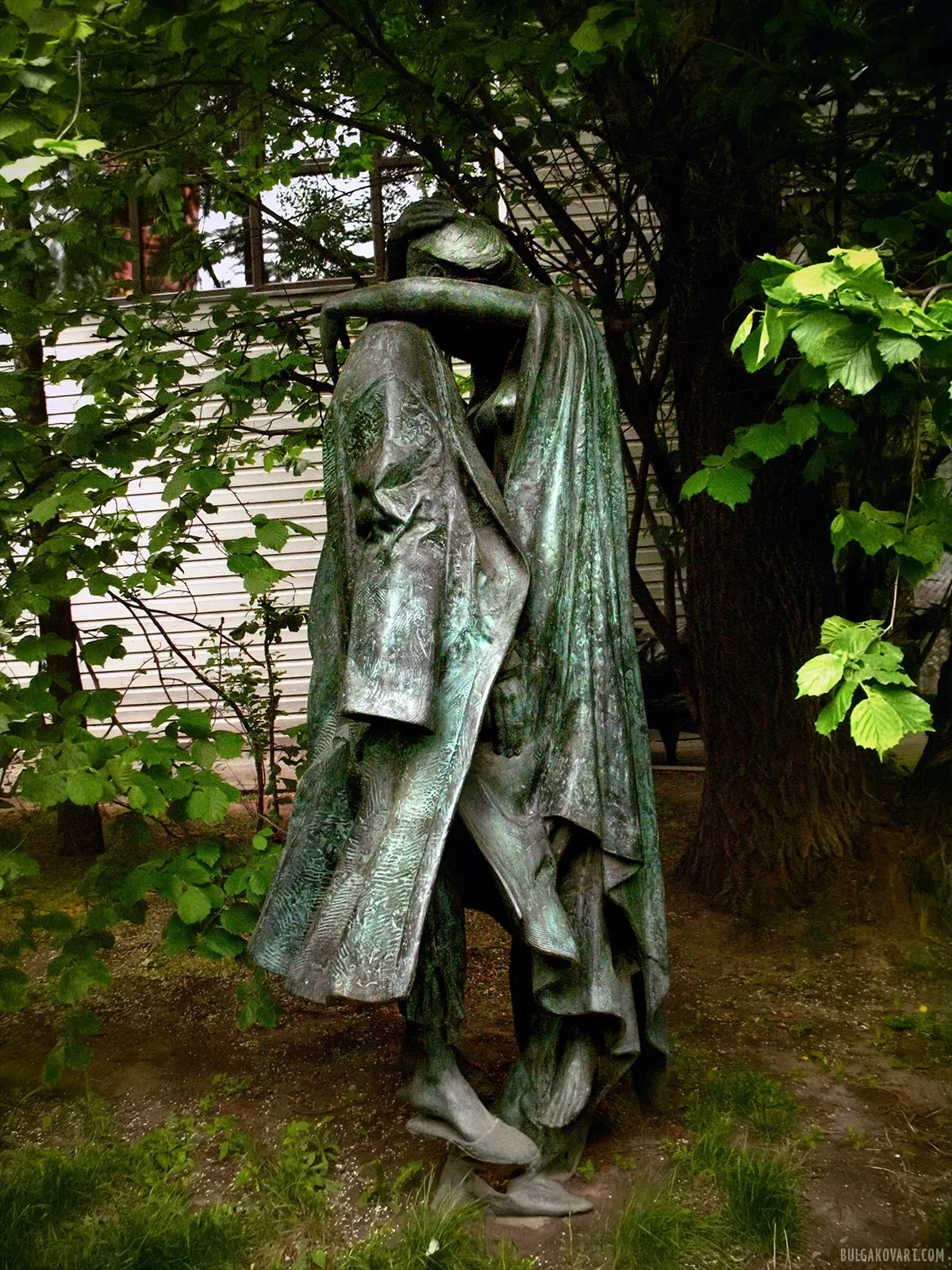
The titular pair was less fortunate: they stand in the yard of the workshop surrounded by lush greenery, and so photographing them from behind the fence is difficult. Thanks to a happy coincidence I managed to get inside, so from all sides I was able to examine the Master, clad in hospital pajamas, and Margarita in a cloak thrown over her naked body, frozen in an eternal embrace. Note their legs: the lovers float in the air without touching the ground. It seems to me this is one of the best artistic embodiments of the titular pair I have ever seen.
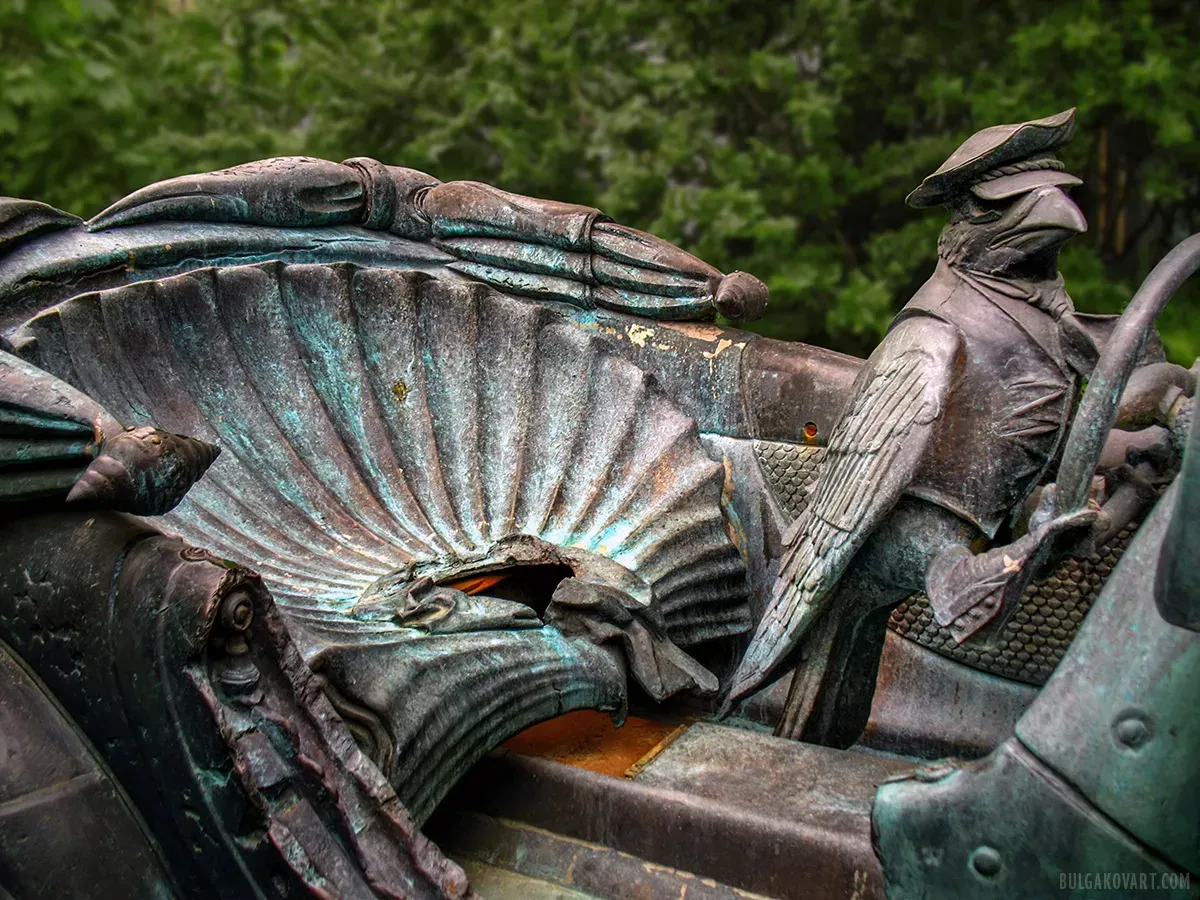
Most fascinating of all was examining the enormous automobile that brought Margarita to the Spring Ball of the Full Moon.
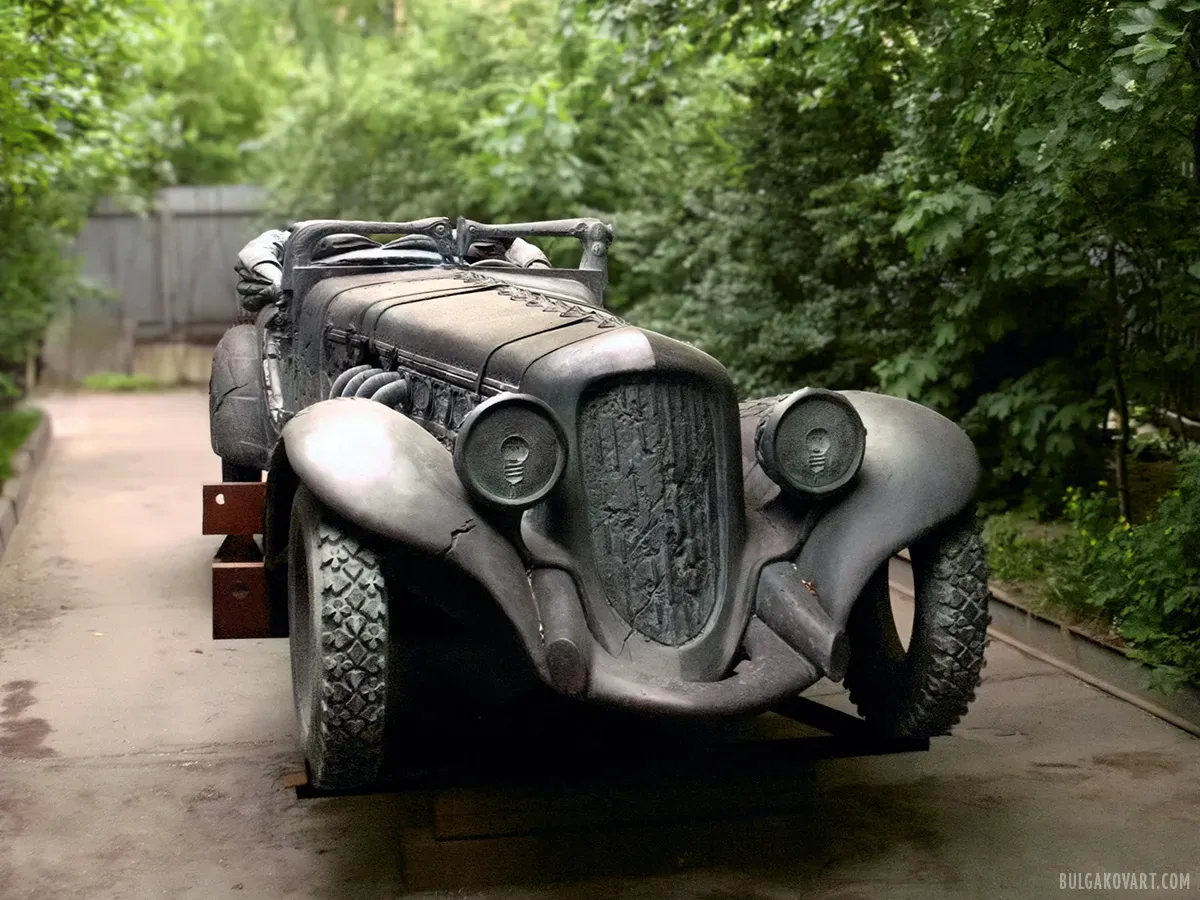
You can look at the automobile for hours, it seems, studying every trifle and every detail born of the sculptor’s imagination.
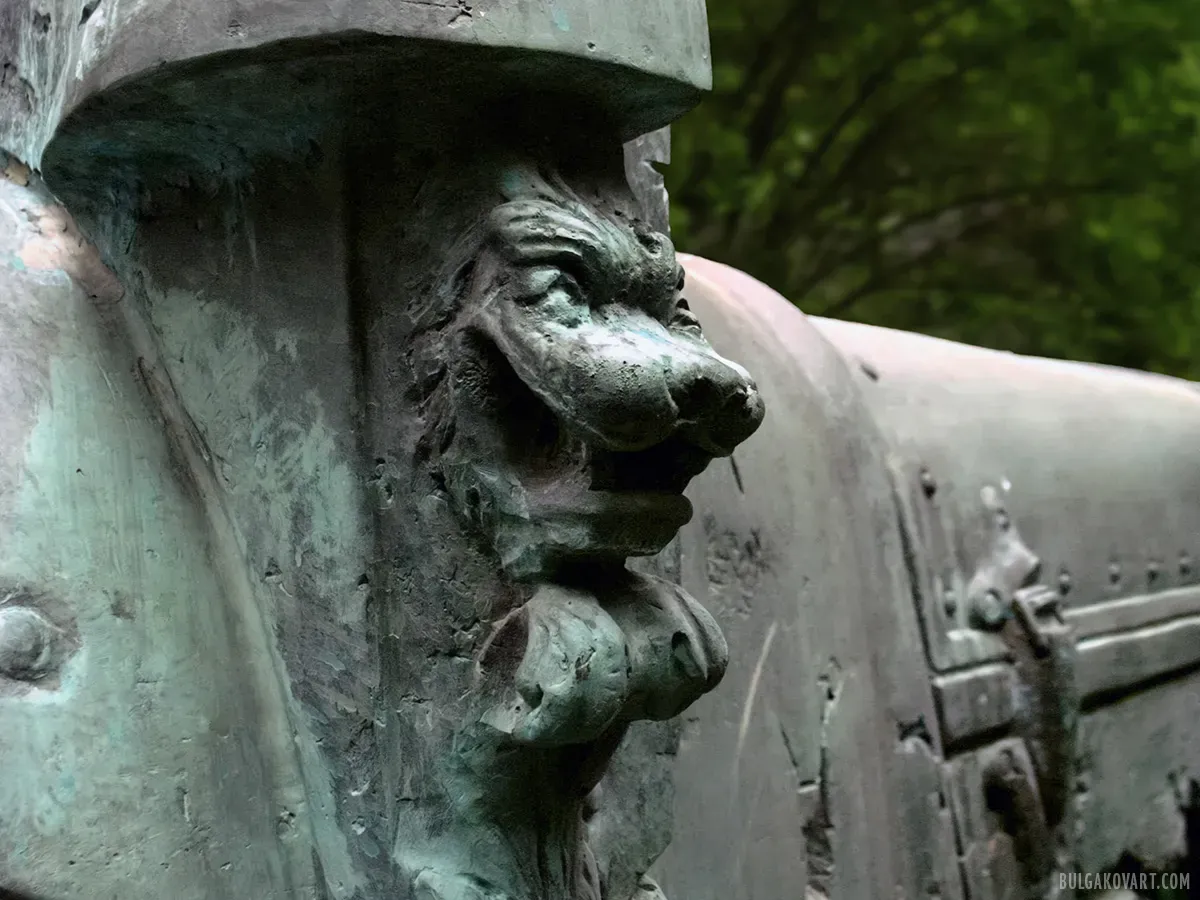
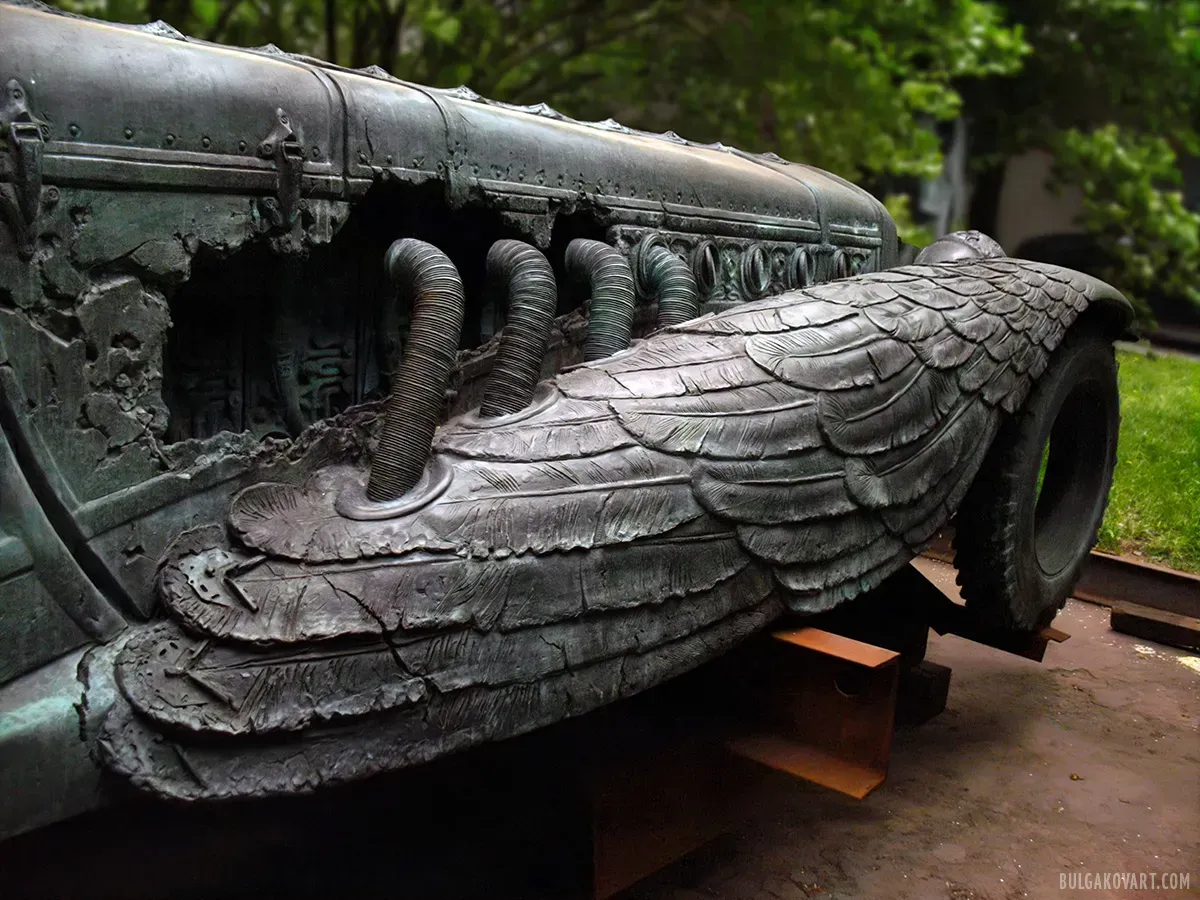
The fender over the wheel of the flying car is a wing.
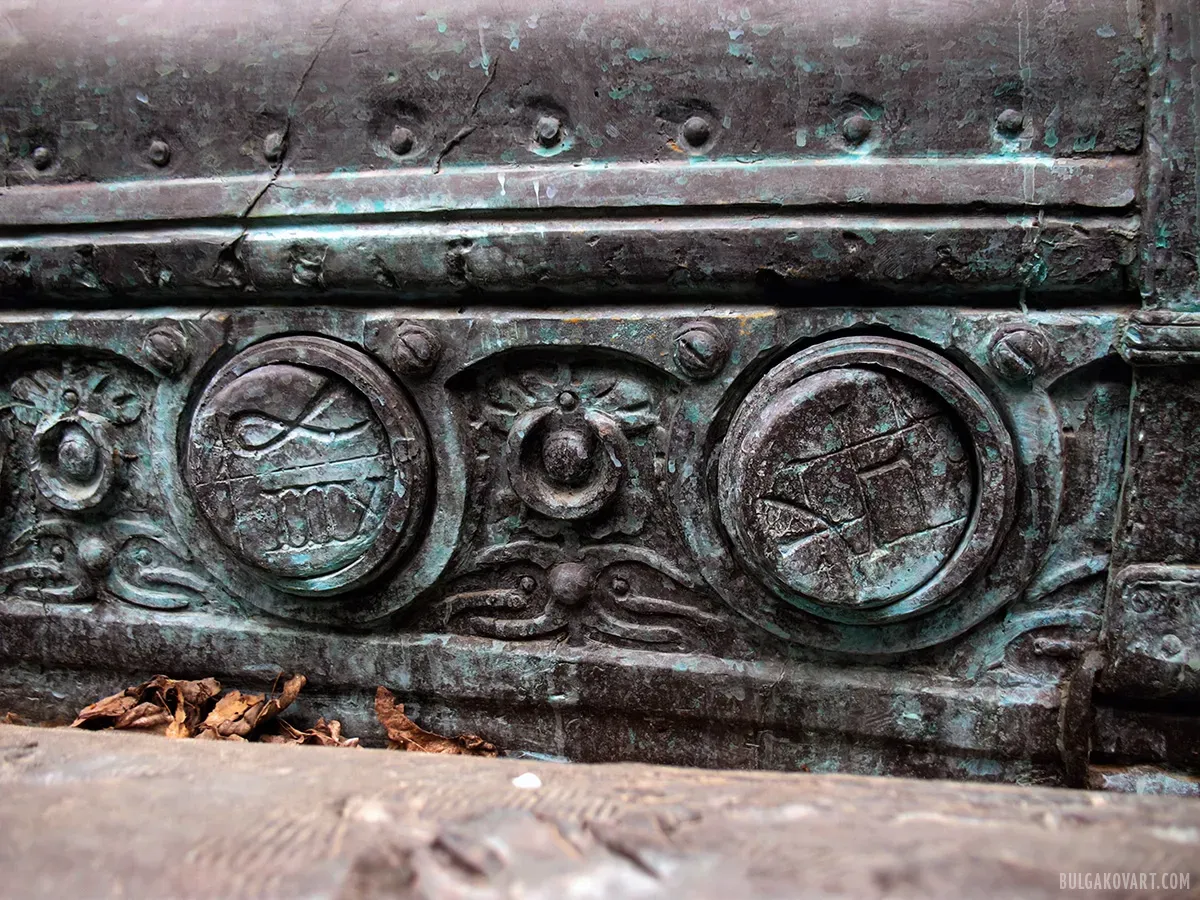
The automobile is entirely covered with some sort of cabalistic symbols.
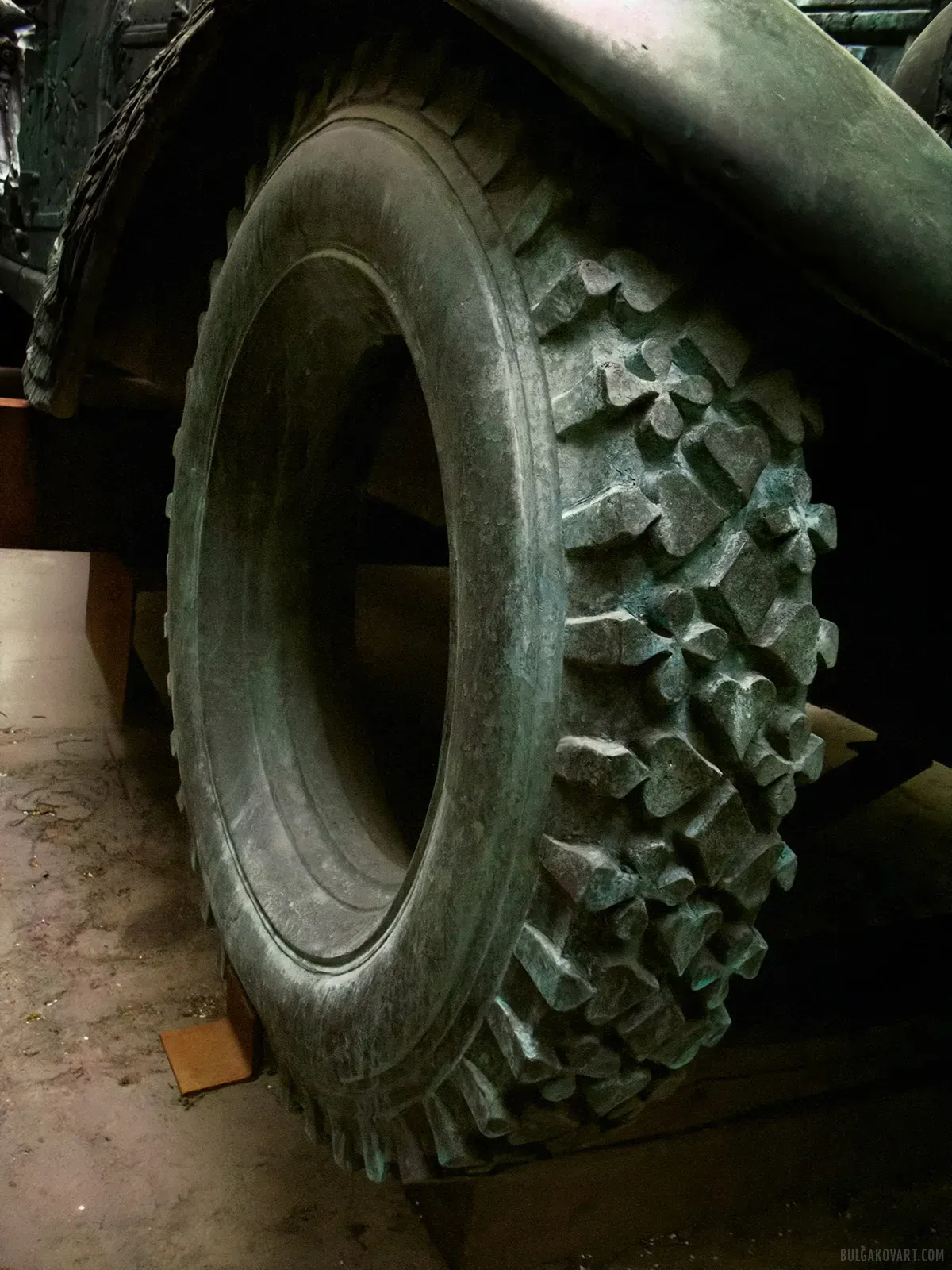
And just look at the marvelous tires of the magic machine.
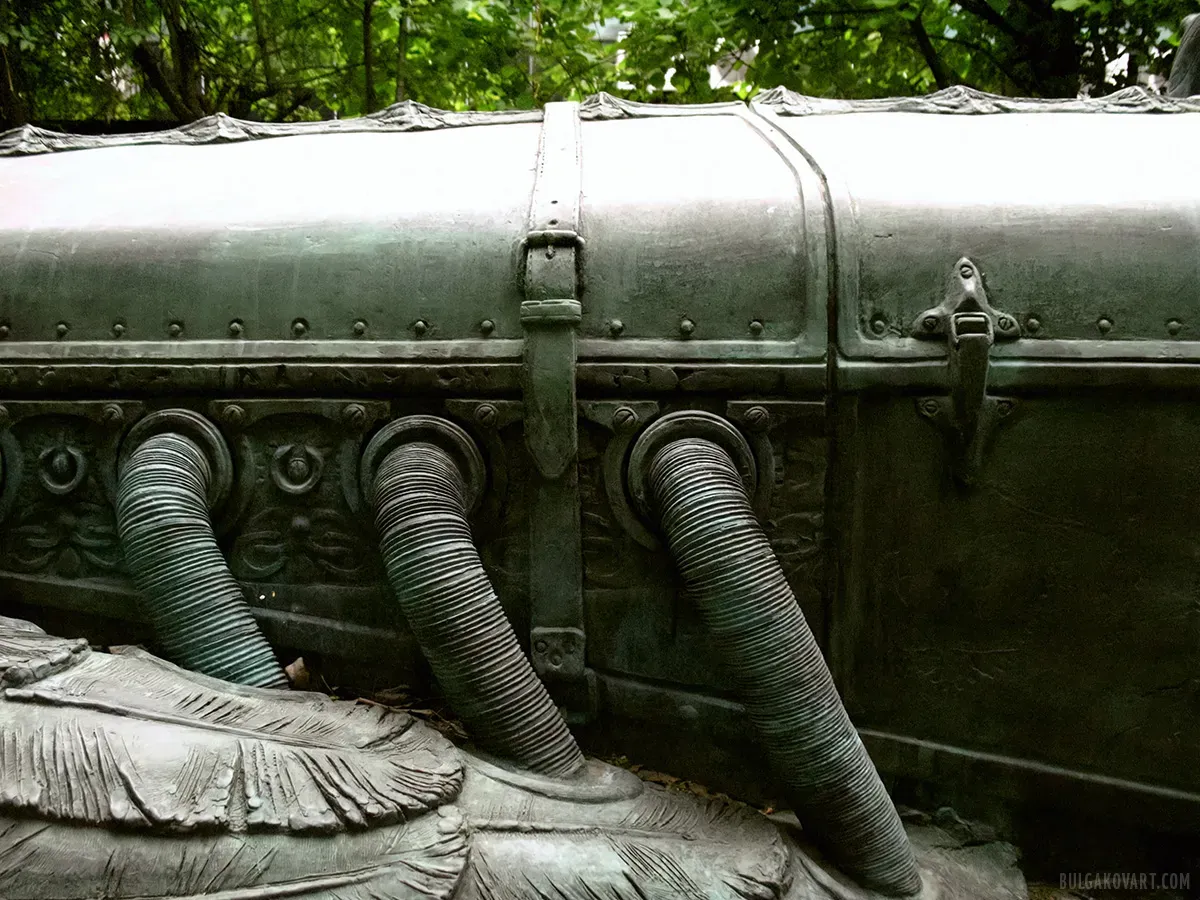
The car’s hood is strapped with a belt like a suitcase.
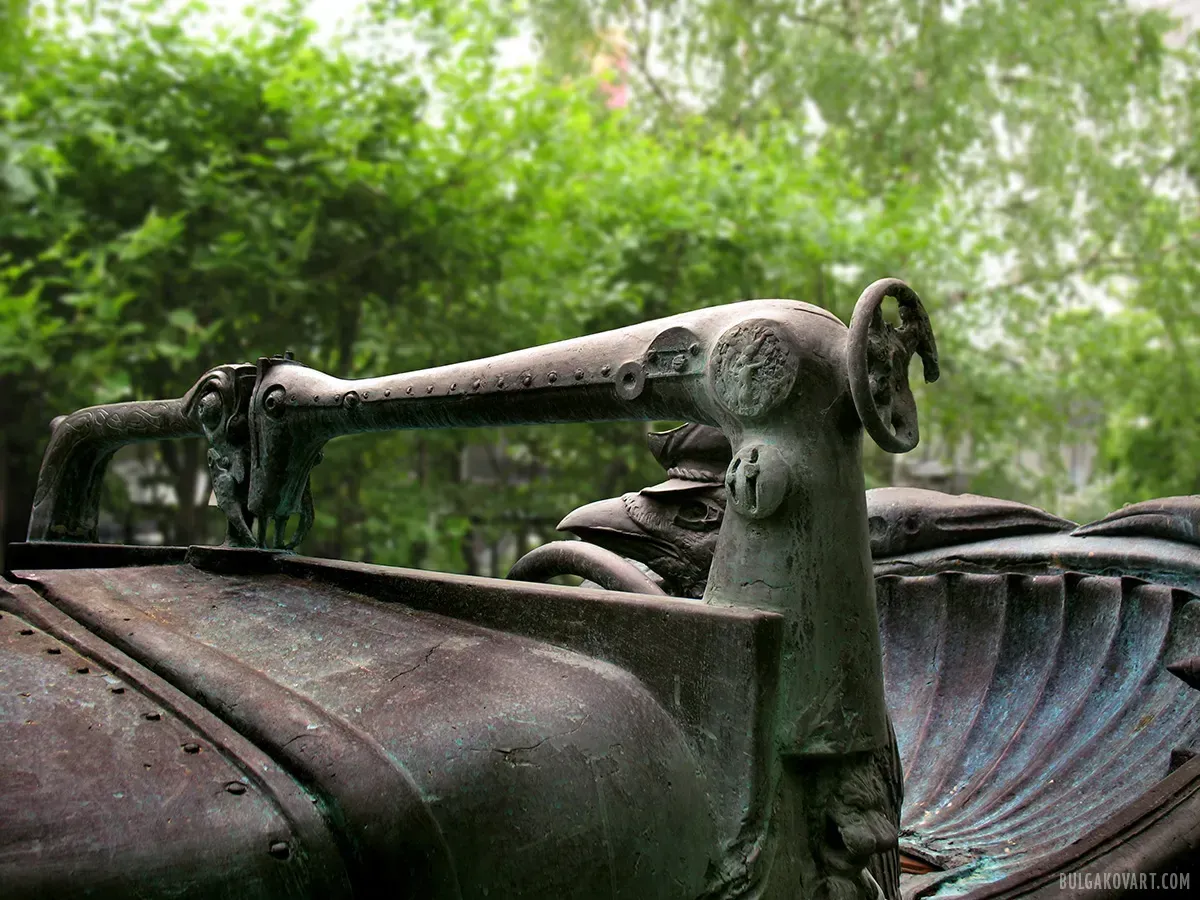
The windshield is framed by sewing machines.
The folded top of the cabriolet is framed by giant claws.
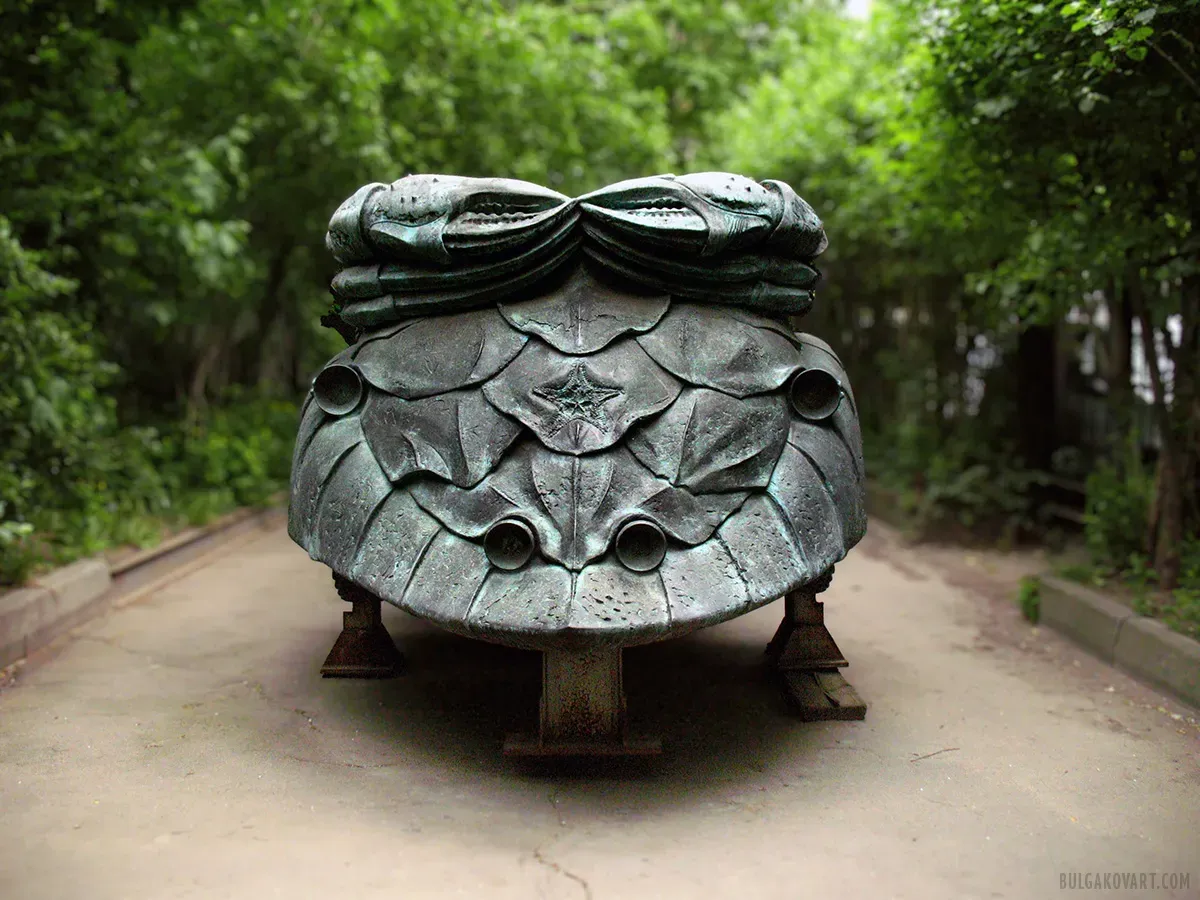
The car’s interior is finished with scales, and the passenger seat is a huge seashell.
And finally, the driver himself—a rook in a vest, tie, cap, and gloves with buttons.