 Andrey Nikolaevnikolaev-andrey.ru
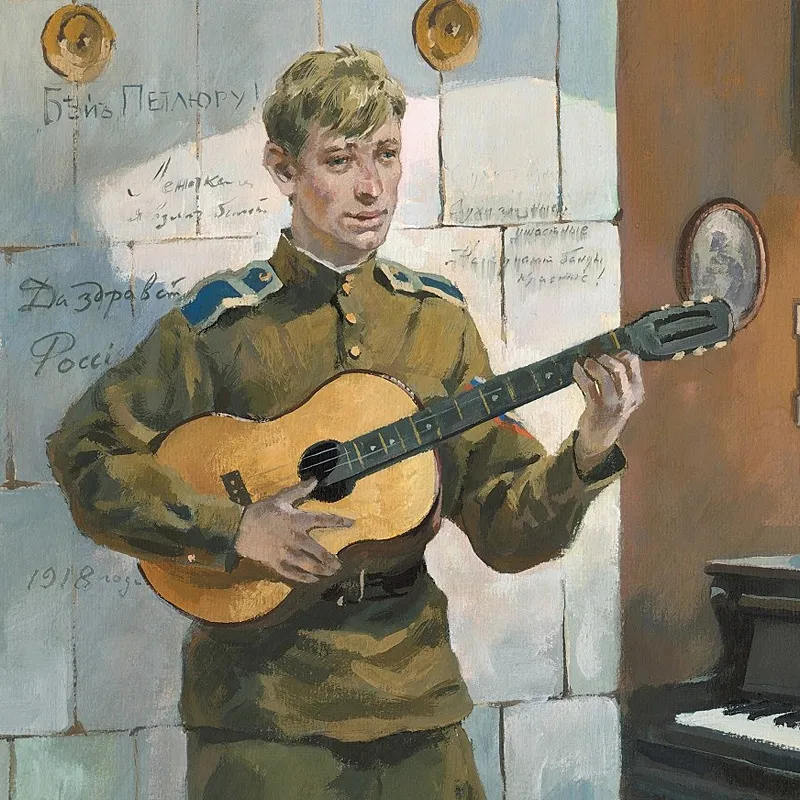
It is possible that we owe our ability to admire these works today to a former teacher from a finishing school for young ladies, whose name history has not preserved. But it was she who, in the early 1920s in a Moscow communal apartment, instilled in a neighbor's child—the future artist Andrei Nikolaev—a love for literature by reciting pages of Leo Tolstoy's War and Peace from memory. It was for this novel that the three-year-old boy made his first illustration.
At the very same time, in a completely different Moscow communal apartment, another great writer, Mikhail Bulgakov, was beginning his literary career. Time would pass, and Andrei Nikolaev would create magnificent illustrations for both his novel The White Guard and The Master and Margarita.
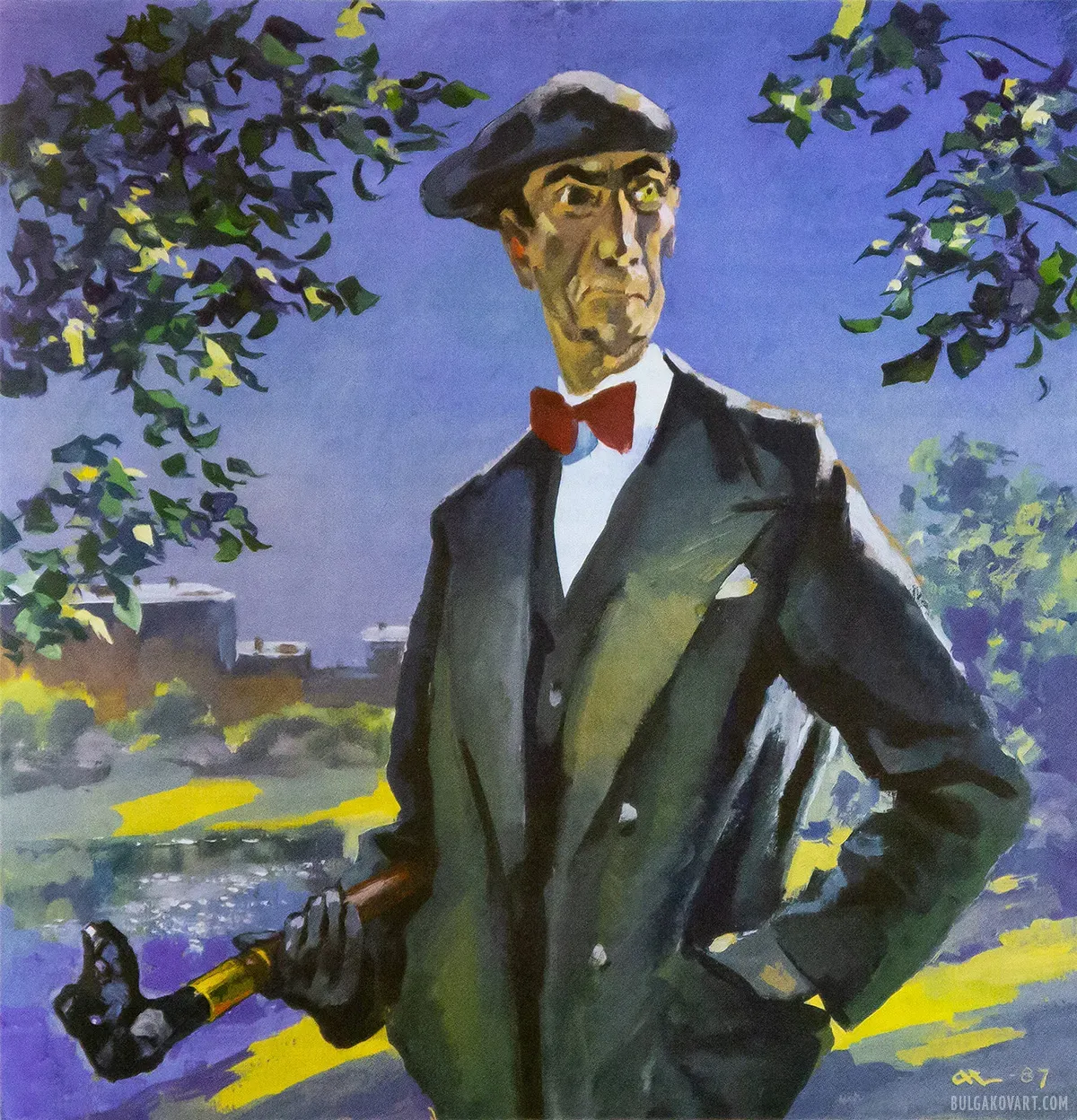
A suspicious foreigner with an asymmetrical face appears at Patriarch's Ponds (asymmetry is a traditional distinguishing feature of the devil in folklore) with a cane topped by a poodle's head (the poodle is taken not from folklore, but from Goethe's Faust—Mephistopheles first appears in the form of a black poodle)
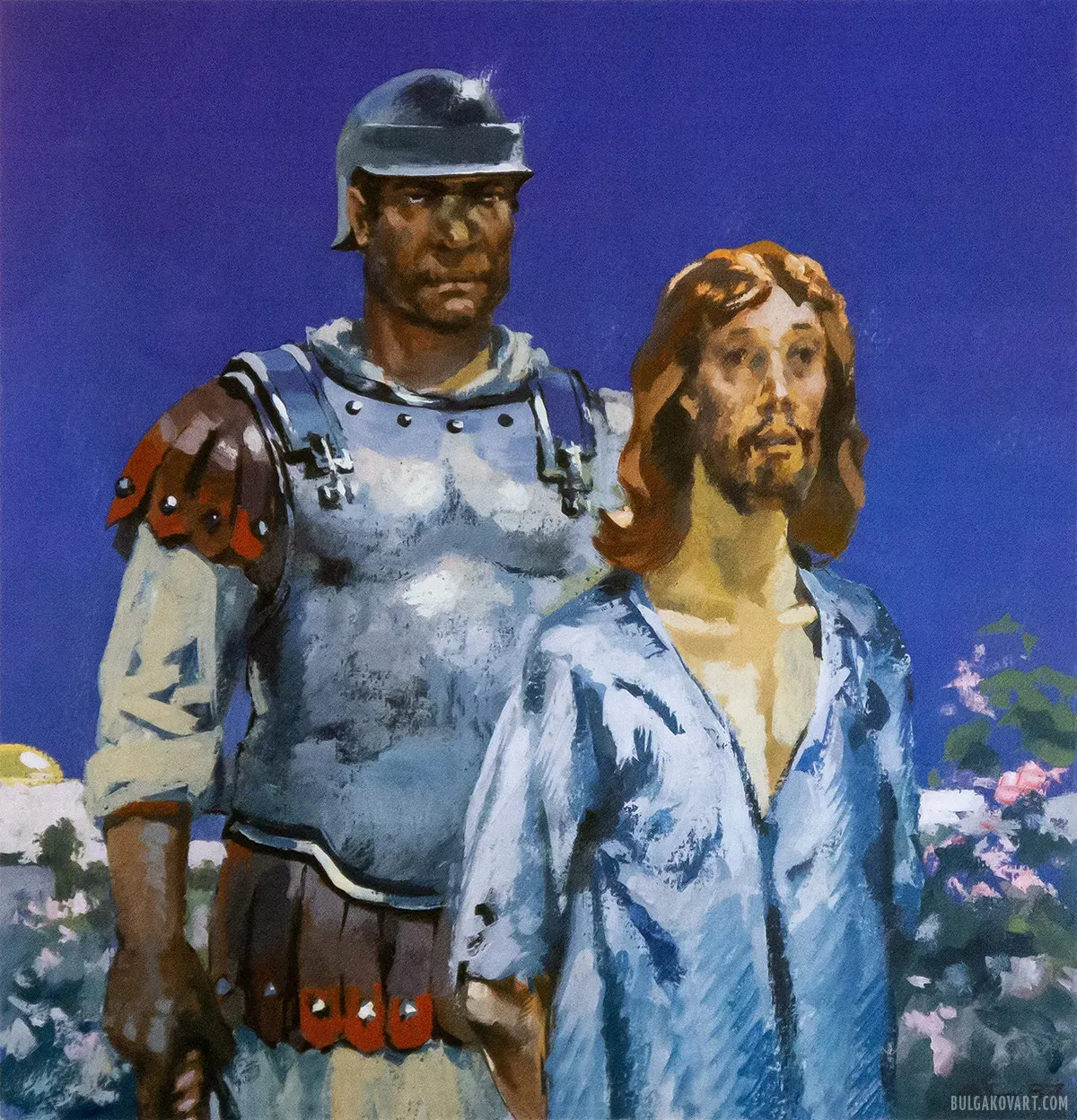
Mark Ratslyer and the arrested itinerant preacher in a blue chiton
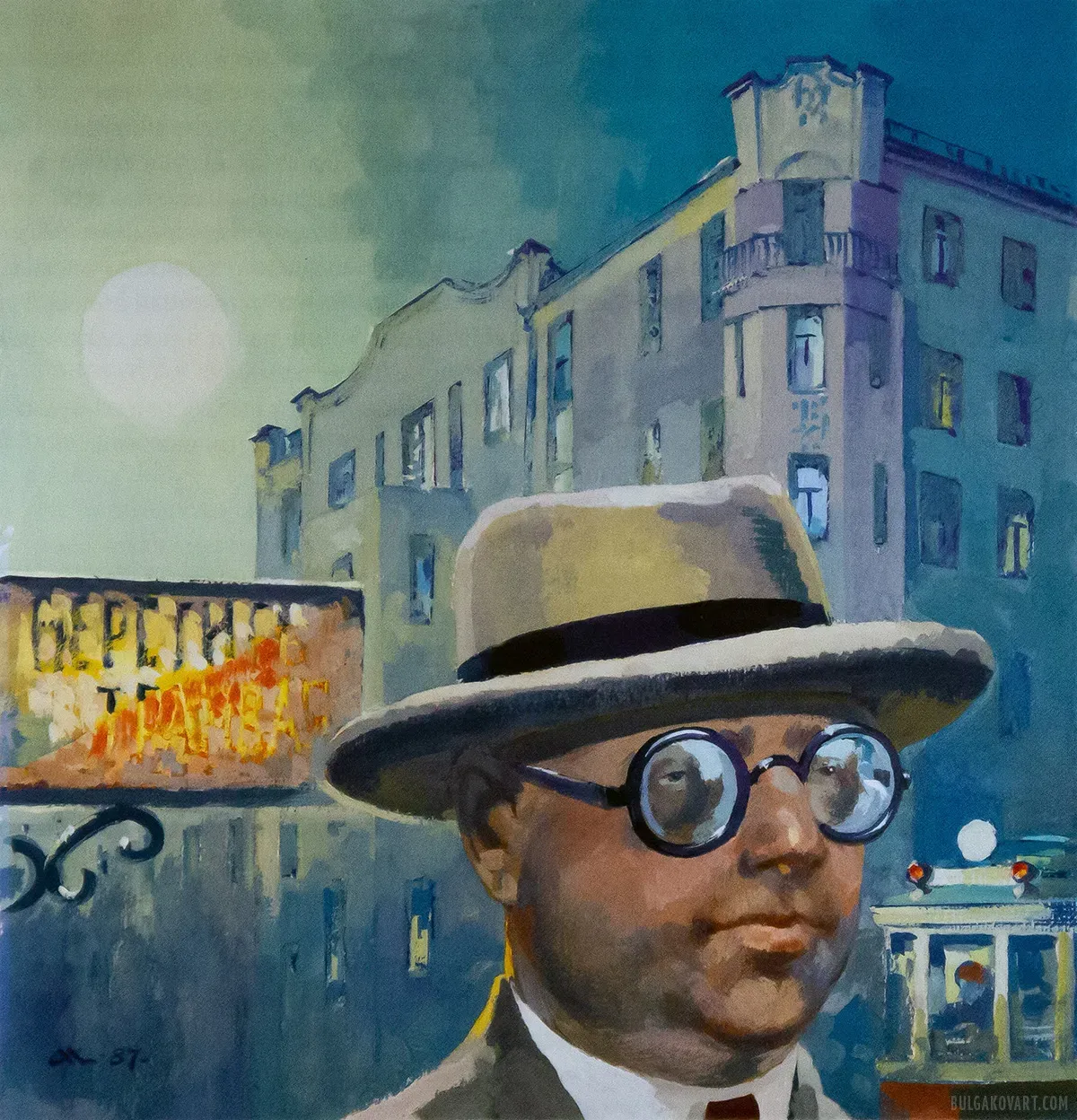
Berlioz and the Beware of the tram sign. Oh, and here is the tram itself
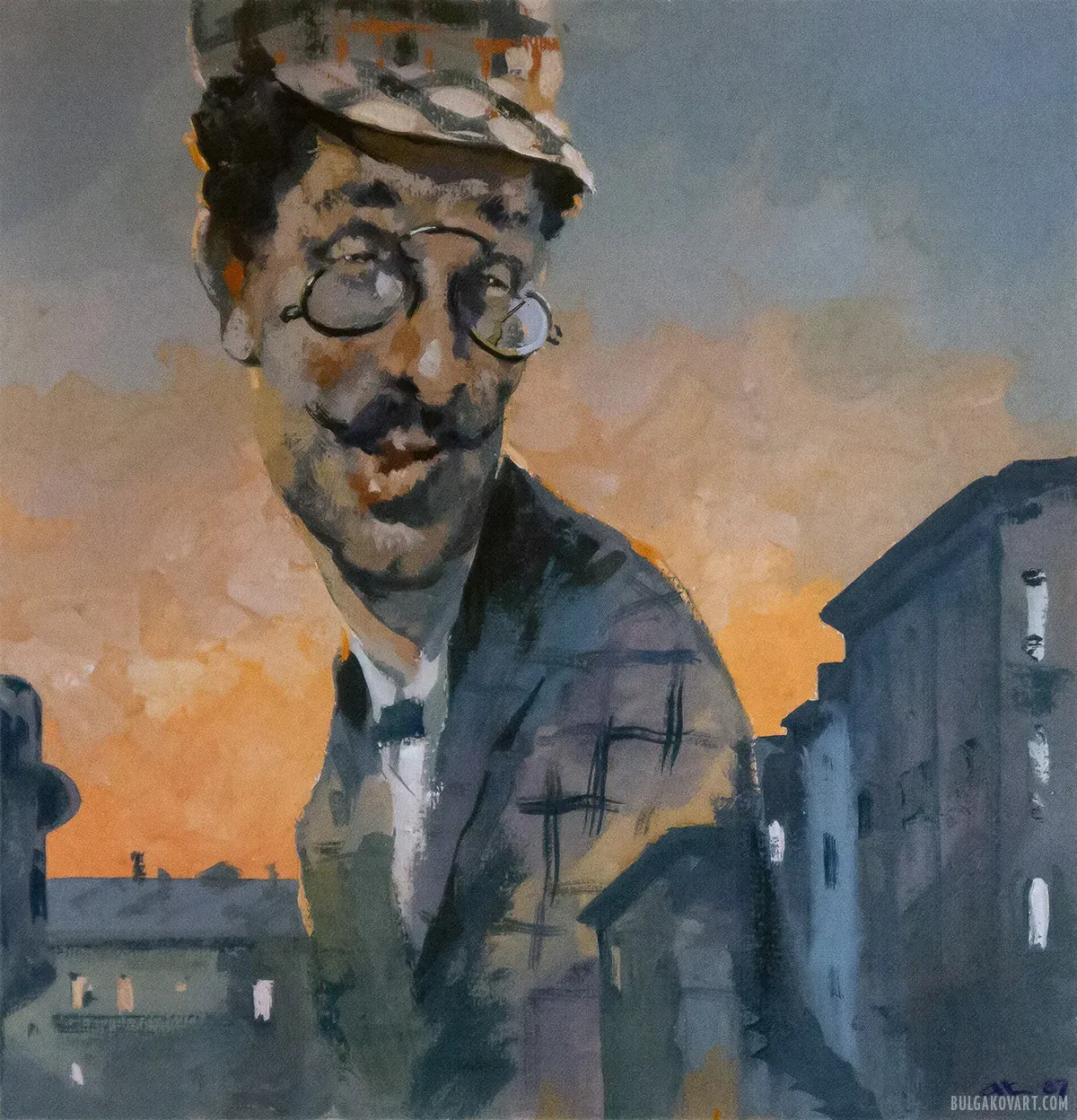
Koroviev in cracked pince-nez (asymmetry in appearance again)
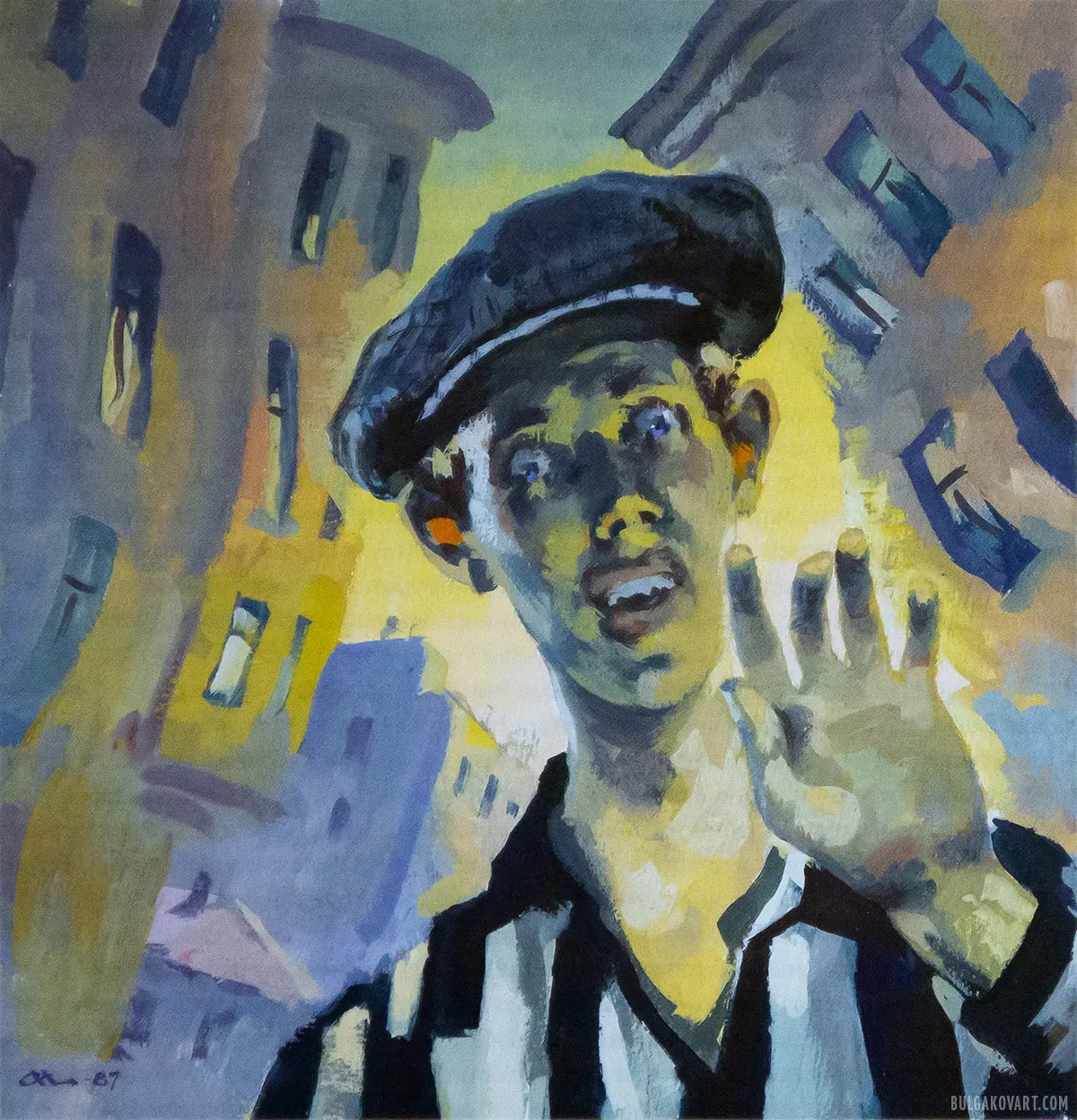
Ivan Homeless is slightly shocked by what's happening
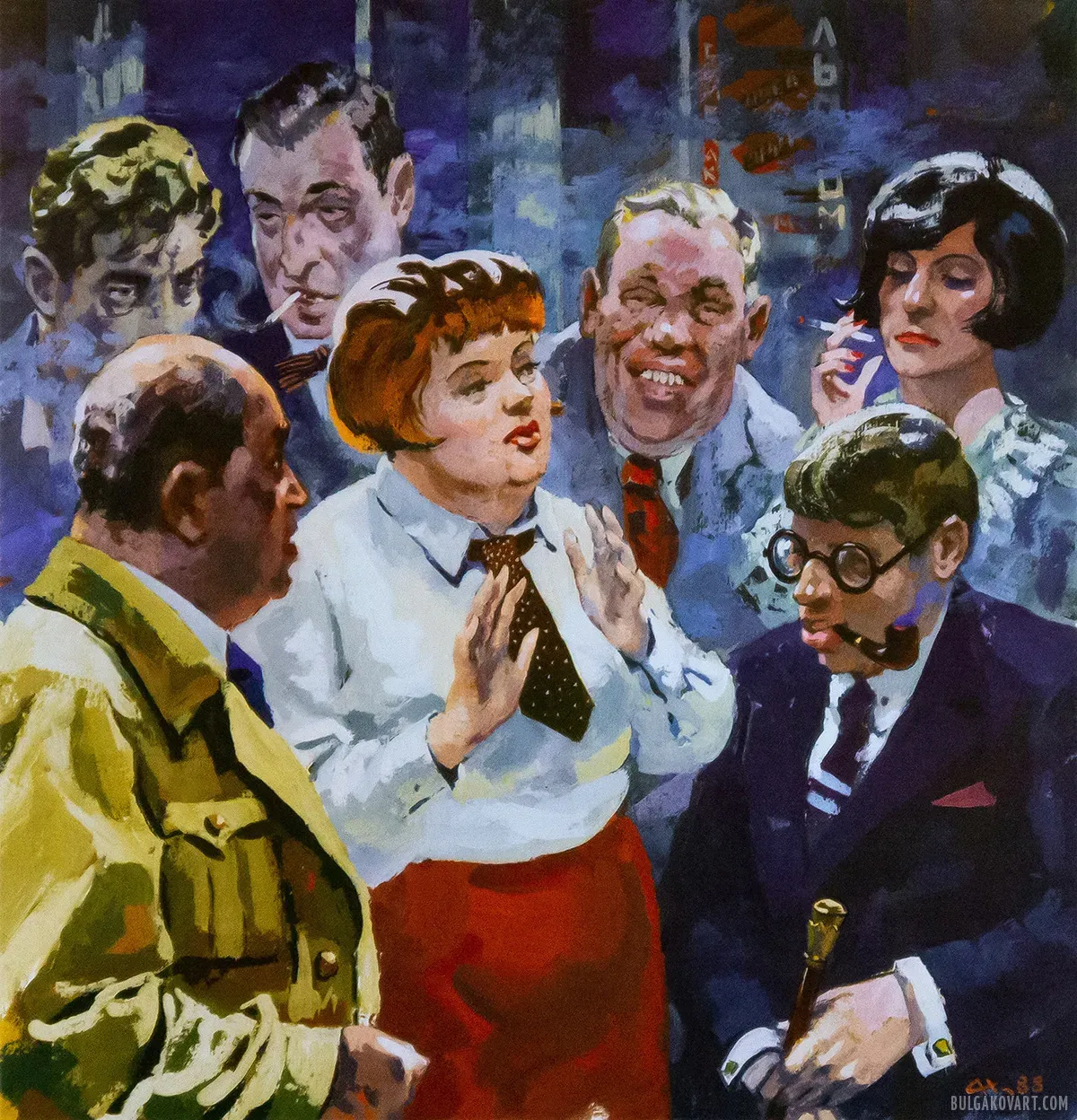
Soviet writers in MASSOLIT. One can try to guess their prototypes from their appearances
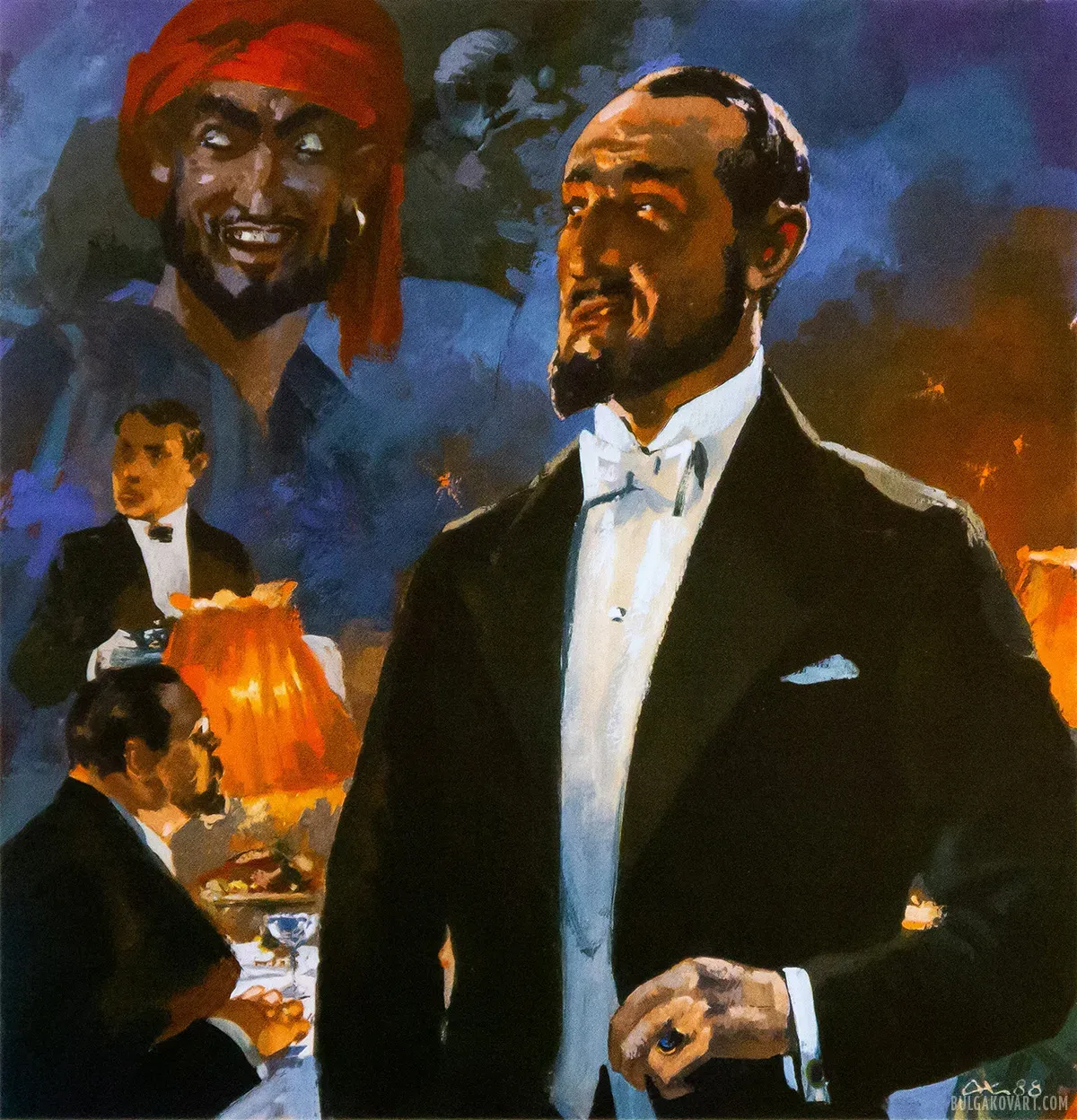
The pirate-like restaurant director Archibald Archibaldovich (he also had a prototype—Yakov Rozental, whose features can be found in this portrait)
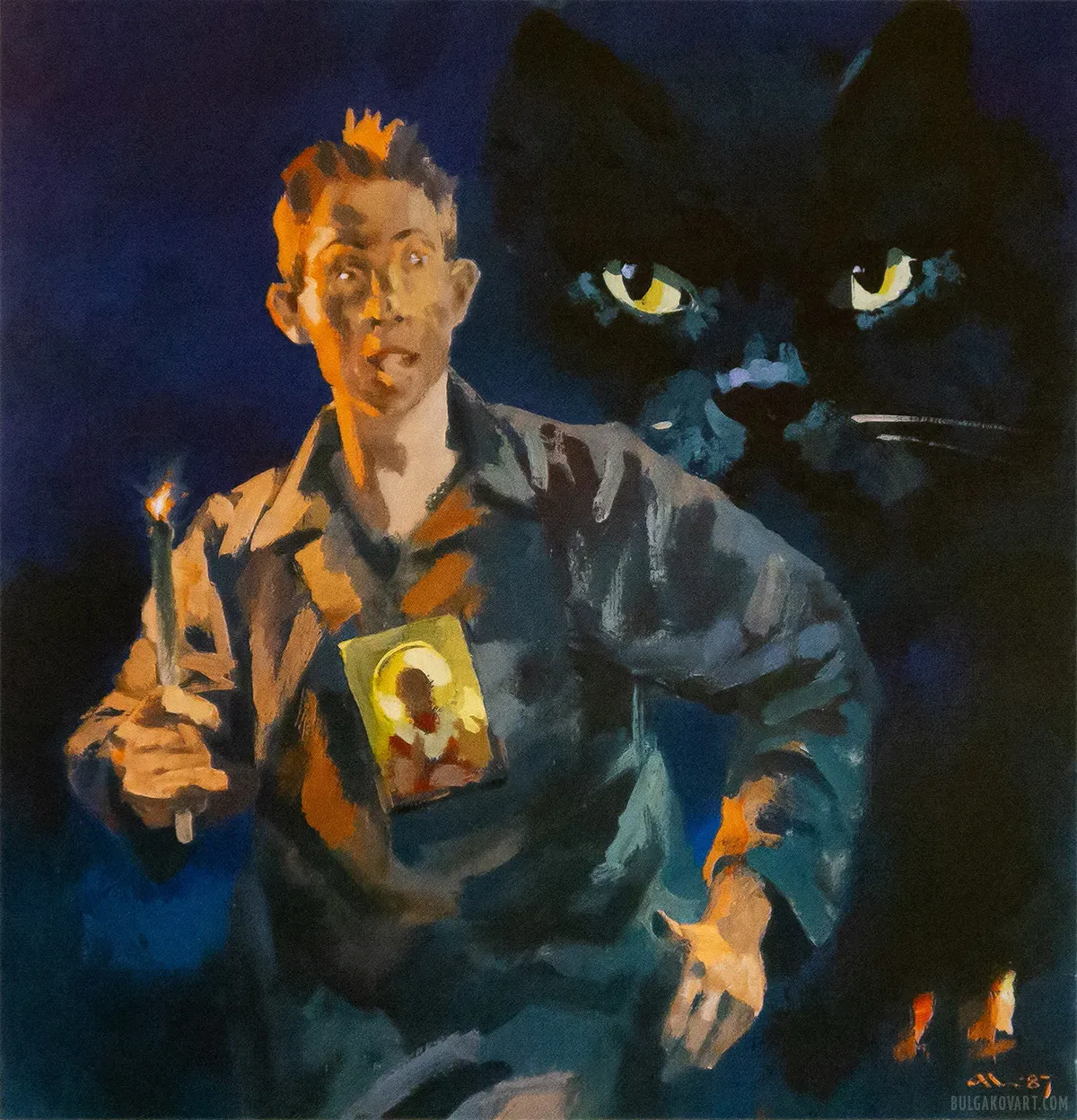
Ivanushka with a candle and an icon runs to catch the consultant
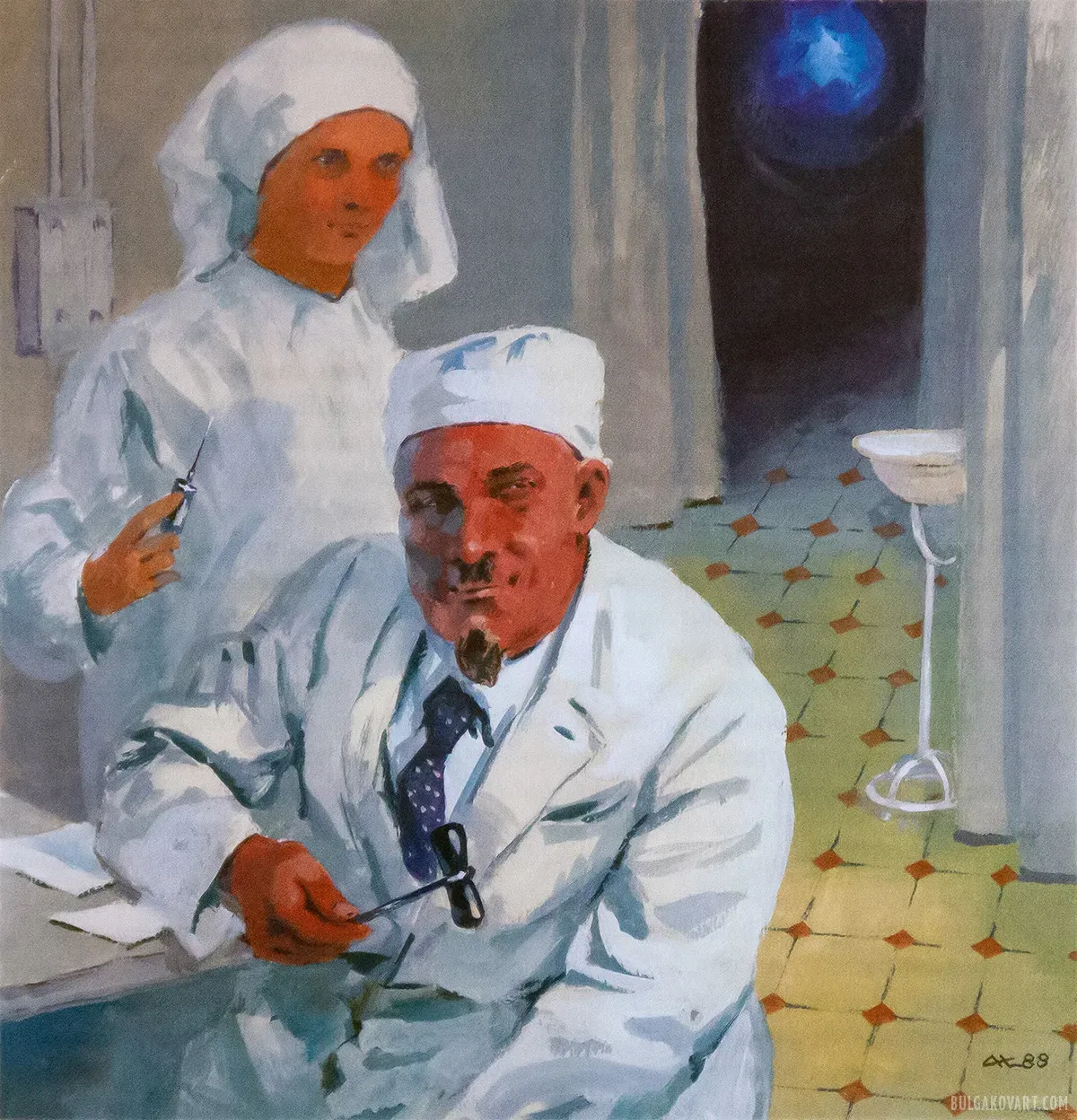
Dr. Stravinsky's clinic
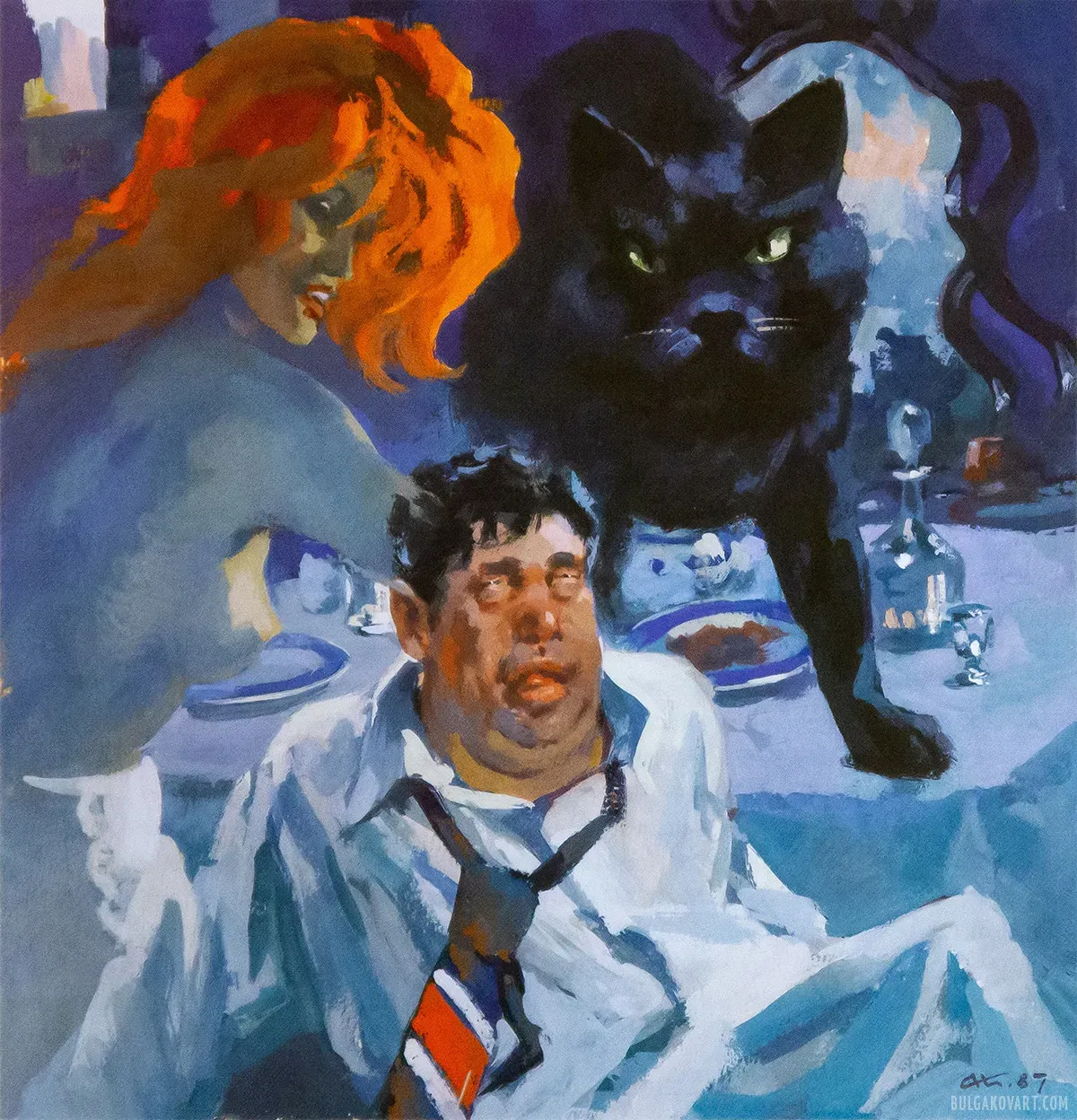
Styopa Likhodeyev wakes up with a hangover, and this is what he finds
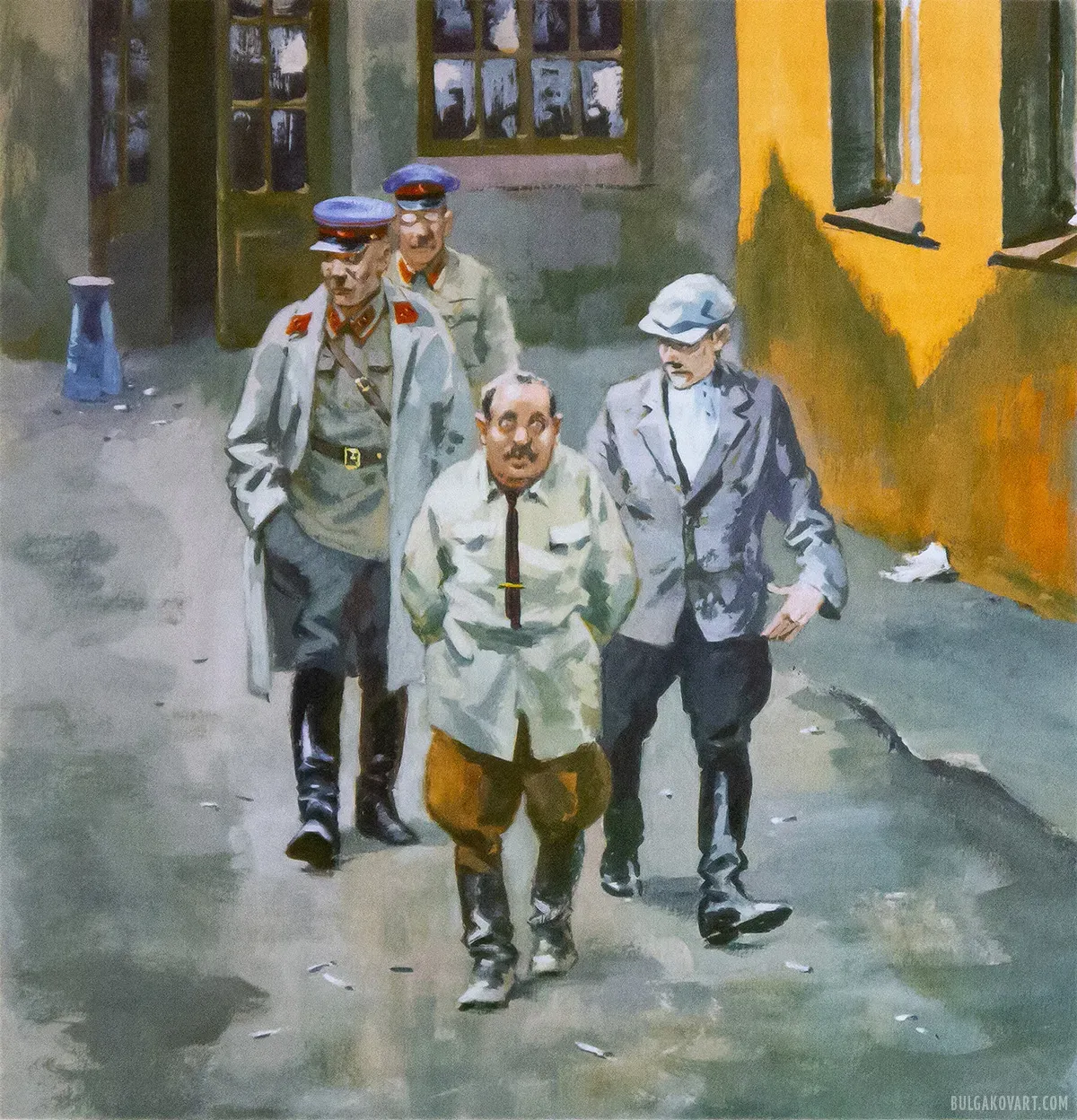
Nikanor Bosoy is arrested for hiding foreign currency in the ventilation
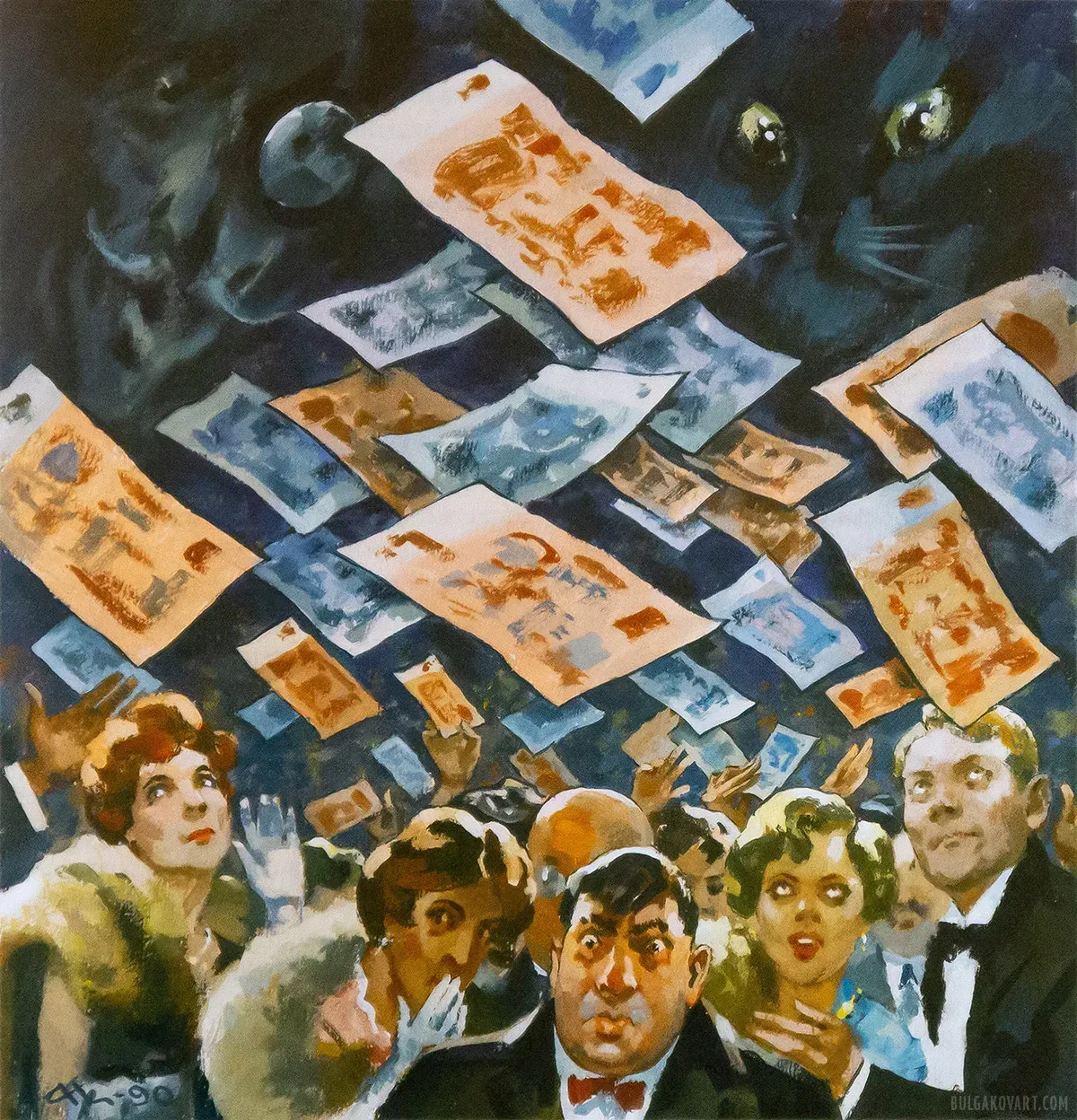
Ten-ruble banknotes fall from the Variety Theatre dome (for some reason, they are from the 1960s—apparently, when the artist created these illustrations, he no longer remembered that tеn-ruble notes from Bulgakov's time looked different)
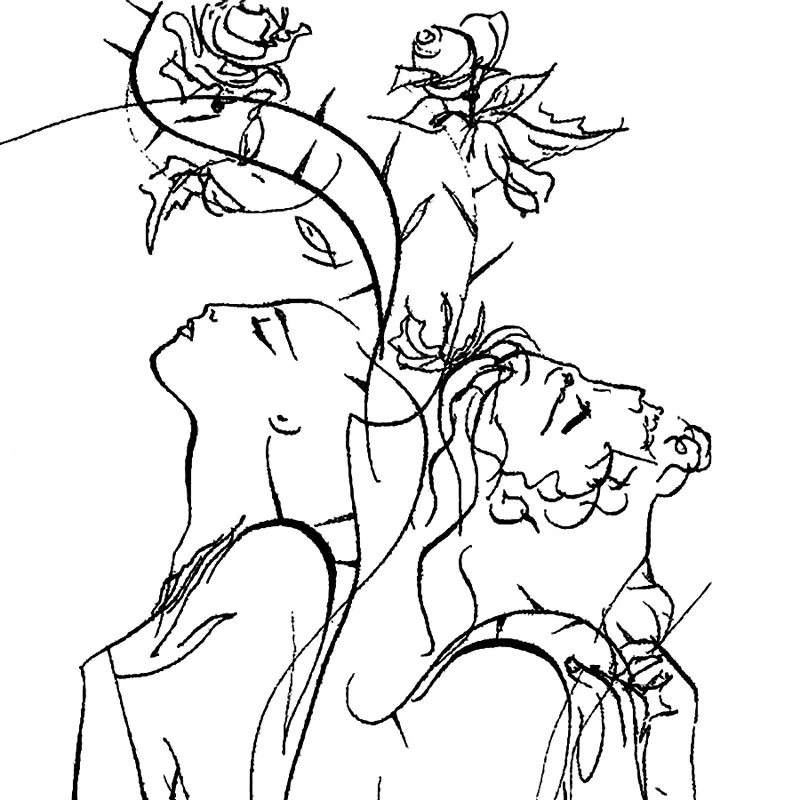
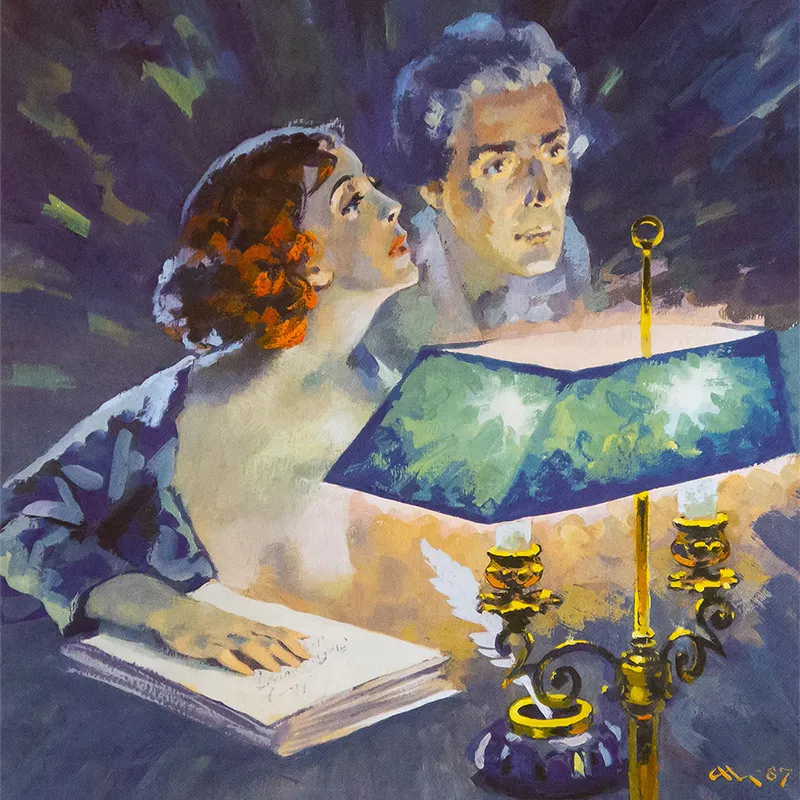
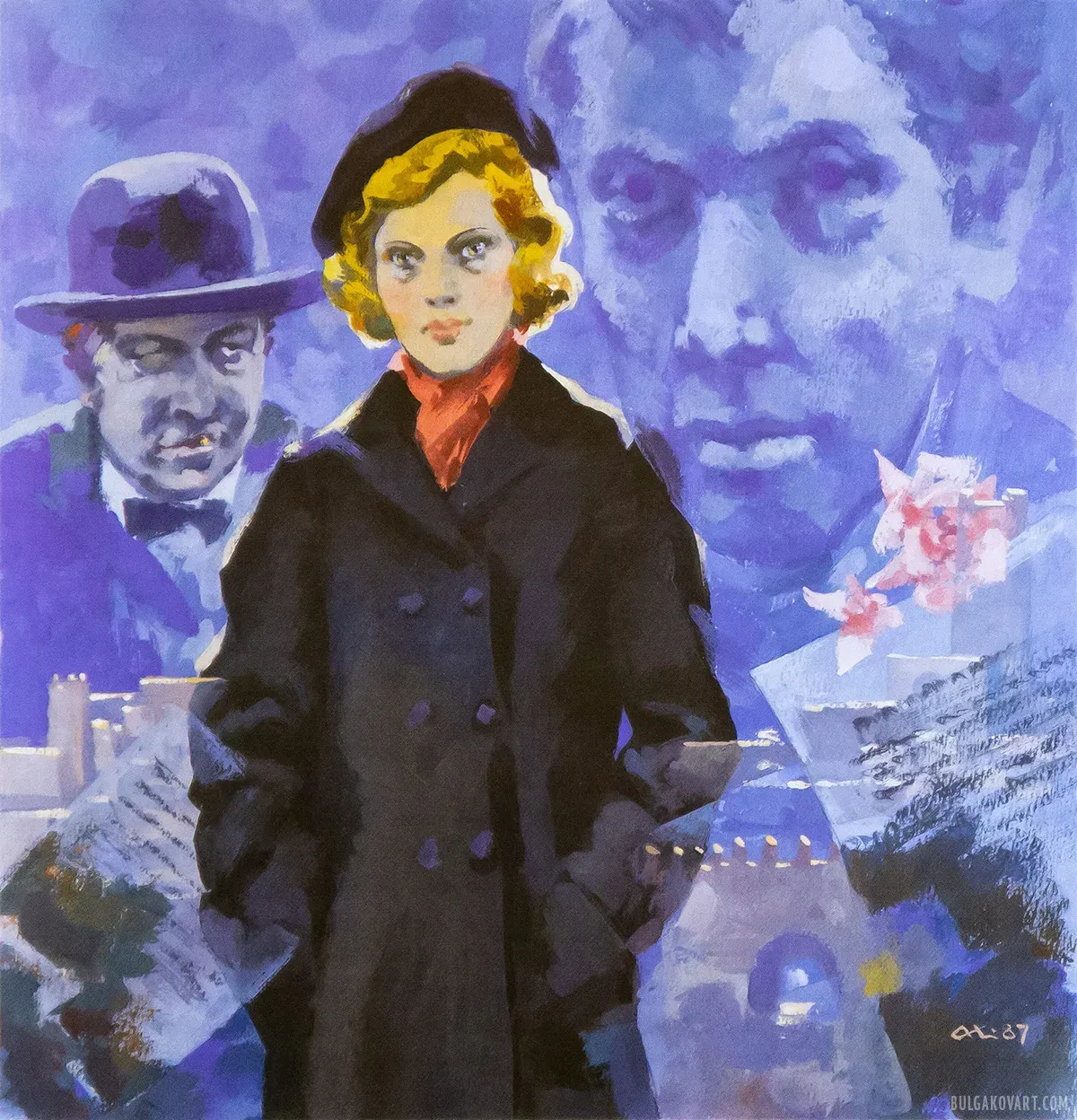
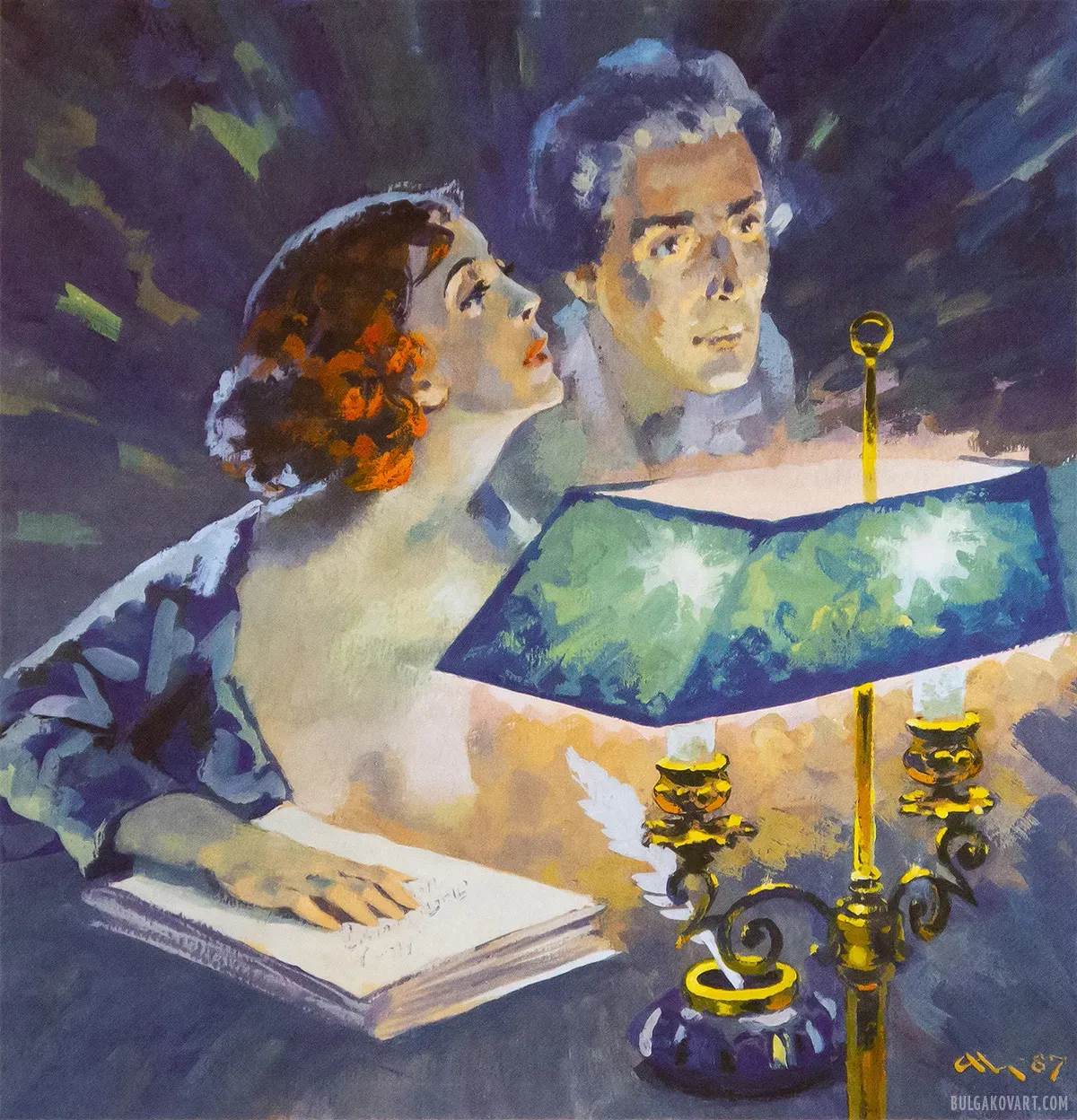
The Master remembers Margarita (since we are on the subject of prototypes, it is worth mentioning that Bulgakov himself had a similar black cap with an embroidered M—for the first letter of his name)
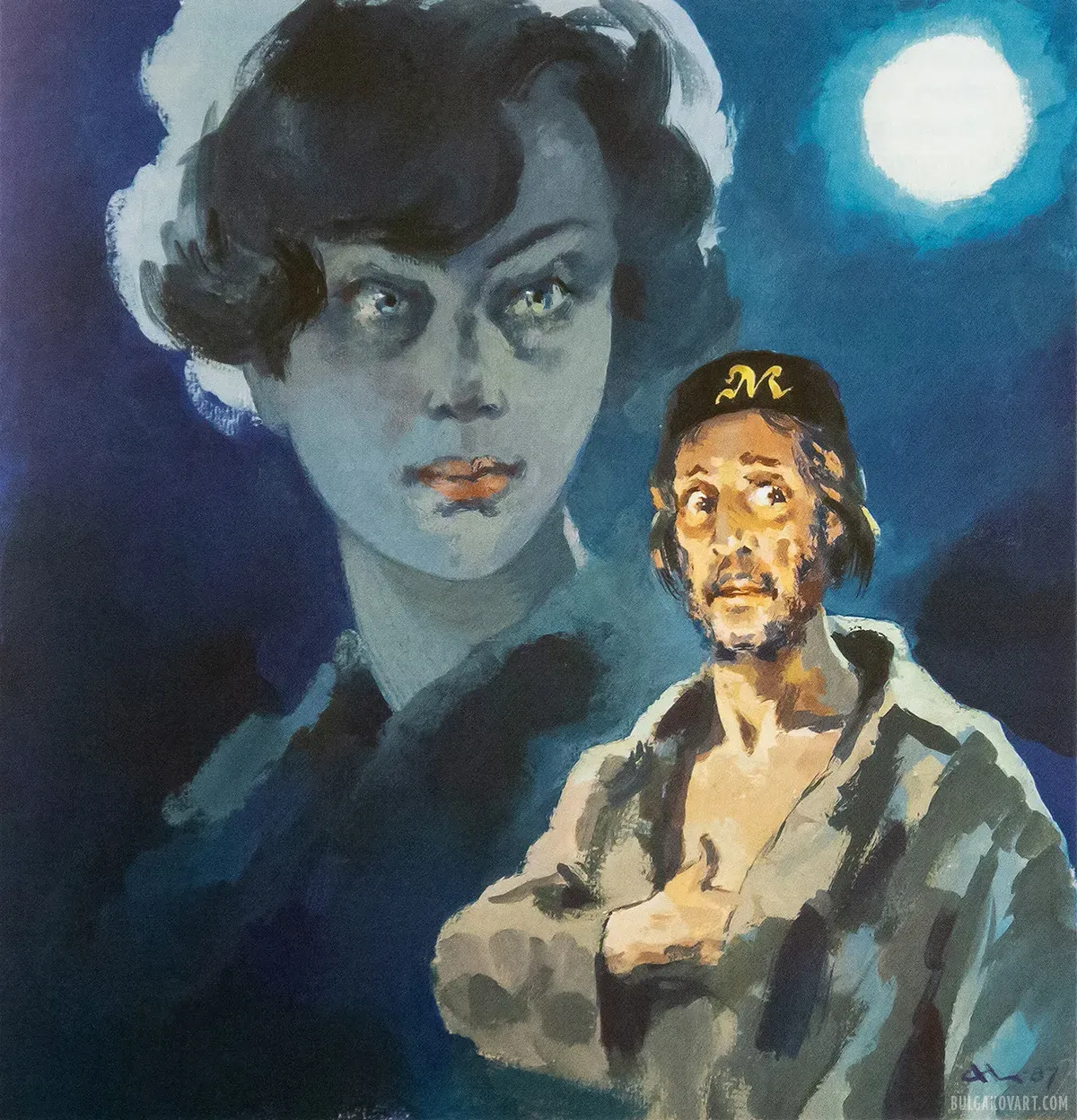
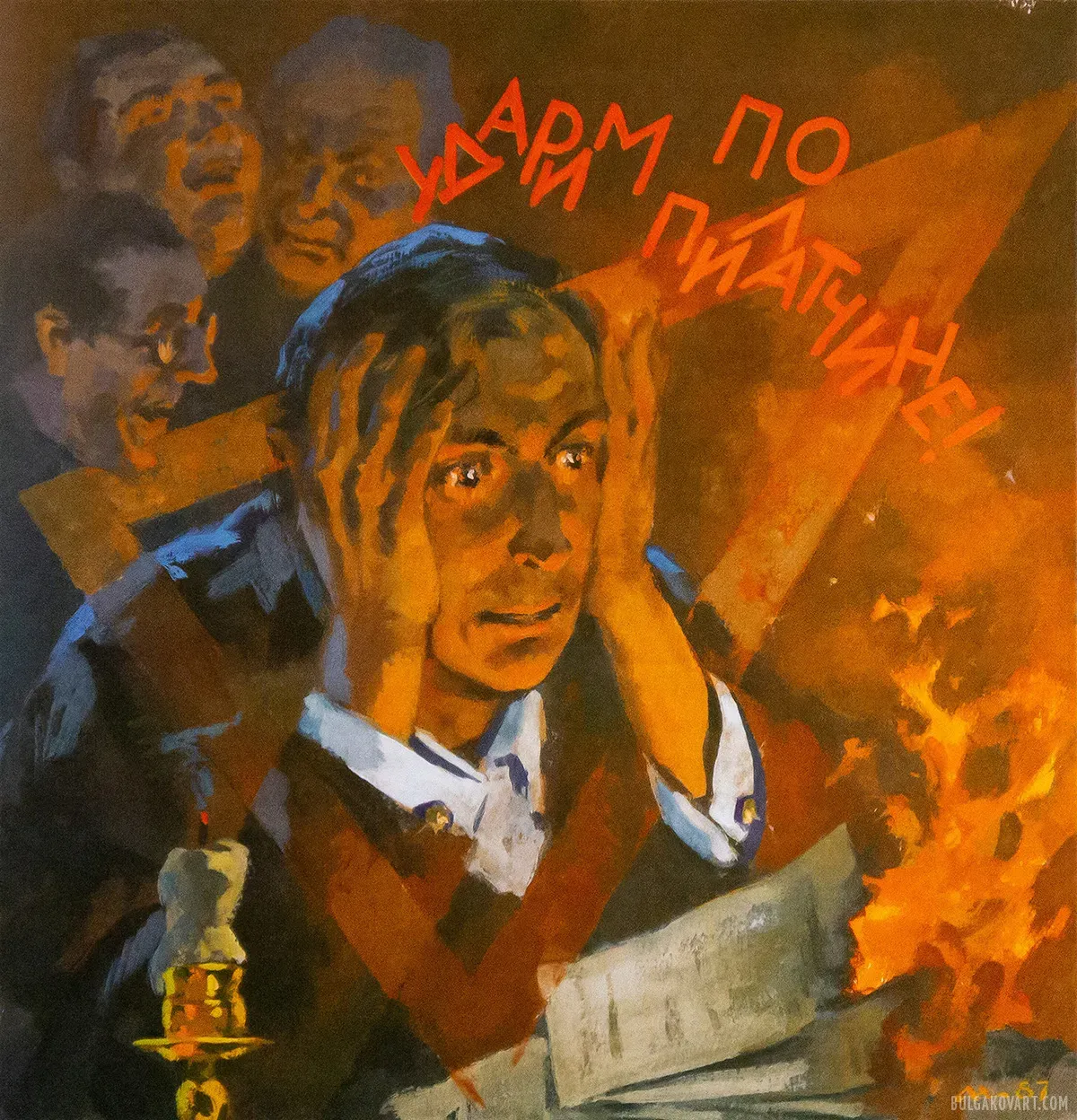
The persecution of the Master (Bulgakov repurposed the word bulgakovism—a term used to denigrate him in newspapers—into pilatism)
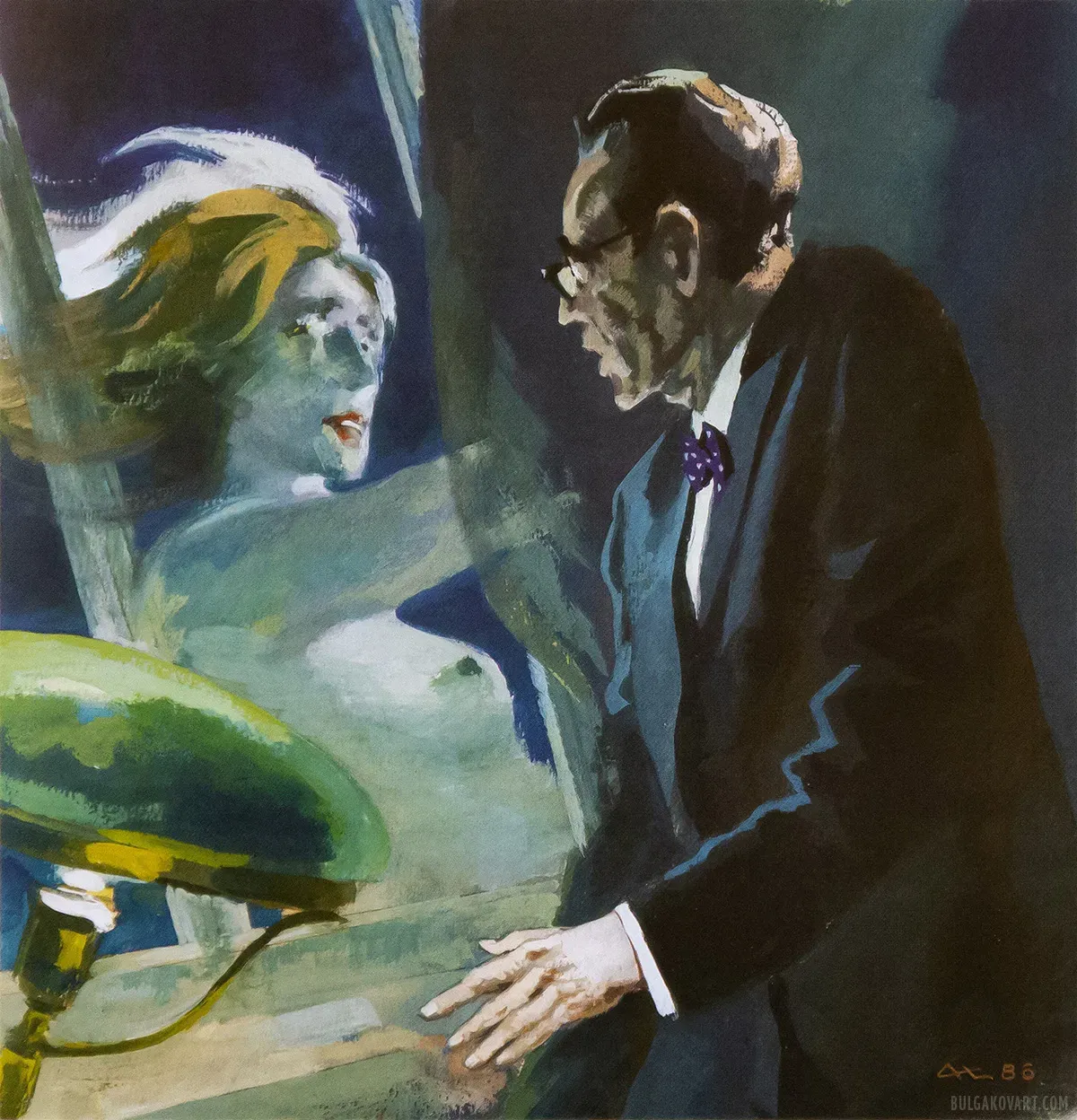
Hella looks in through the window at Rimsky, the financial director of the Variety Theatre
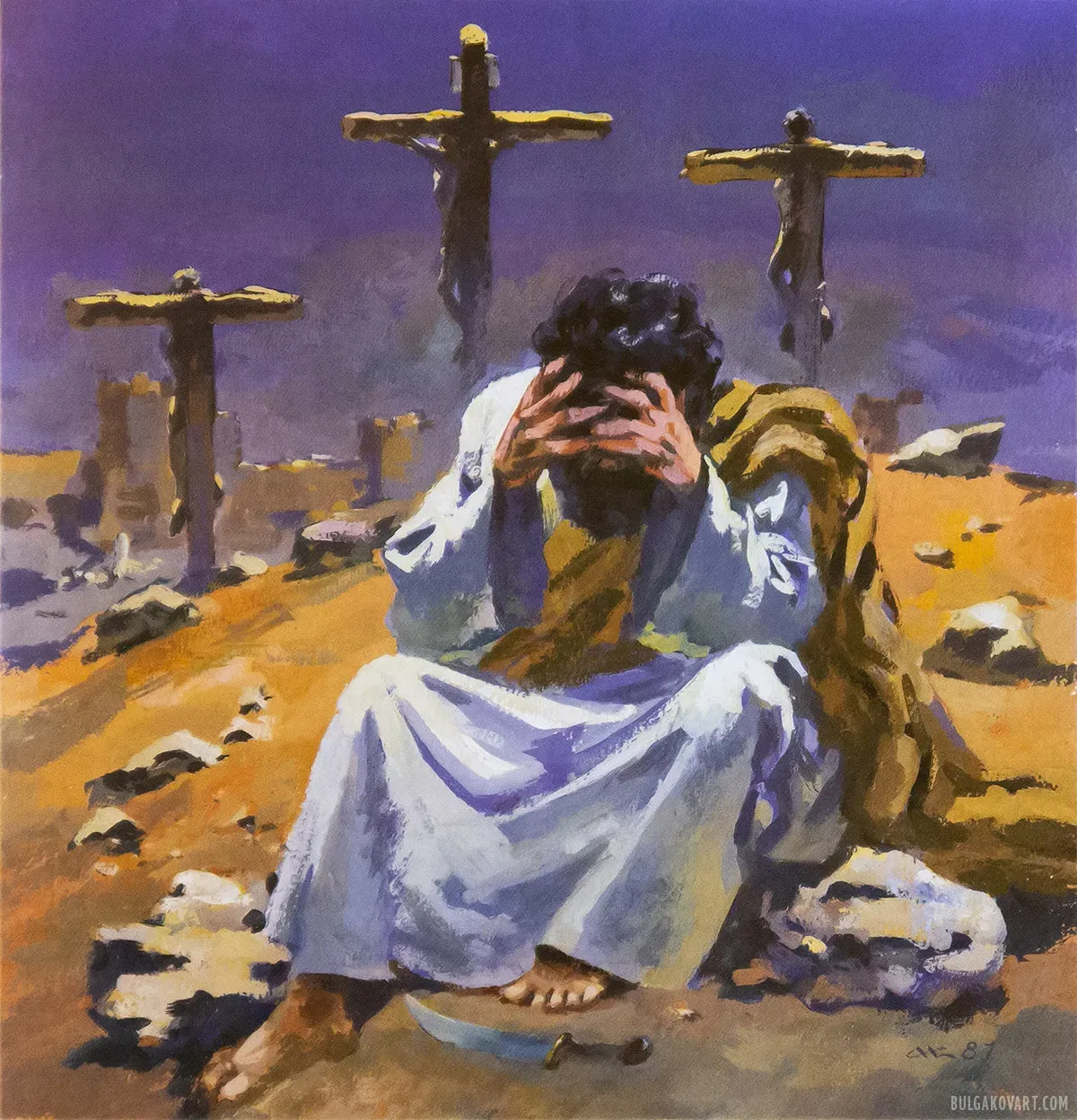
Matthew Levi before the crucified
Margarita remembers the Master. And on the left is Azazello's face—and again, asymmetrical features: a fang and a cloudy eye
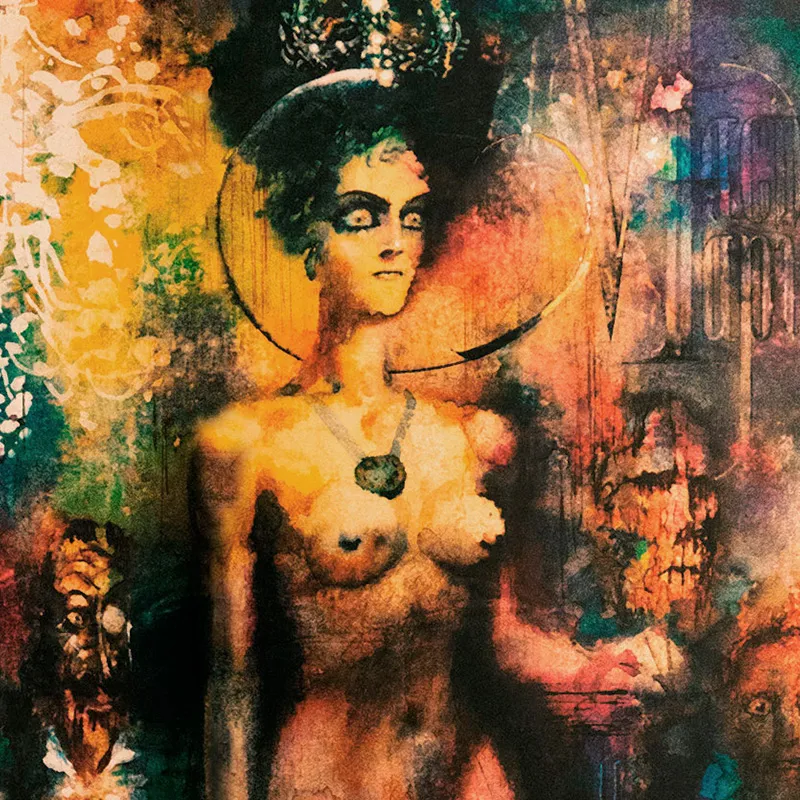
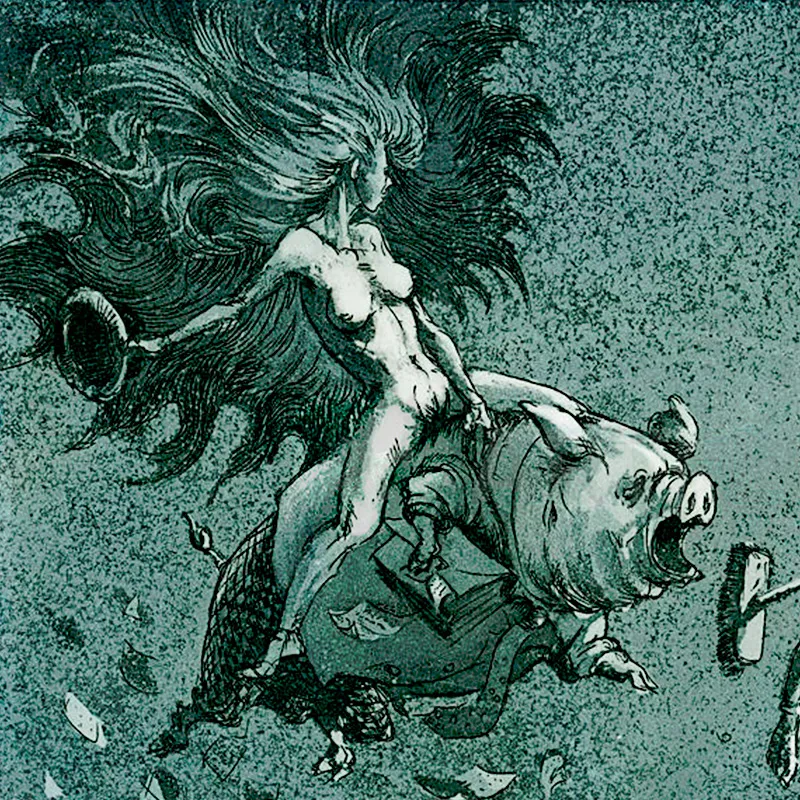
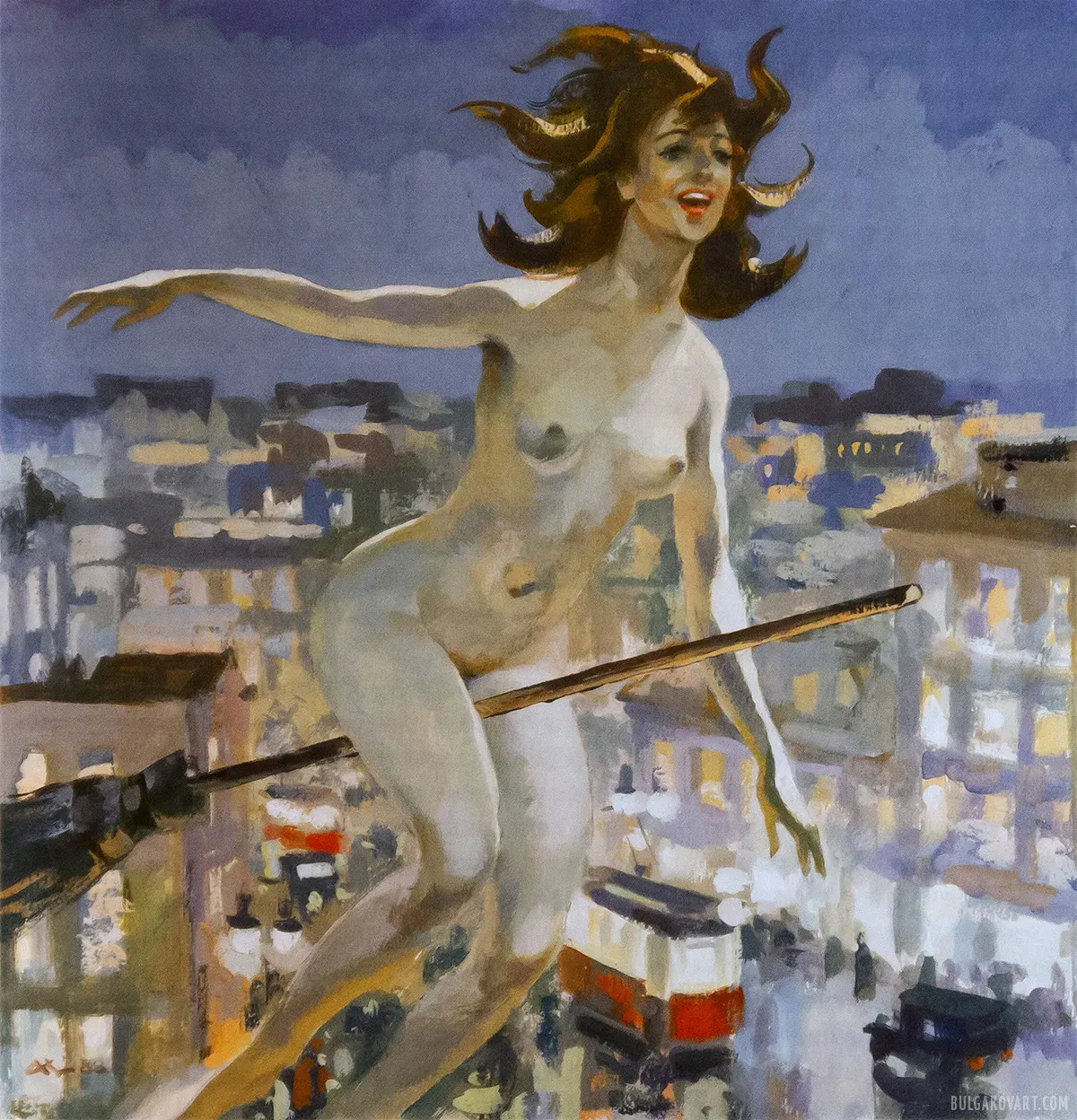
Margarita in flight—invisible and free.
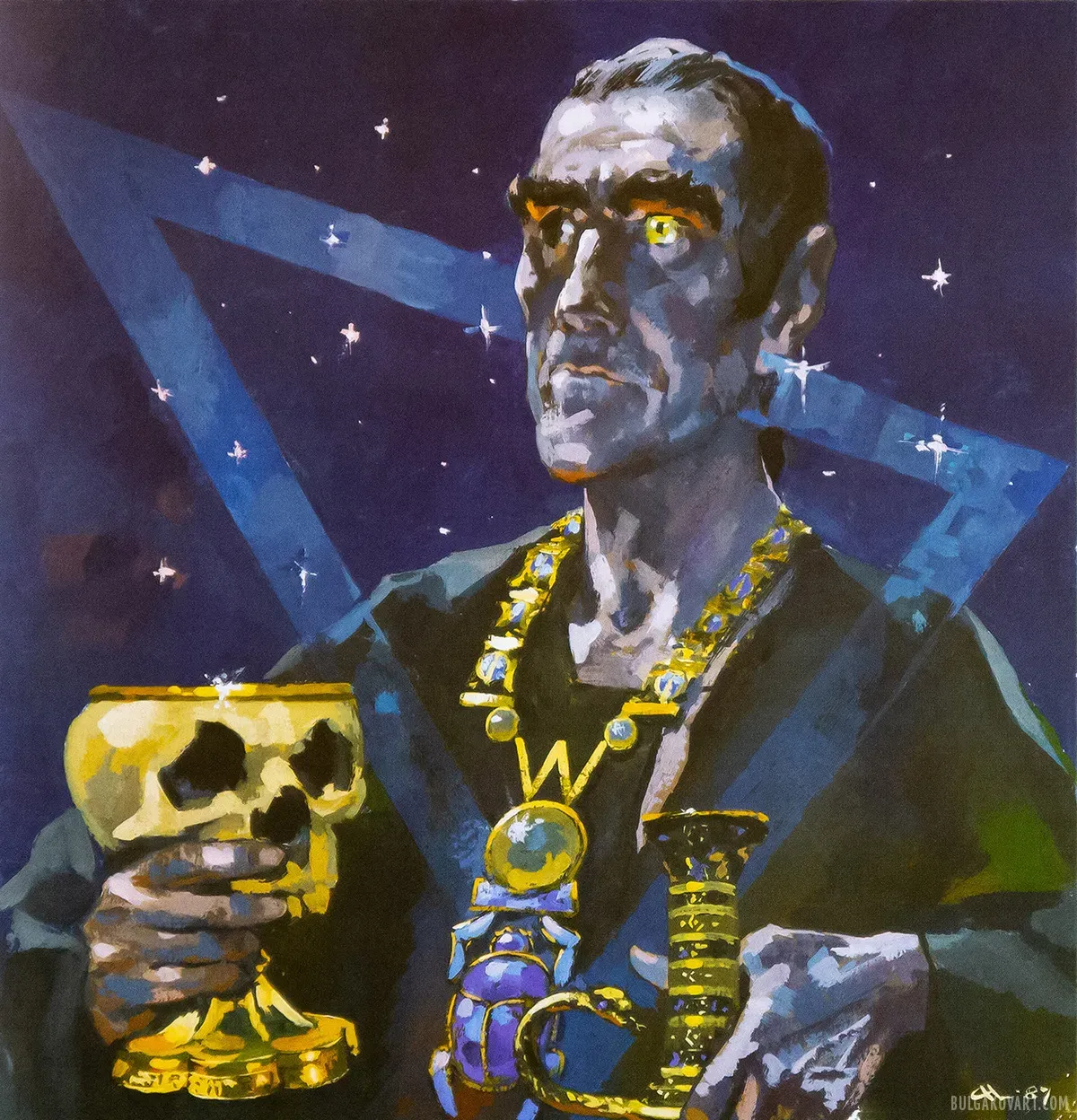
Satan against the background of a triangle (Bulgakov also mentions this symbol in connection with Woland, but Bulgakov scholars are still debating its exact meaning)
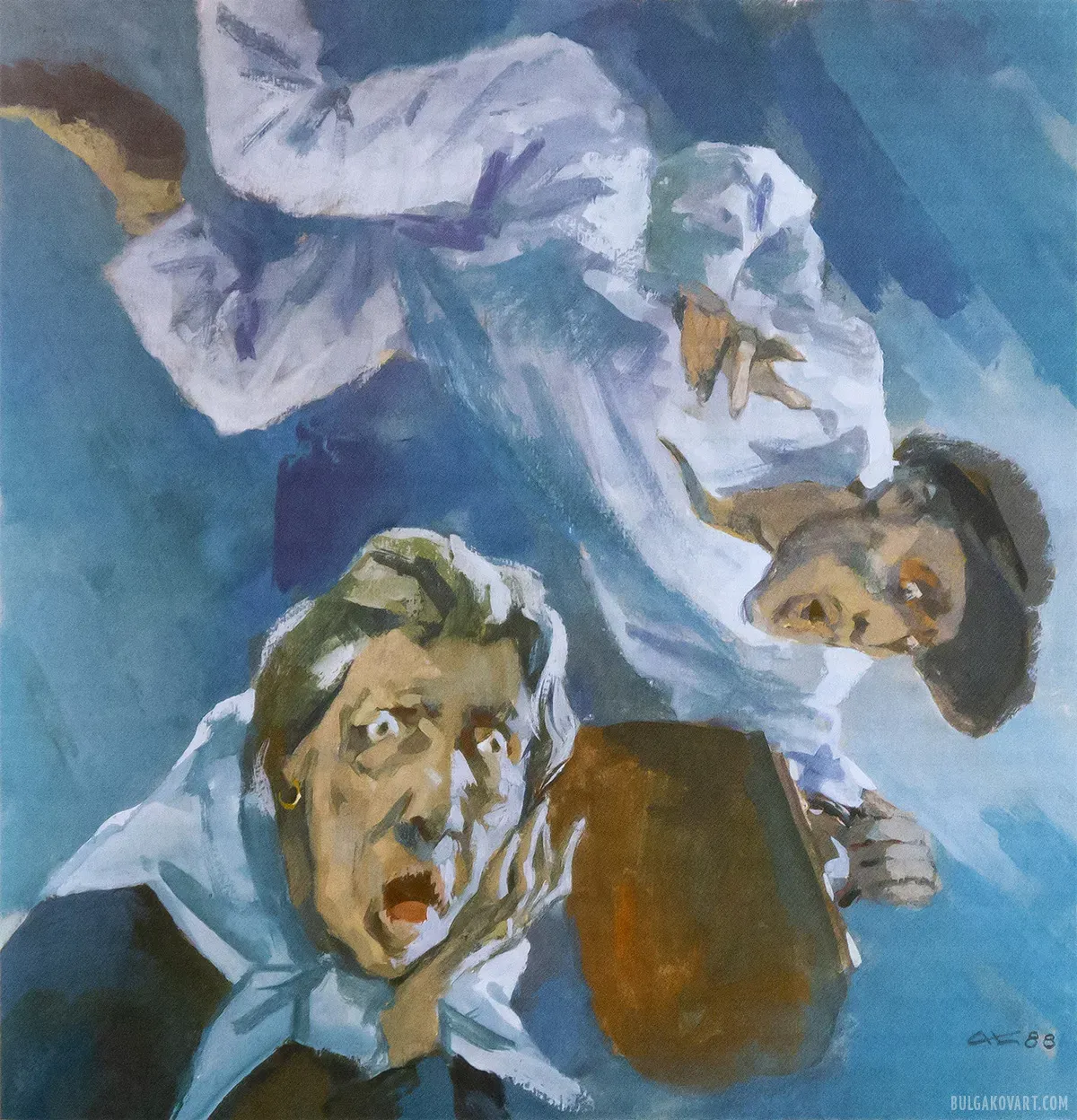
Annushka watches as some citizens are thrown out of the “naughty apartment”
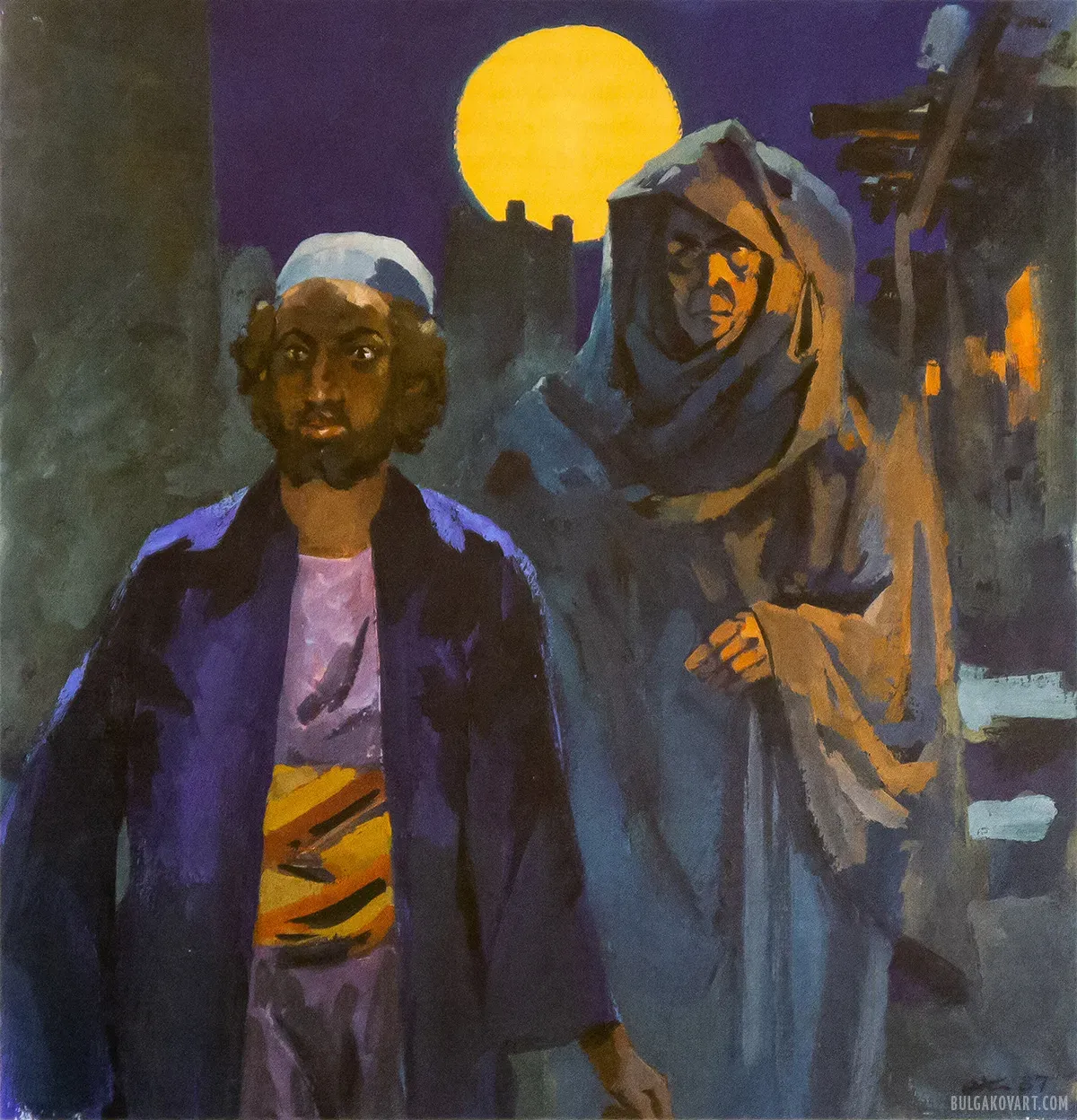
The murder of Judas is being prepared
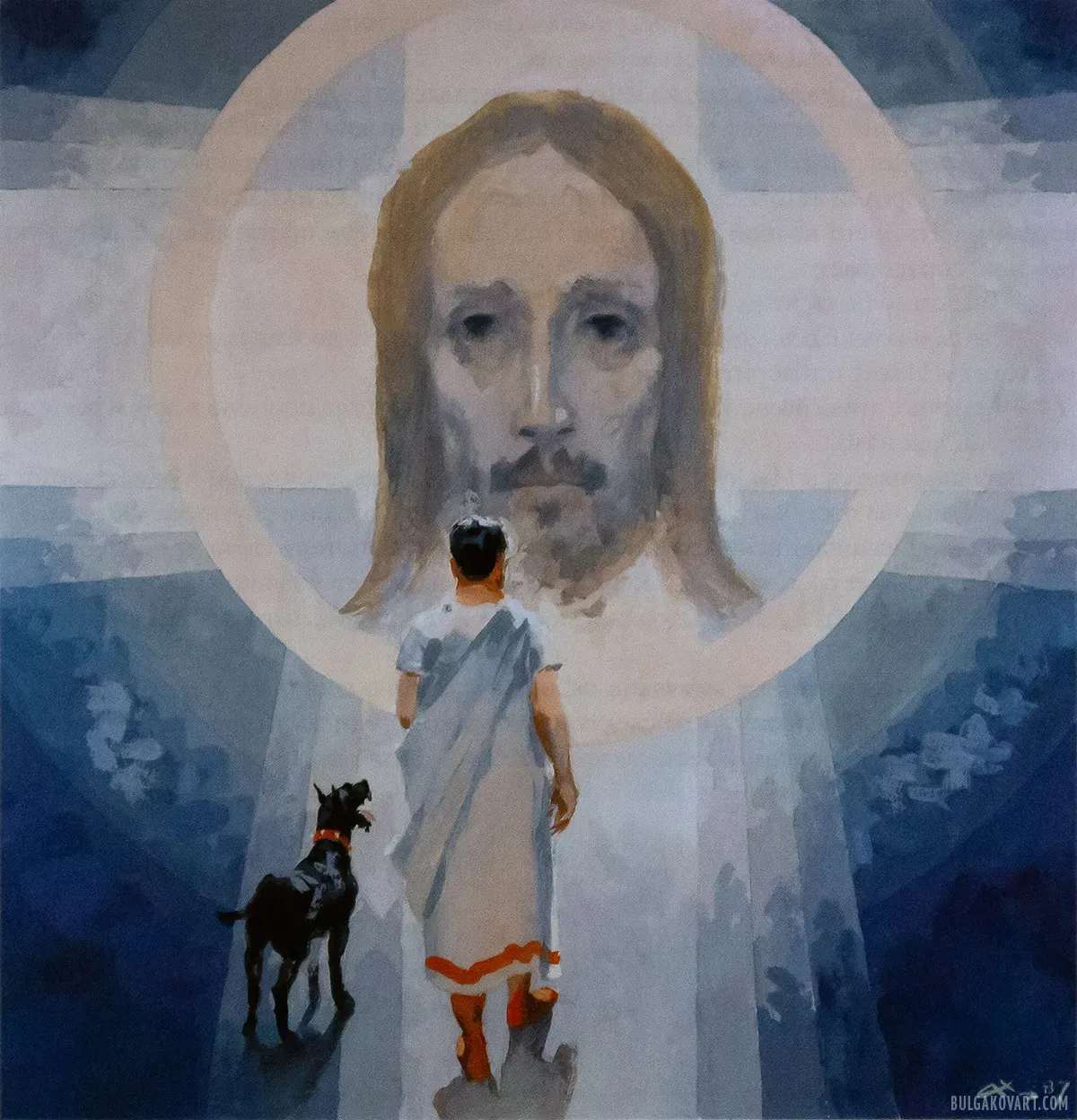
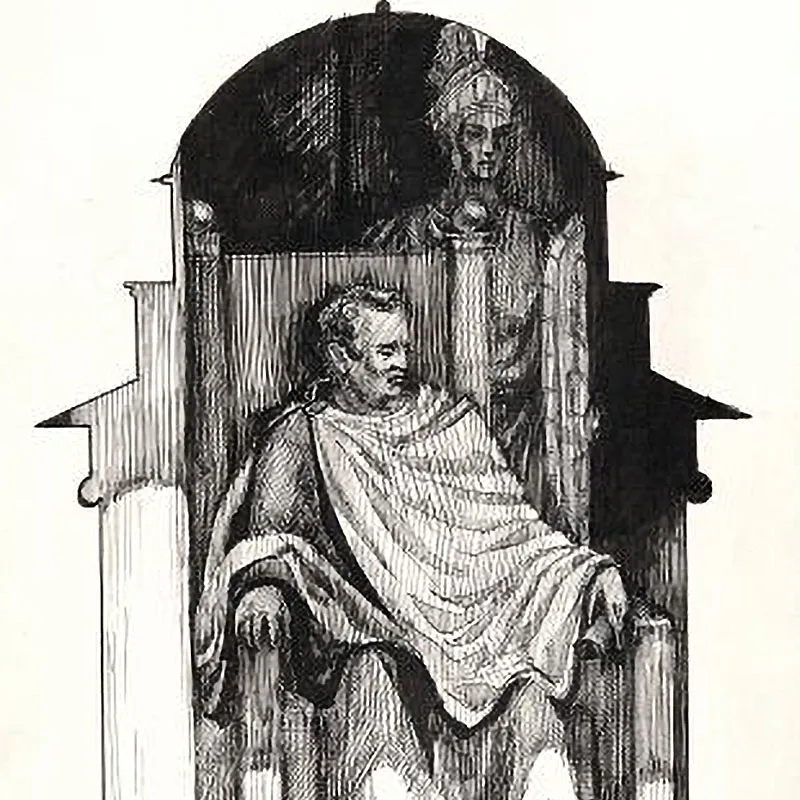
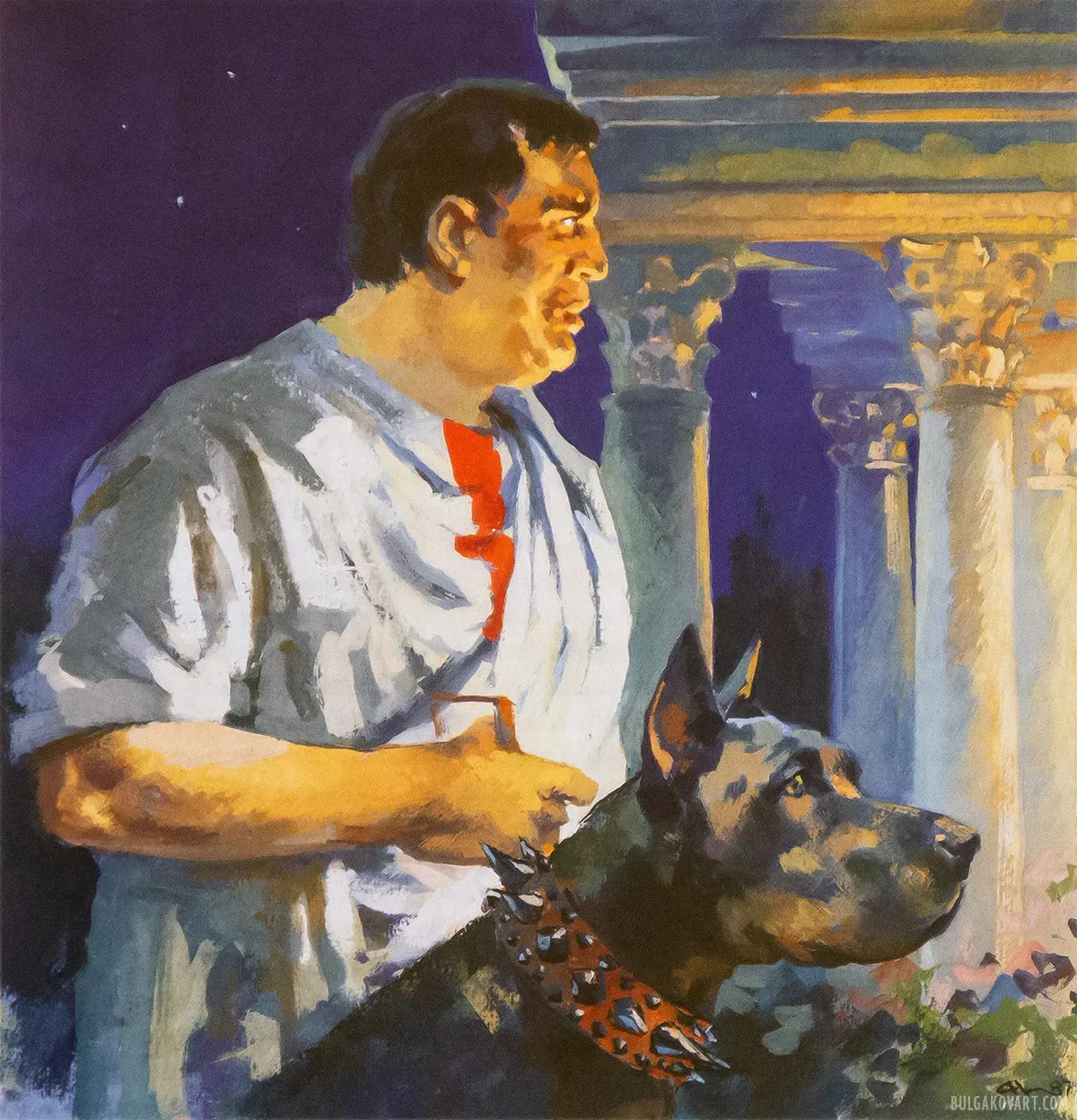
Pilate with a dog (artists usually draw a Great Dane here, although Bulgakov doesn't specify the exact breed)
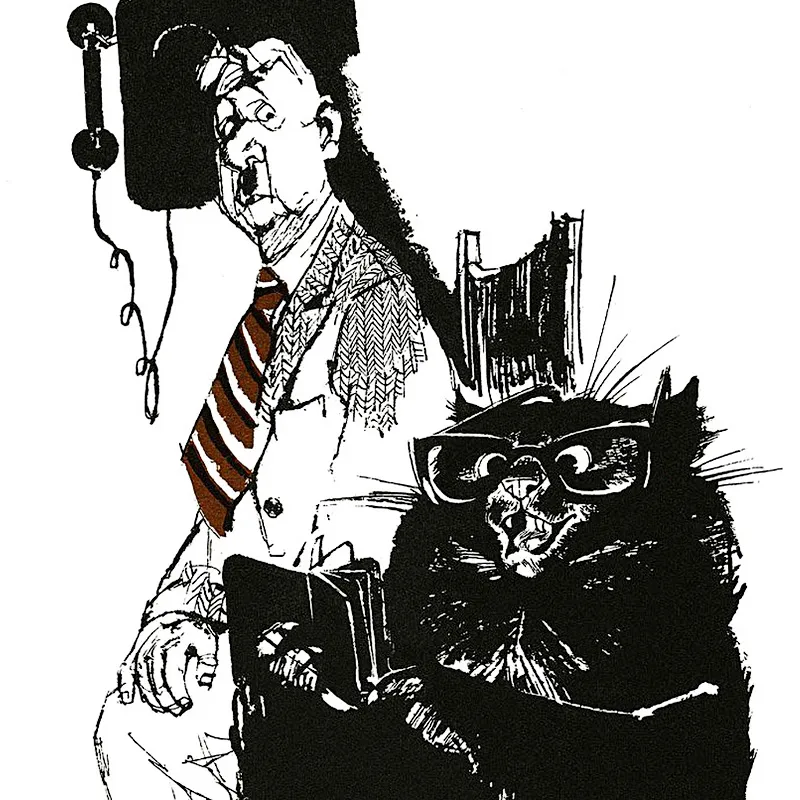
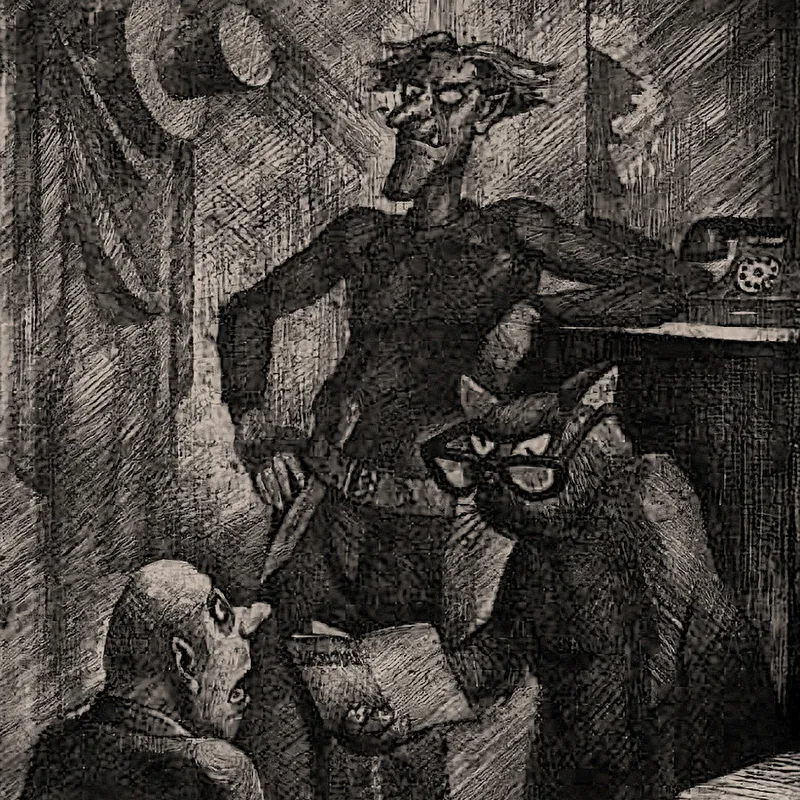
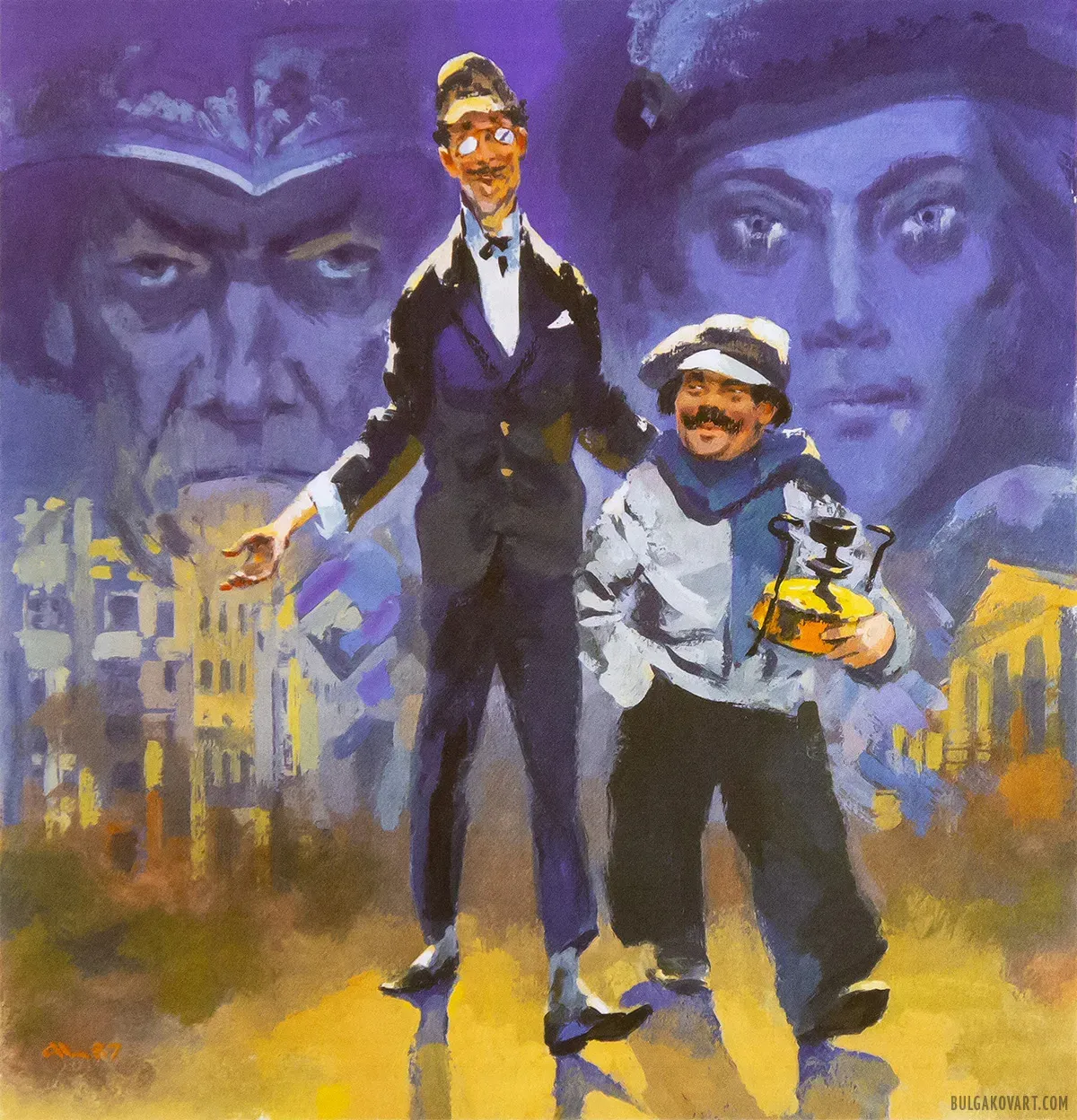
The last adventures of Koroviev and Behemoth in Moscow
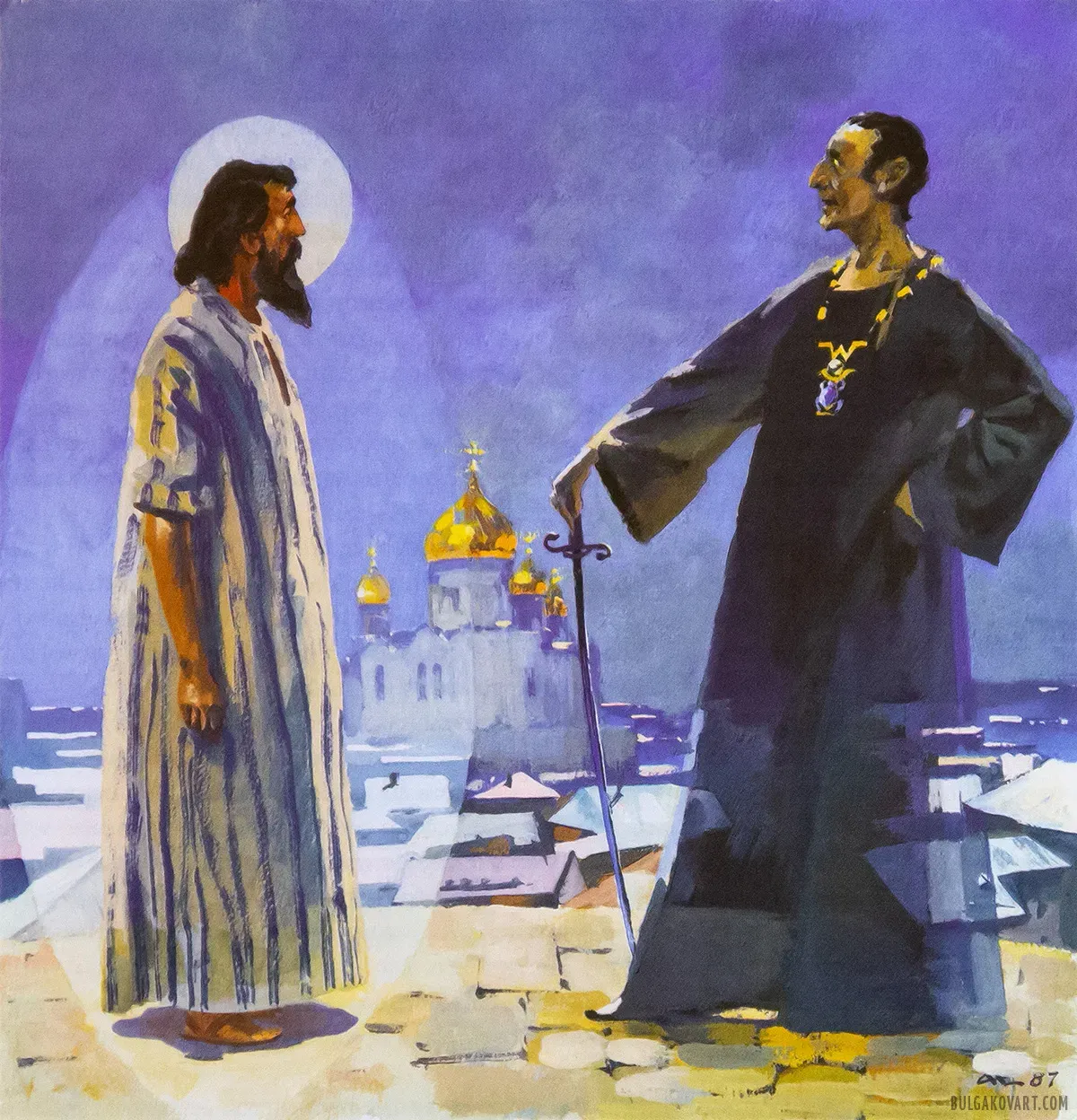
Woland debates with Matthew Levi about the nature of good and evil, using the shadow from a sword as an example
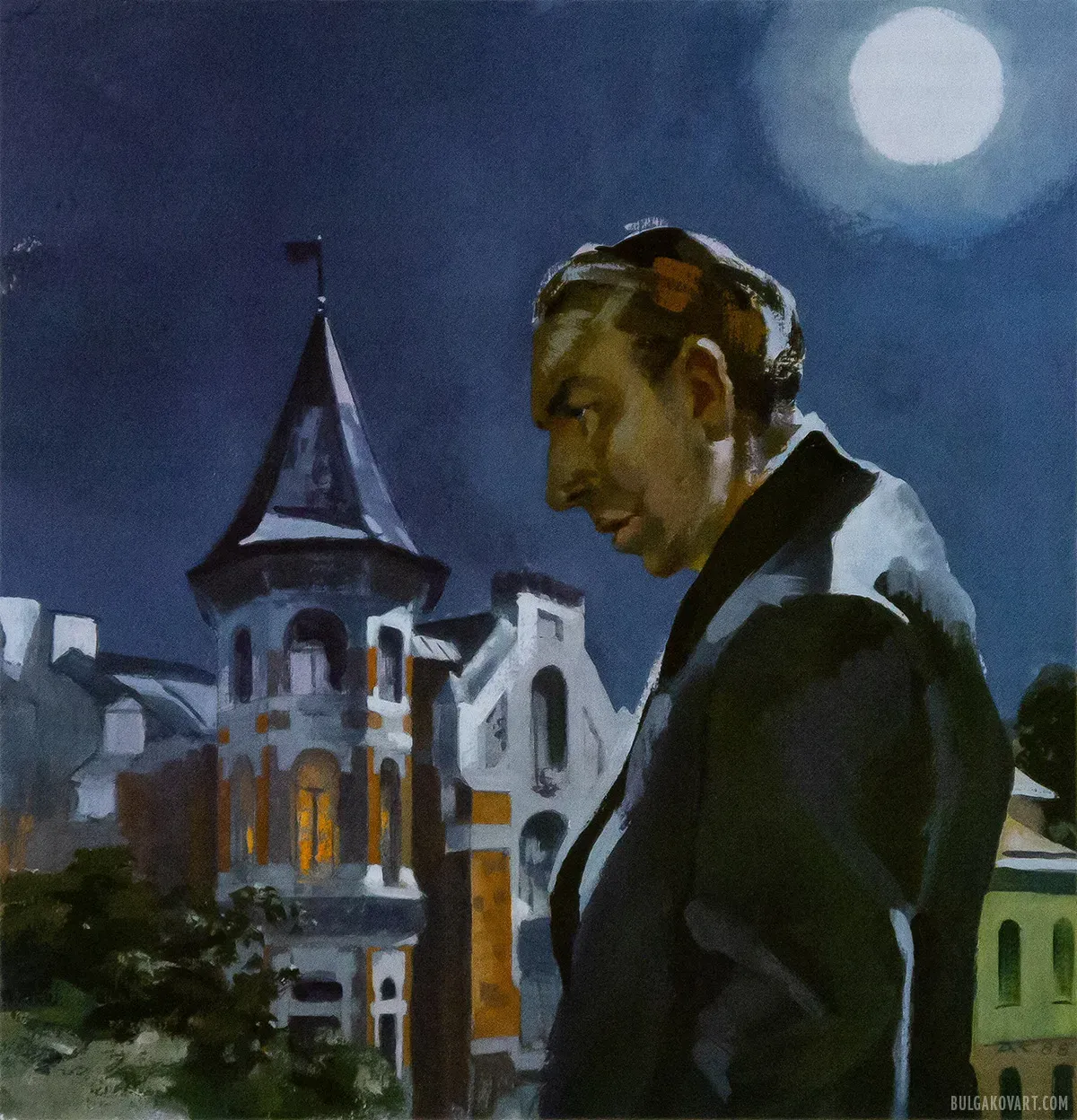
A grown-up Ivanushka—Professor of History Ivan Ponyryov—comes to Margarita's house during the full moon (by the way, the house is drawn correctly—it is believed that Kekusheva's mansion served as its prototype)
Not light, but peace
The moonlit road