 Anton Glotovdas-es.livejournal.com
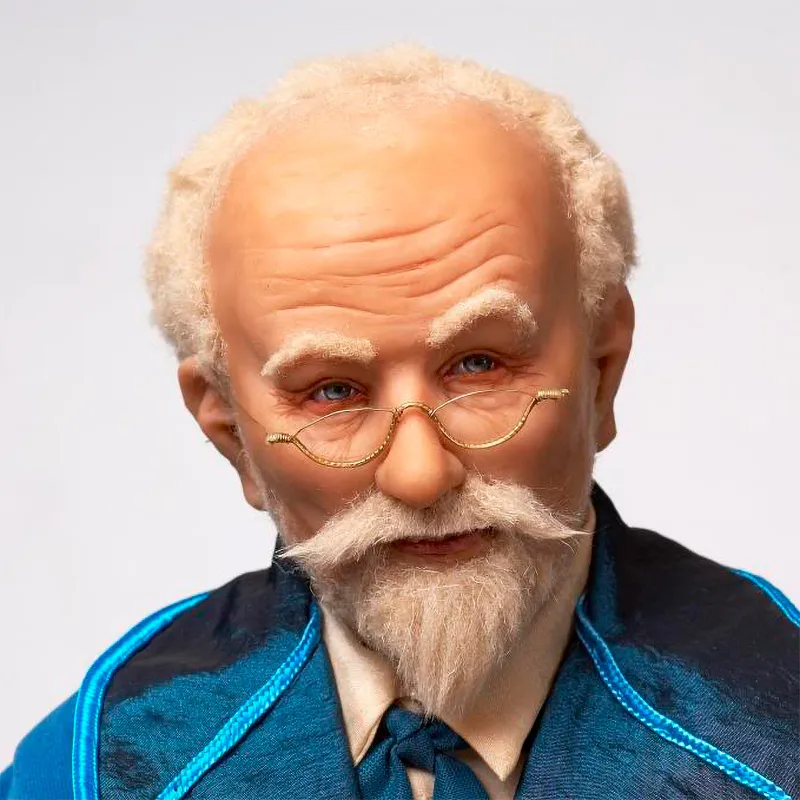
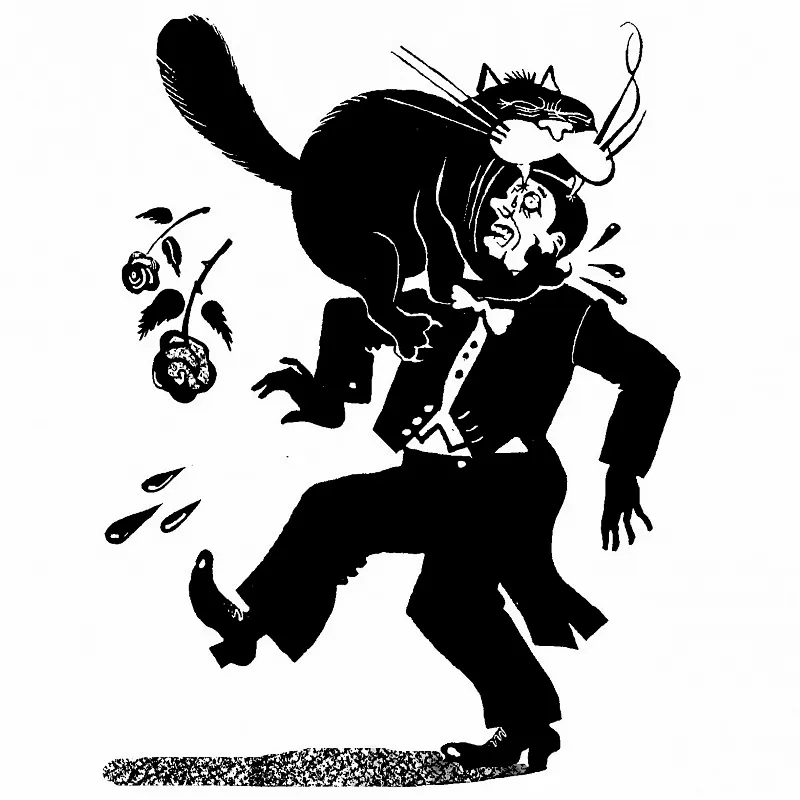
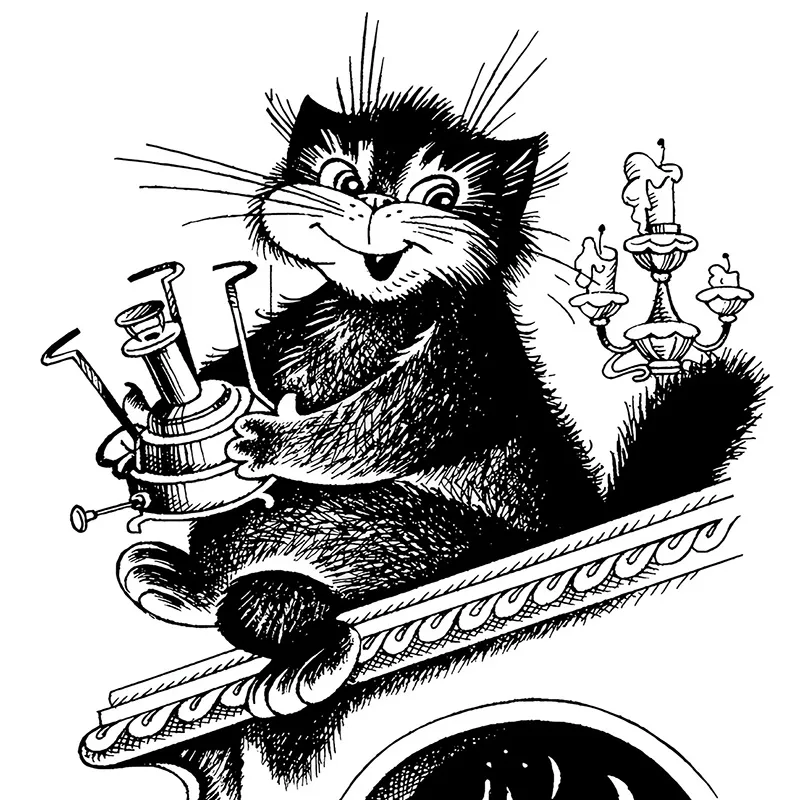
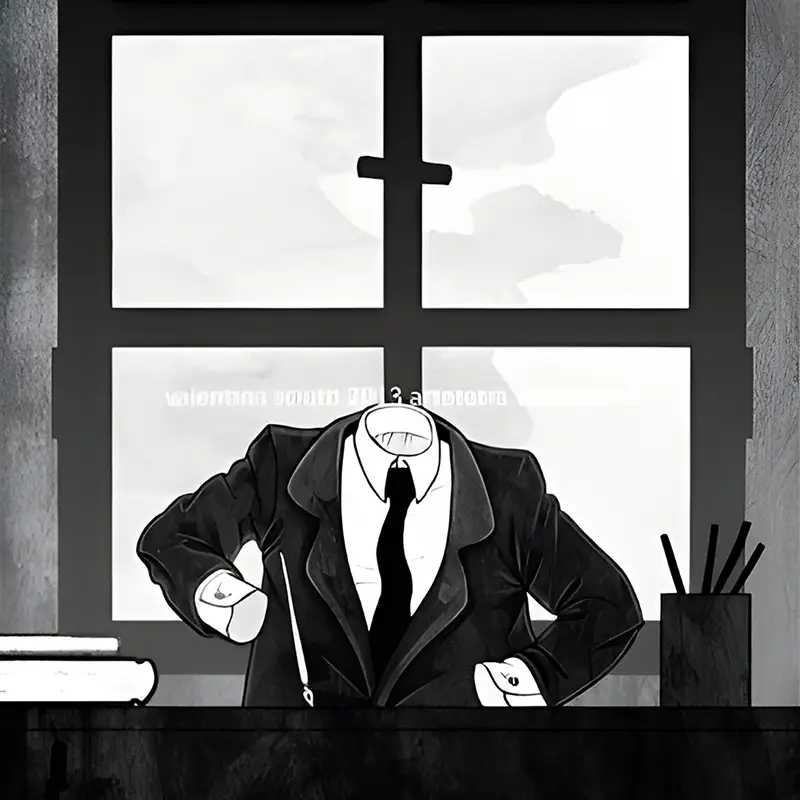
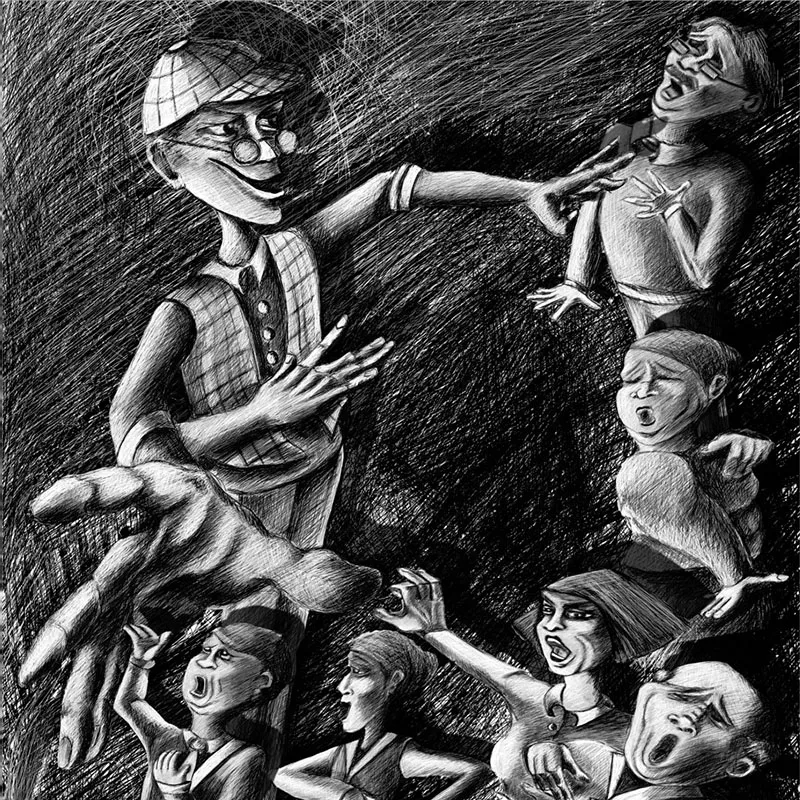
The author of this exhibition is Anton Glotov, an artist at the Bulgakov museum The Bad Apartment and simply a wonderful person. And, generally speaking, looking at these works in pictures is, of course, not the way to do it. You need to go directly to the Bulgakov museum (the one on the fifth floor of house number ten on Sadovaya) and admire them live. But since, alas, not everyone can afford it (if only because of geography), let's at least take a closer look at the photos.
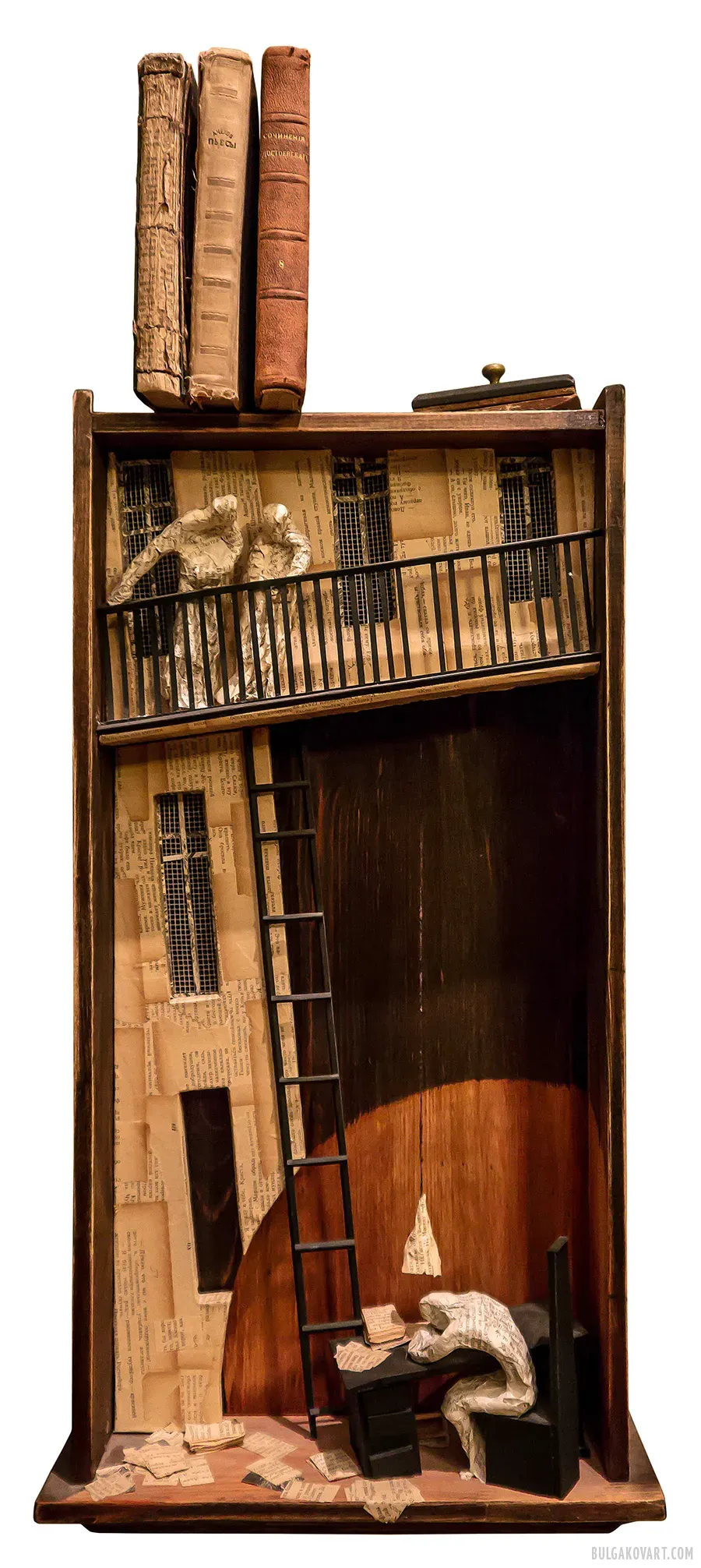
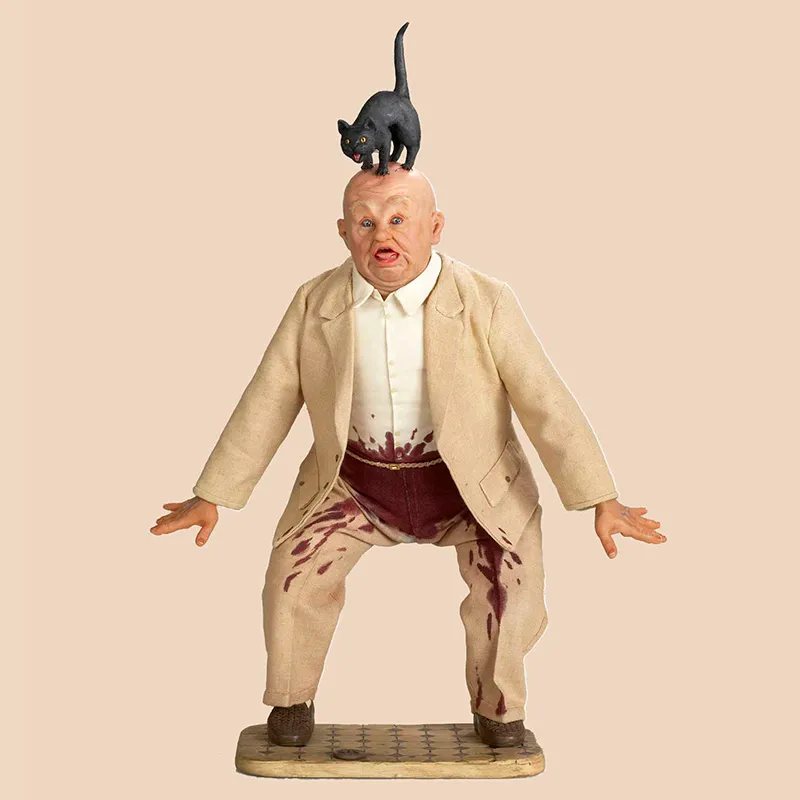
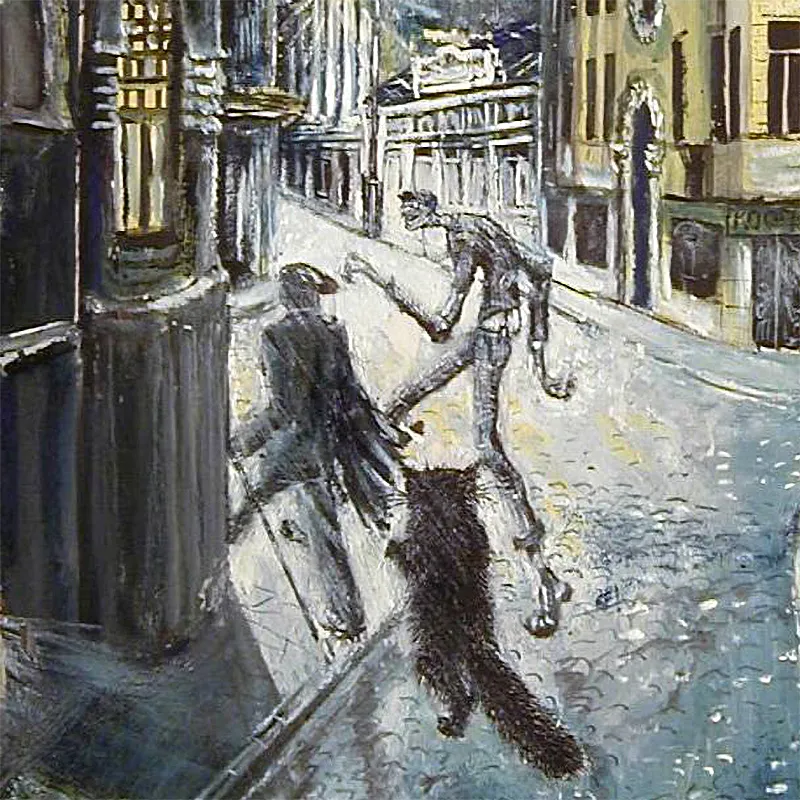
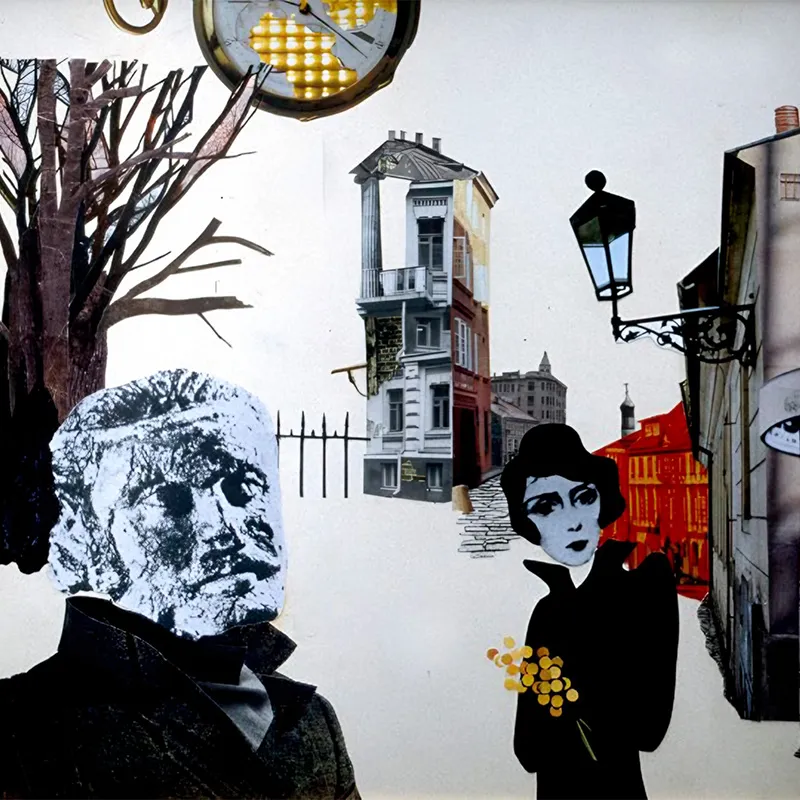
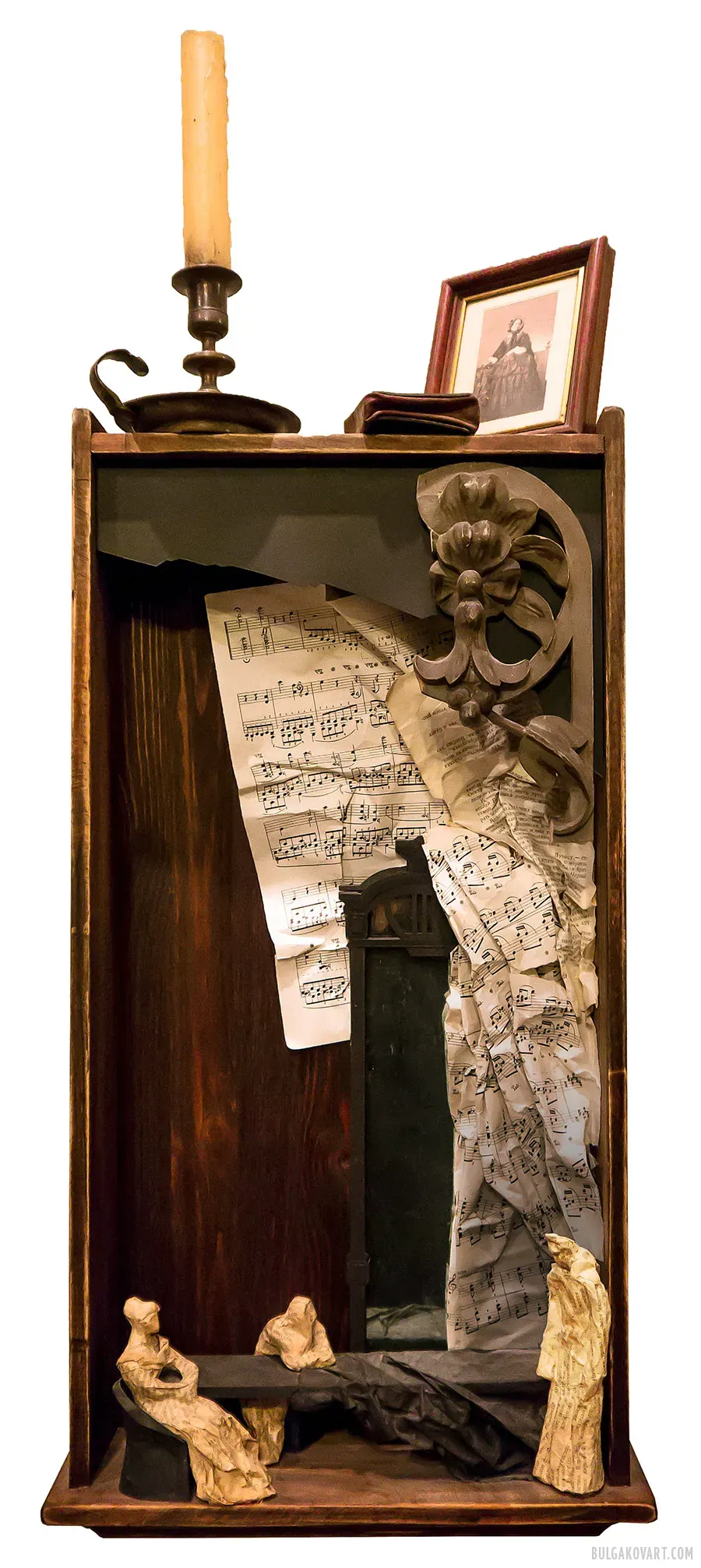
Five desk drawers—five Bulgakov installations. Here's what the museum itself says about the exhibition:
The exhibition In the Desk Drawers is conceived as a development of the theme of the “lost home” from the general concept of the museum. The desk is the main object in the space of the writer's room. In a literary sense, the desk symbolizes creativity and the writer's work, and moreover, it is also a metaphor for the asceticism and self-denial of the creator.
The drawer is a symbol of the inner content of a person's personality. In contrast to the artisan, who actively explores external reality, the creative act of a true artist is the result of an analysis of the inner space of his own self. Working for the drawer is contrasted with literary hack work and opportunism as a social compromise.
The drawer is a symbol of the inner content of a person's personality. In contrast to the artisan, who actively explores external reality, the creative act of a true artist is the result of an analysis of the inner space of his own self. Working for the drawer is contrasted with literary hack work and opportunism as a social compromise.
The analogy of the drawer with a human dwelling reflects the identity for Bulgakov of “home” and “creativity”, shifting the unstable balance of the conflict between the spiritual and the material towards the priority of the eternal over the temporary. Art requires sacrifices, and if the territory of the artist's inner world expands to the scale of universal spheres, then the sphere of his material surroundings, like shagreen leather, can quite possibly shrink to the size of a desk.
Thus, the desk with its contents is a metaphorical model of the “home”, the “last refuge”, the existential space of the artist, who finds a true refuge only in the monastery of his own spirit.
The first story is from The White Guard
The door to the antechamber let in the cold, and before Alexey and Elena stood a tall, broad-shouldered figure in a floor-length overcoat and in protective shoulder straps with three lieutenant's stars in chemical pencil. The bashlyk was covered in frost, and a heavy rifle with a brown bayonet took up the entire antechamber.
“Hello,” the figure sang in a hoarse tenor and with frozen fingers grabbed the bashlyk.
“Vitya!”
Now, The Master and Margarita
After winning a hundred thousand, Ivan's mysterious guest did this: he bought books, abandoned his room on Myasnitskaya...
“Ugh, a cursed hole!” the guest growled.
...and rented two rooms in the basement of a small house with a garden from the builder in a lane near the Arbat. He quit his job at the museum and began to compose a novel about Pontius Pilate.
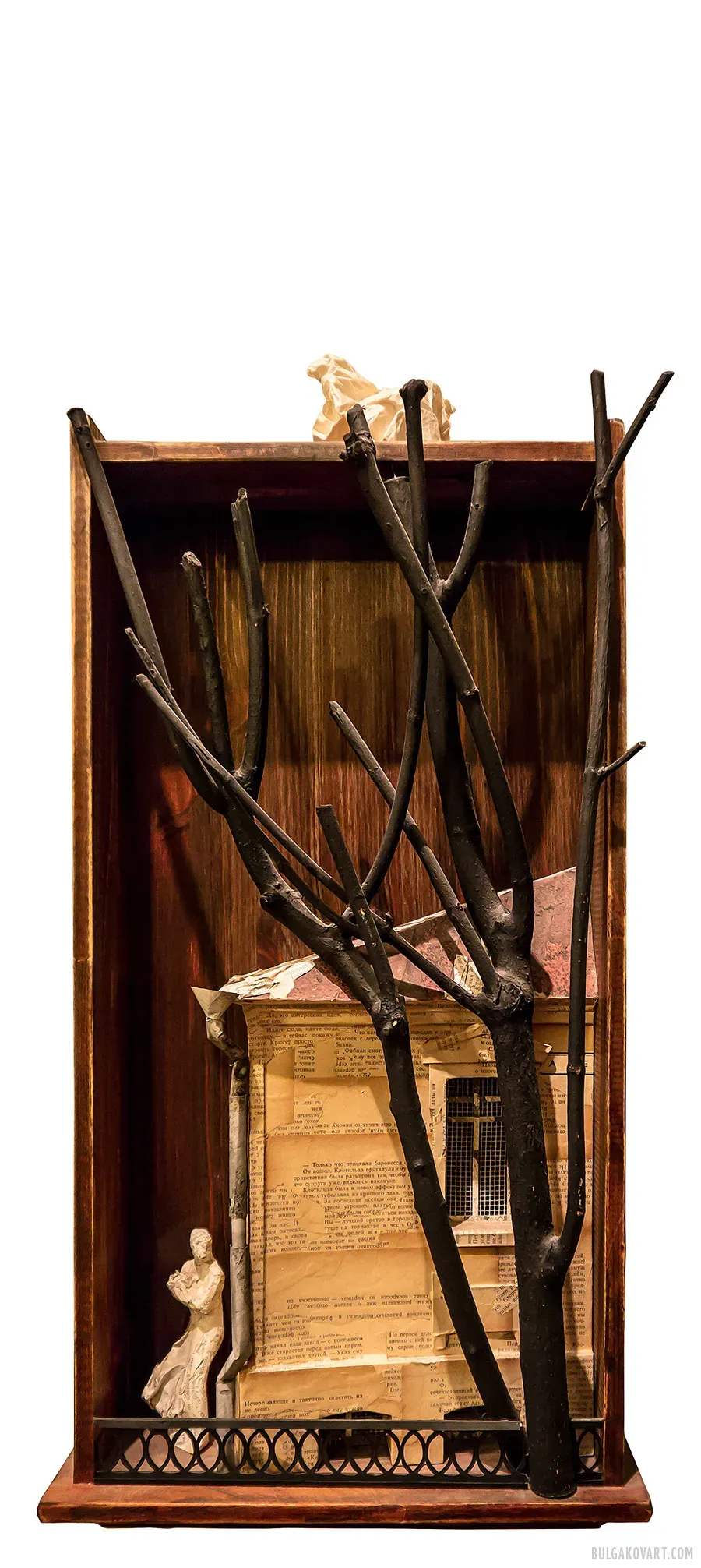
“Yes, love struck us instantly.
...And soon, soon this woman became my secret wife.
She came to me every day, and I began to wait for her from the morning. This waiting was expressed in that I rearranged the objects on the table. Ten minutes before her arrival, I would sit at the window and begin to listen, to see if the dilapidated gate would creak.“
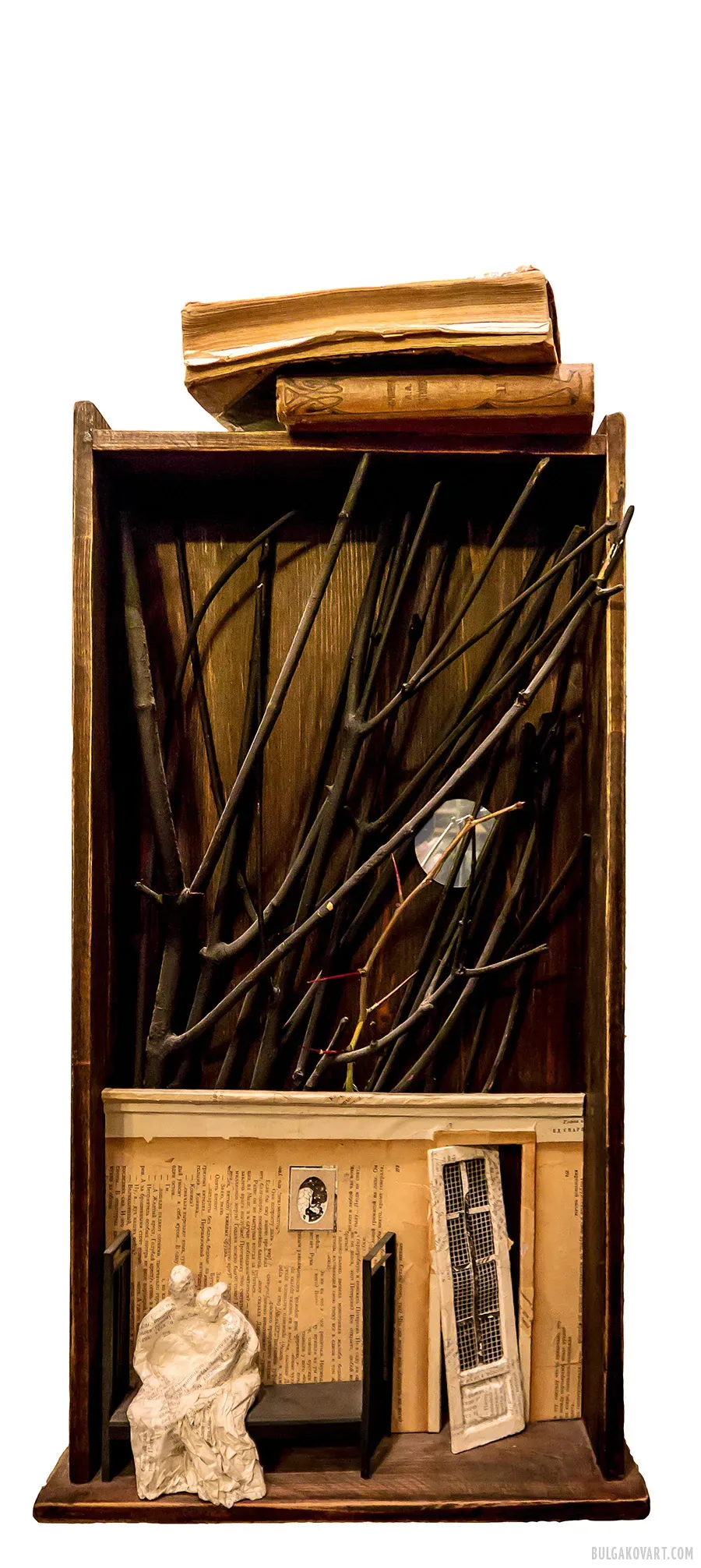
"Guess what, I'm in trouble. Come, come, come!"
But no one came. The fire roared in the stove, and rain lashed against the windows. Then the last thing happened. I took the heavy copies of the novel and the rough notebooks from the desk drawer and began to burn them. This is terribly difficult to do, because scribbled paper burns reluctantly. Breaking my nails, I tore up the notebooks, put them upright between the logs, and a poker stirred the sheets. The ashes from time to time overpowered me, suffocating the flame, but I fought with it, and the novel, stubbornly resisting, nevertheless perished.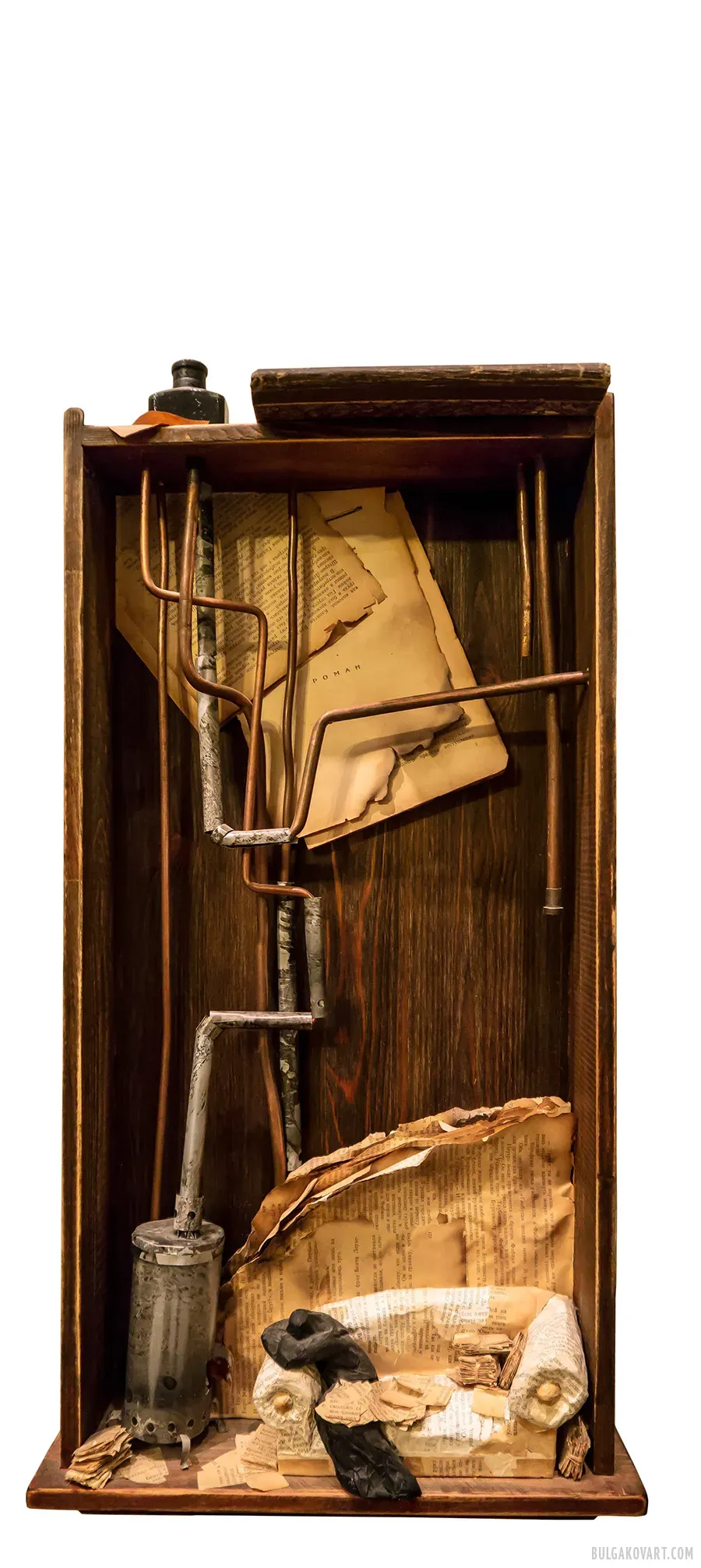
And A Dead Man's Memoirs (also known as Theatrical Novel)
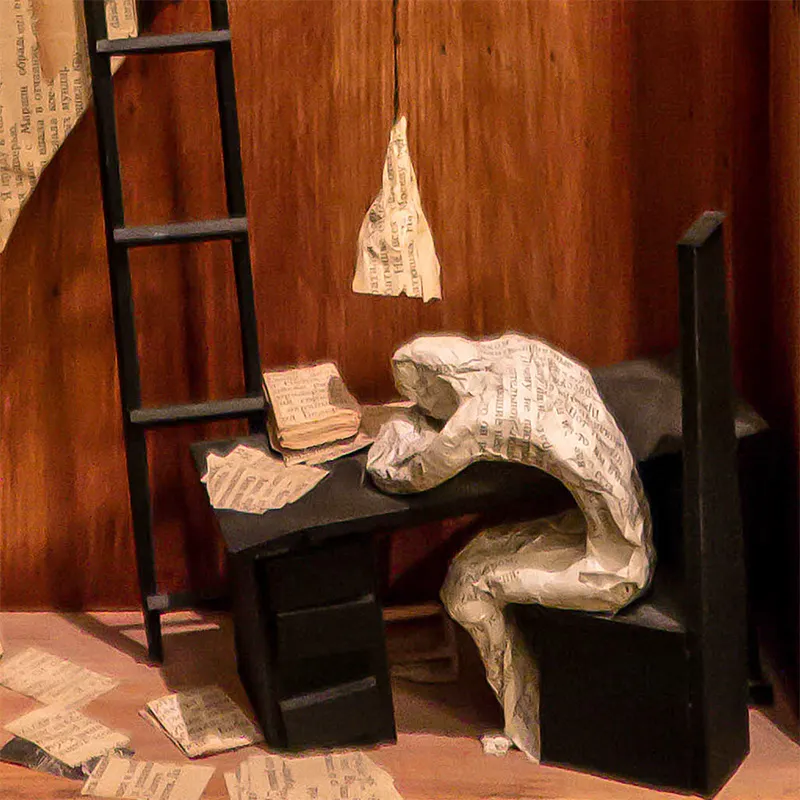
“...at night, sometimes until dawn, I wrote a novel in my attic room.
It was born one night when I woke up after a sad dream. I dreamed of my native city, snow, winter, the civil war... In my dream, a silent blizzard passed before me, and then an old piano appeared and next to it, people who are no longer in this world. In my dream, I was struck by my loneliness, I felt sorry for myself. And I woke up in tears. I turned on the light, a dusty light bulb suspended above the table. It lit up my poverty—a cheap inkwell, a few books, a stack of old newspapers.”