 Nikolay Lavrukhin
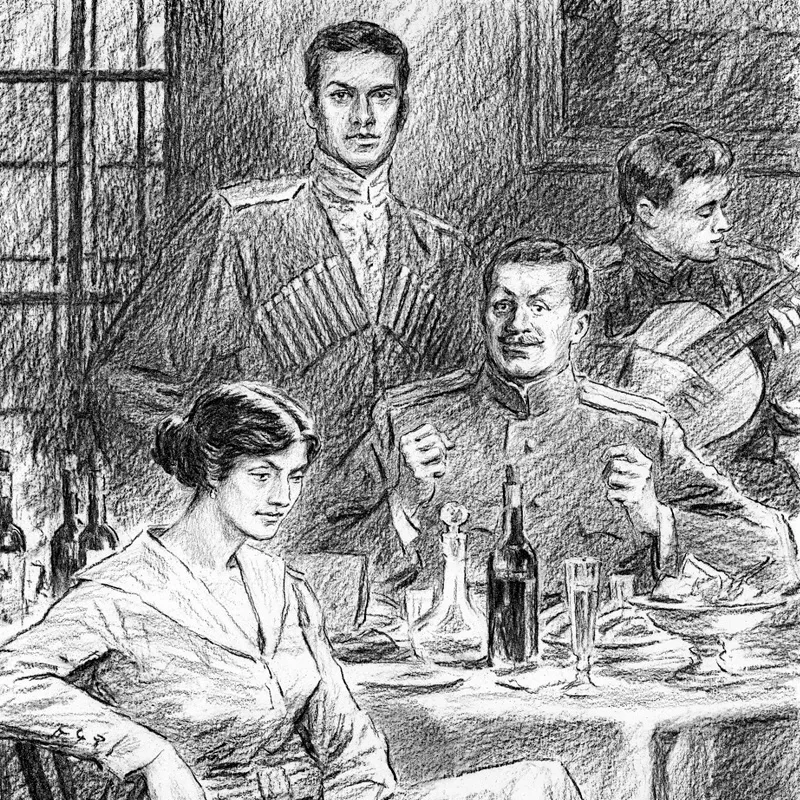
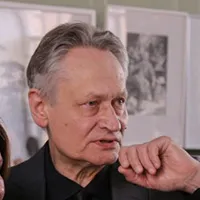
, a professor in the Department of Easel and Book Graphics at the Stieglitz Academy, holds to the principle that an illustration is not an appendage to the text but a full-fledged statement in a dialogue with the writer, and that its style should be in tune with the work. It is largely up to the artist whether a book will grip the reader and make them empathize with the characters. For Rech Publishing House, Lavrukhin illustrated both The White Guard and the play based on it, The Days of the Turbins (which is only logical). Well then, let’s see whether the artist has accomplished his super-objective.
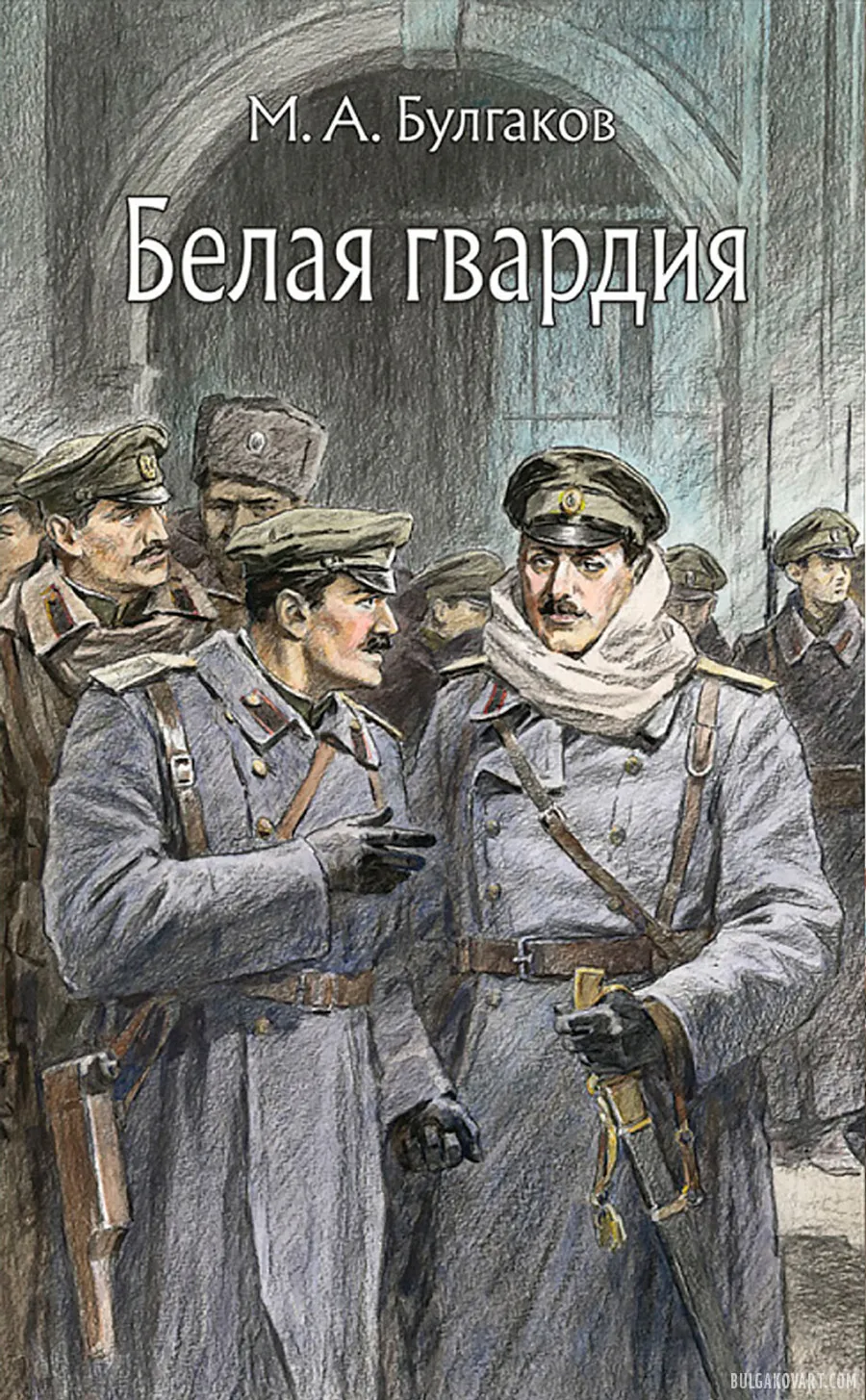
Cover of The White Guard
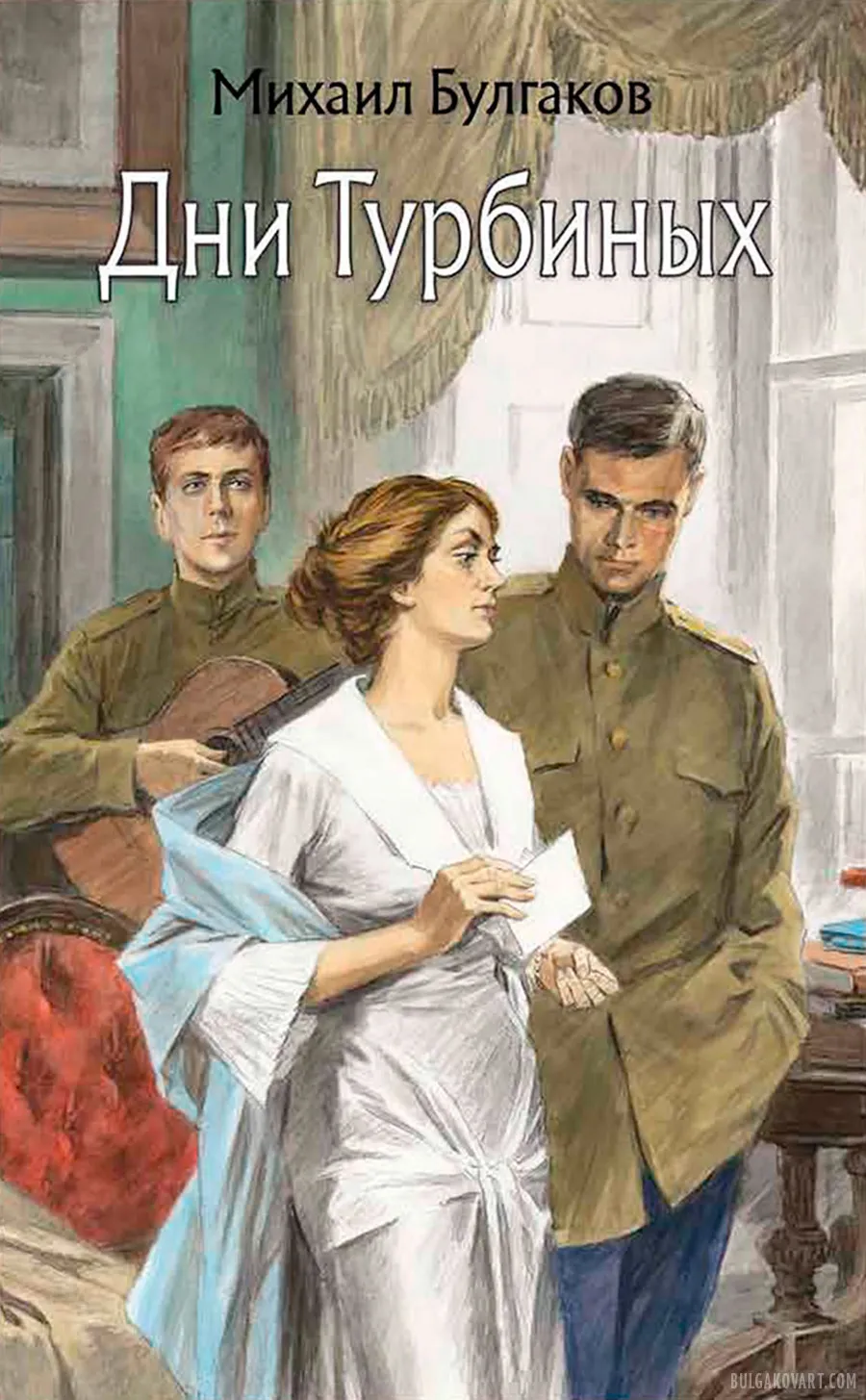
And the cover of The Days of the Turbins
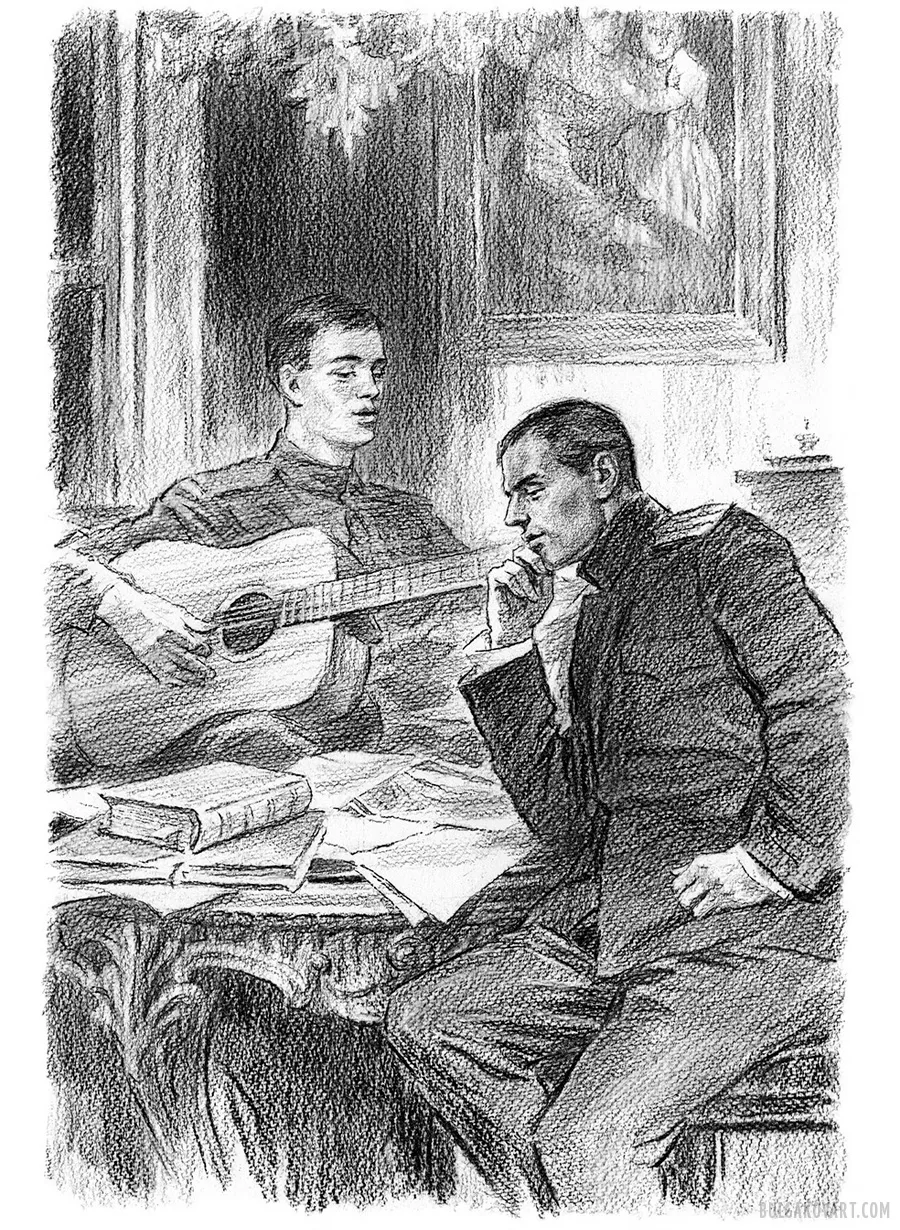
“Nikolka’s companion, the guitar, tender and muffled: plunk… An uncertain plunk… because for now, you see, nothing is really known yet. The City is uneasy, foggy, bad…”
The Turbins
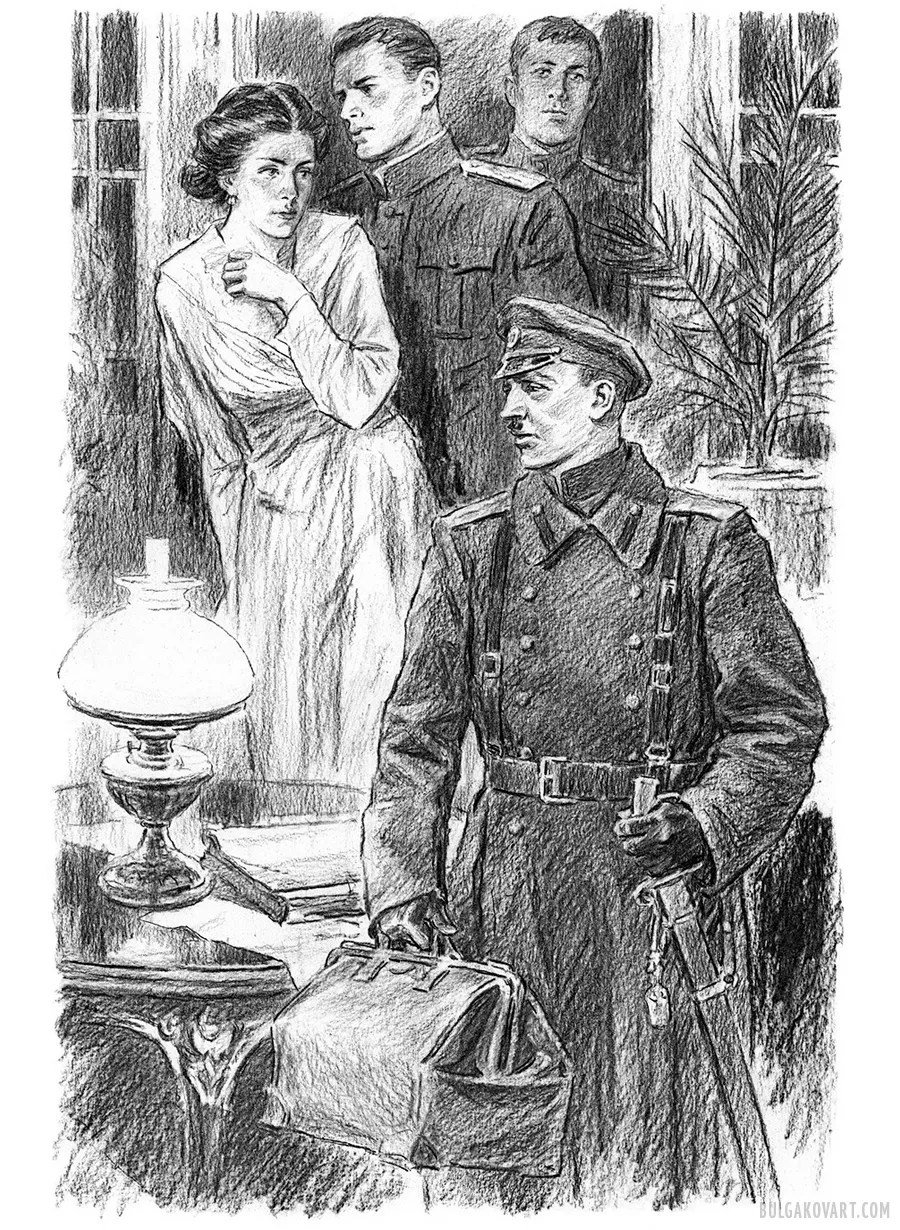
Thalberg: I’m telling you in confidence—I’m running away, because I know you’ll never tell anyone. Colonels of the General Staff don’t run. They go on official assignments. In my pocket I have an assignment to Berlin from the Hetman’s ministry. Not bad, eh?
Elena: Not bad at all. But what will become of them all?
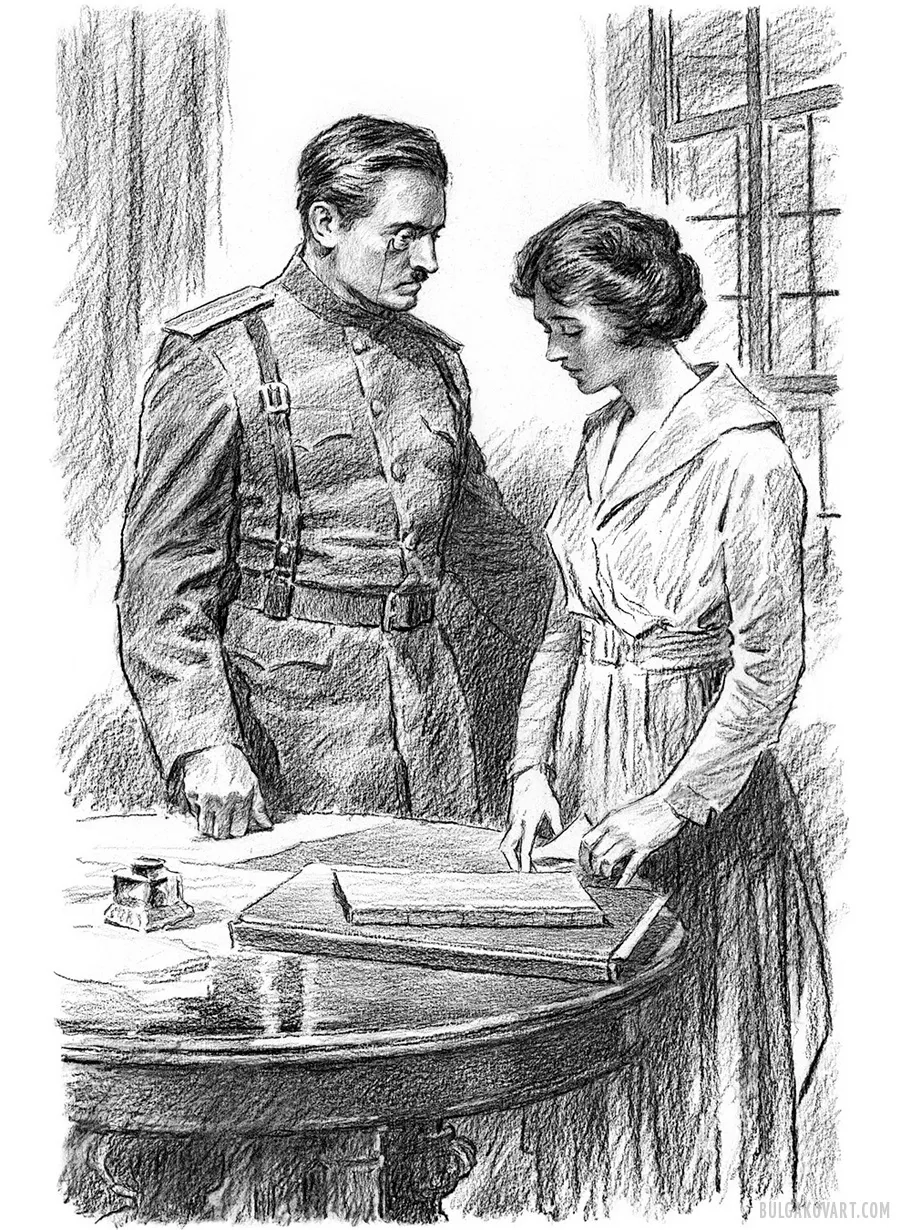
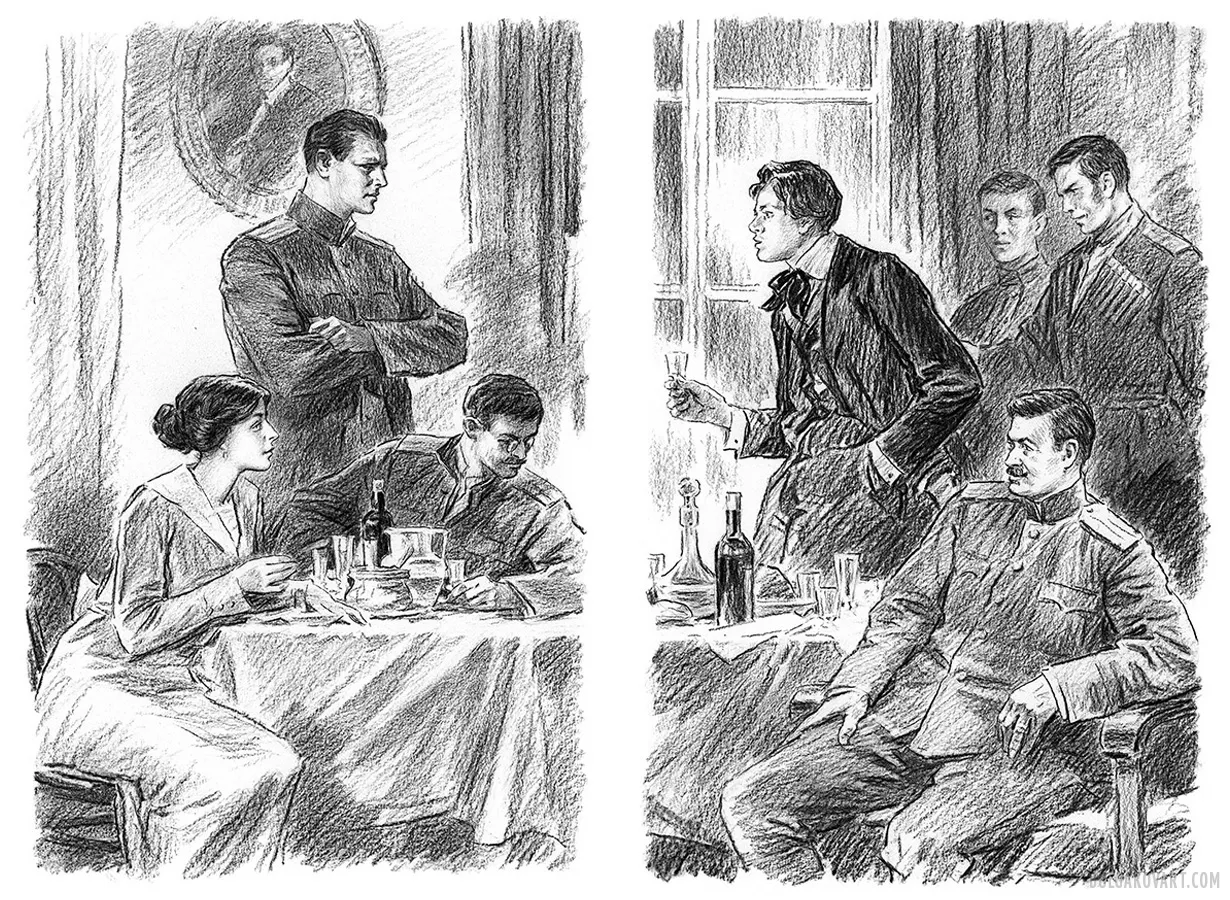
“A little wine glass of vodka made Lieutenant Myshlayevsky drunk in an instant, his eyes clouding over.”
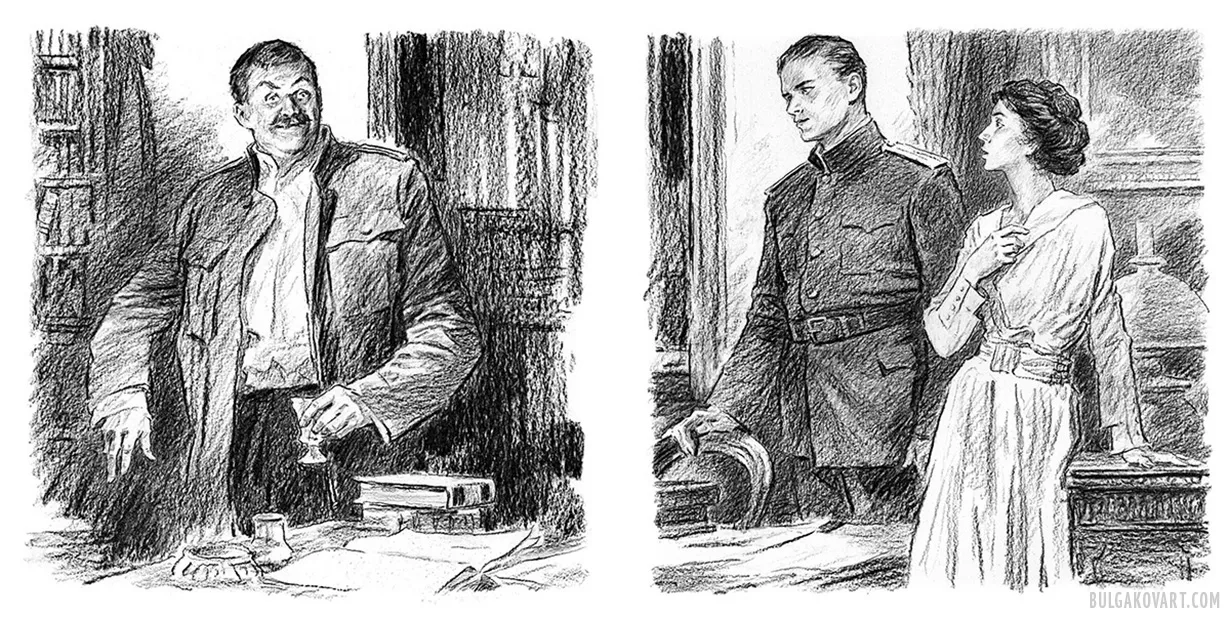
Shervinsky: Good health to you, Elena Vasilyevna. (Takes an enormous bouquet out of its paper.)
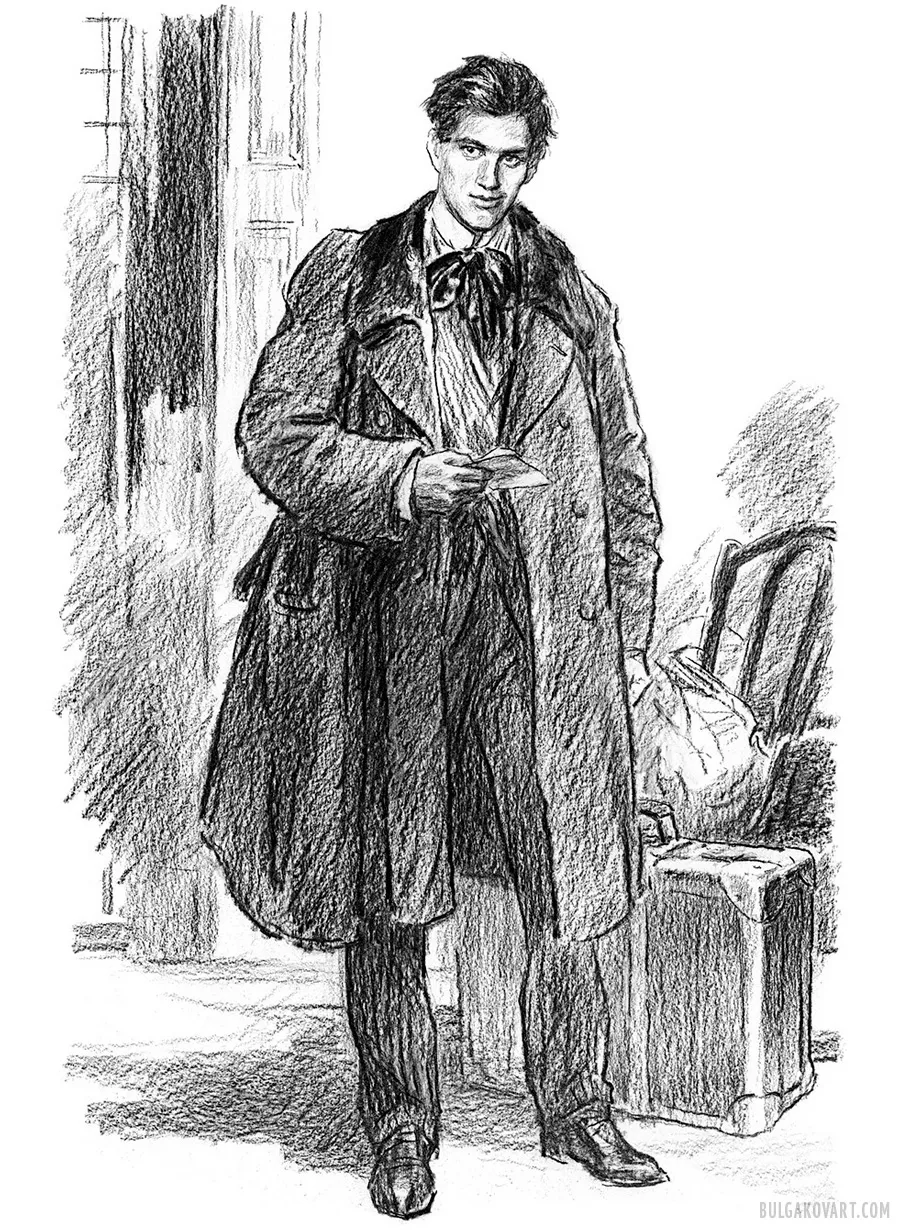
Elena
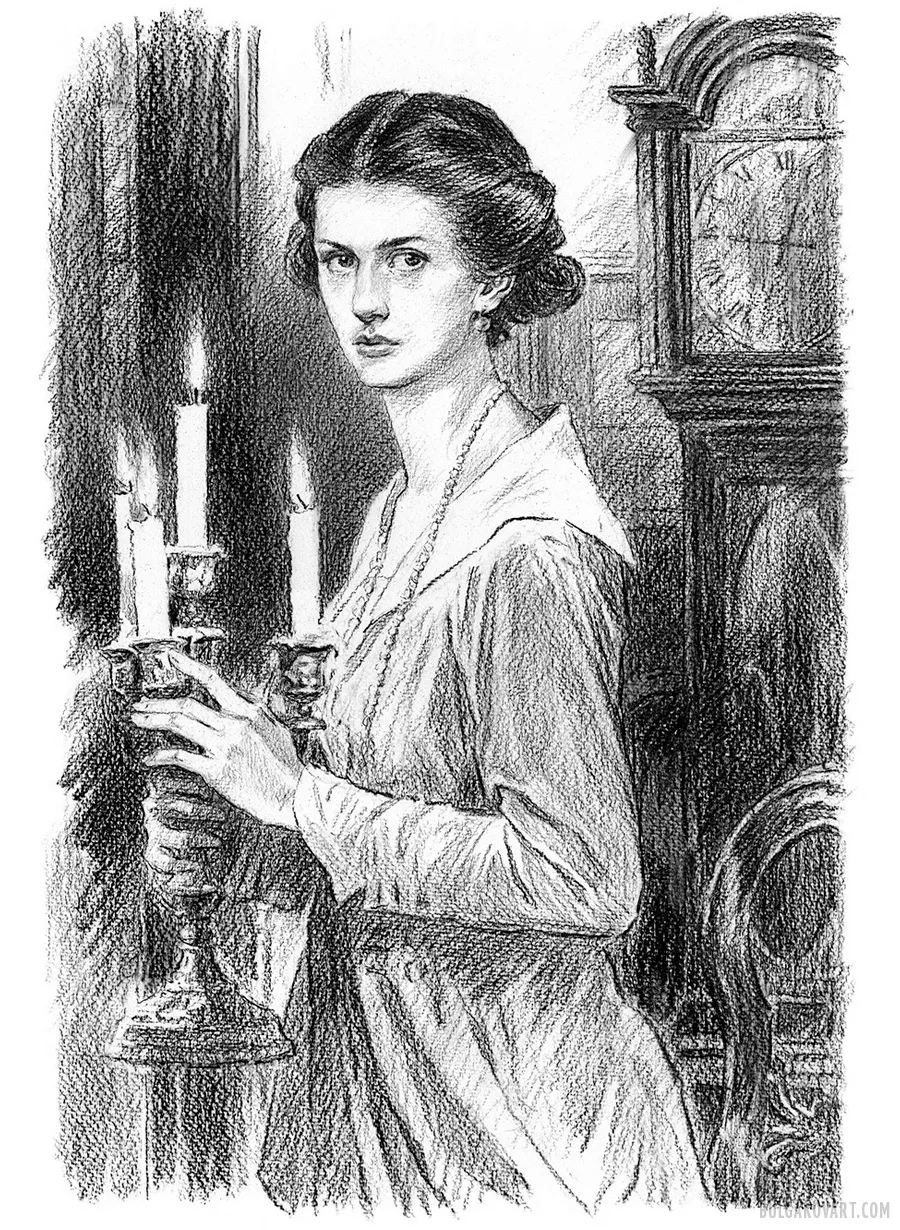
Lariosik: (Enters the room.) Well, here I am. How do you do, most esteemed Elena Vasilyevna, I recognized you at once from your photographs. Mama asks me to give you her warmest regards.
Lariosik: How deftly you knock it back, Viktor Viktorovich.
Myshlayevsky: It comes with practice.
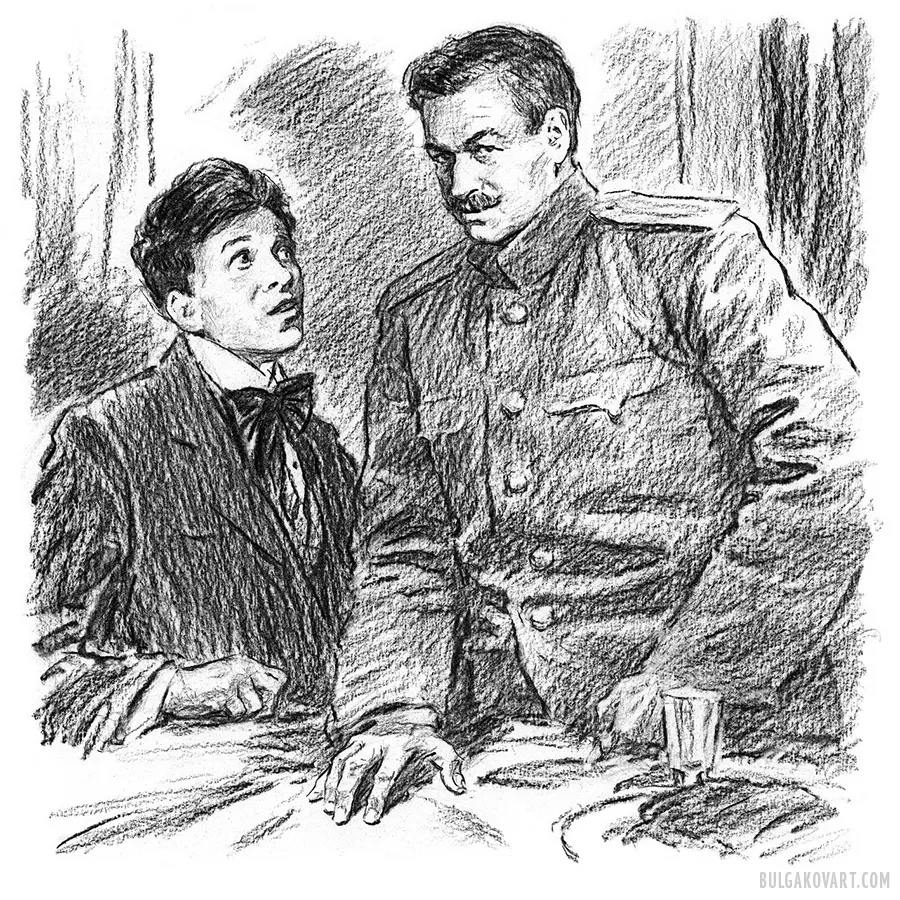
Lariosik: Gentlemen, cream-colored curtains… behind them one’s soul finds rest… one forgets all the horrors of the civil war. And our wounded souls so long for peace…
Myshlayevsky: May I ask, do you write poetry?
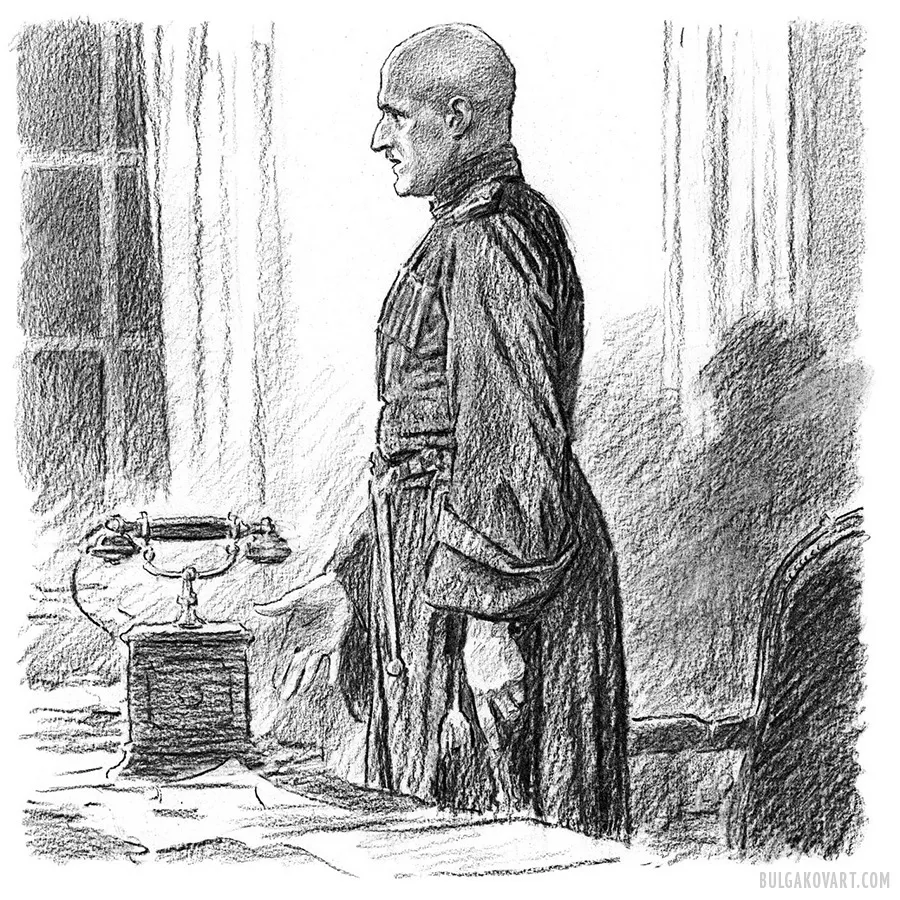
The Hetman before his flight
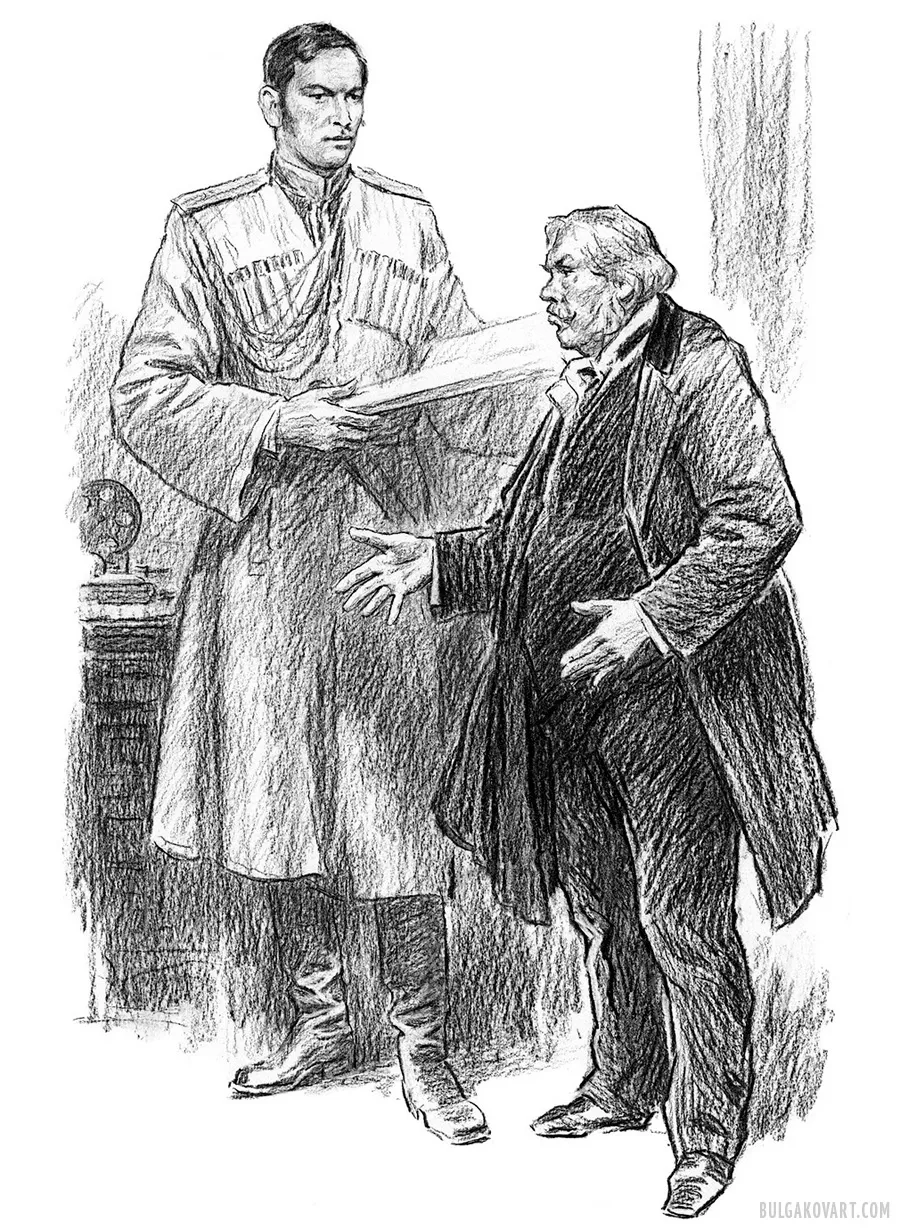
Shervinsky: Well, now… My dear Fyodor, allow me to leave you fifty karbovanets as a keepsake. Allow me to shake your honest, hardworking hand. Don’t be surprised, I’m a democrat by nature, Fyodor! I was never at the palace, I never served as an aide-de-camp.
A feast at the Turbins’ house
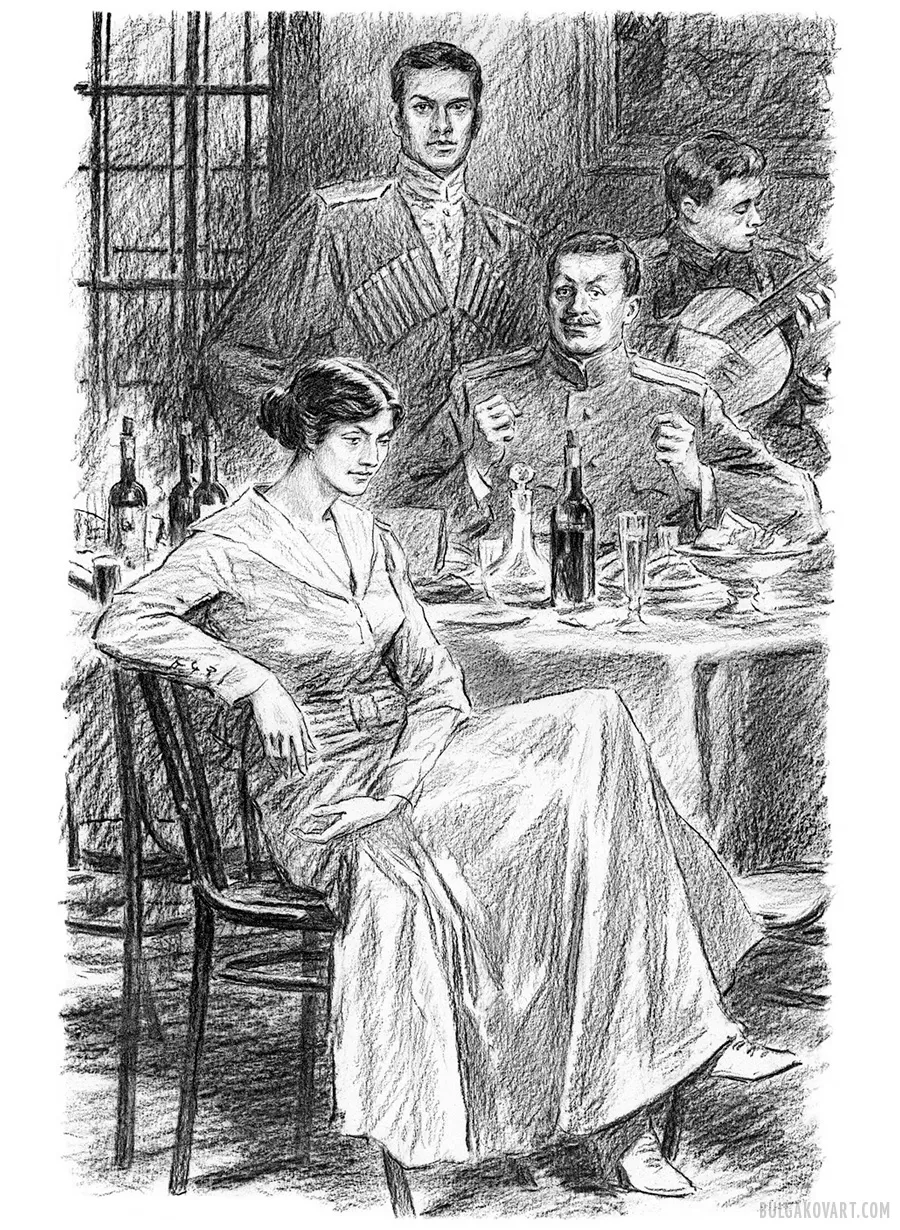
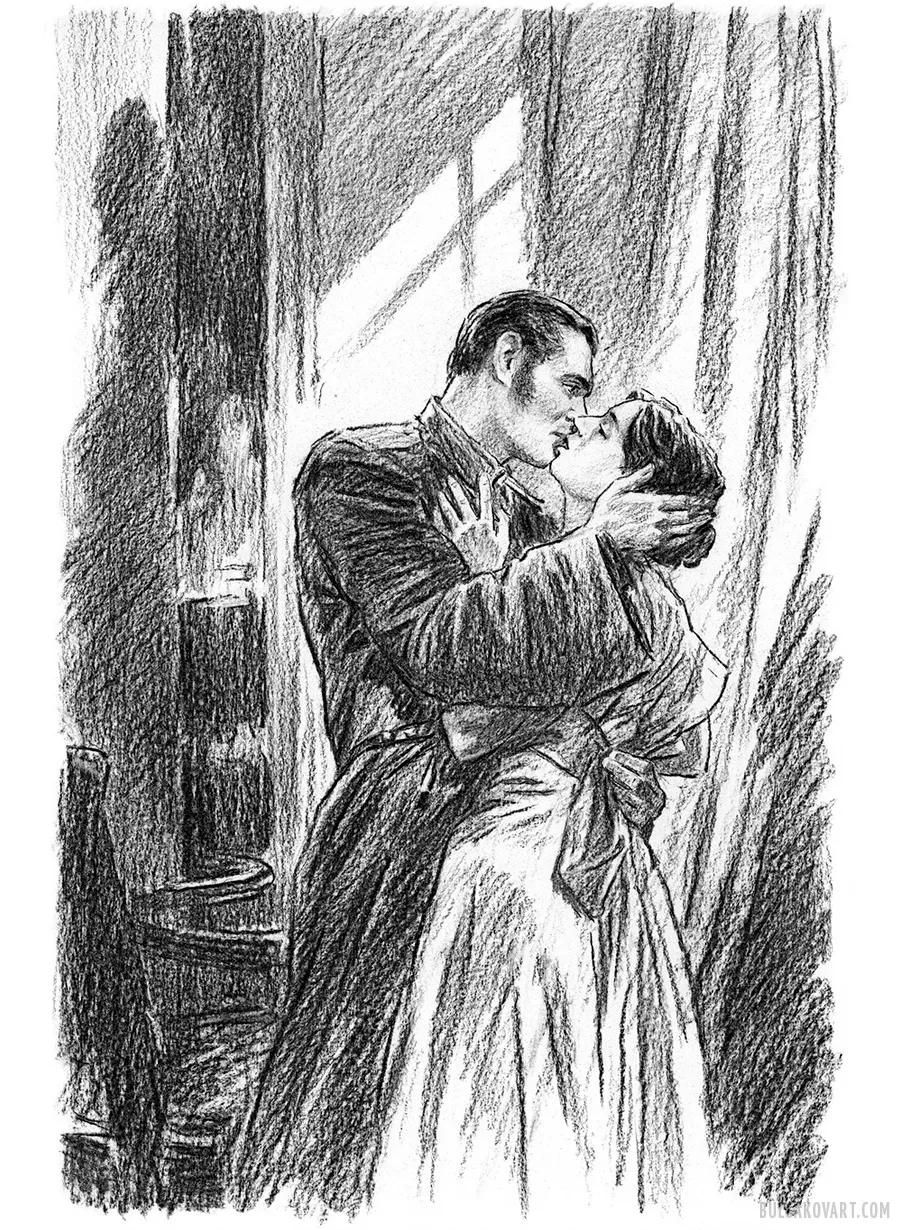
Elena: Let me go. I’m afraid of casting a shadow on the Thalberg name.
Shervinsky: Lena, leave him for good and marry me…
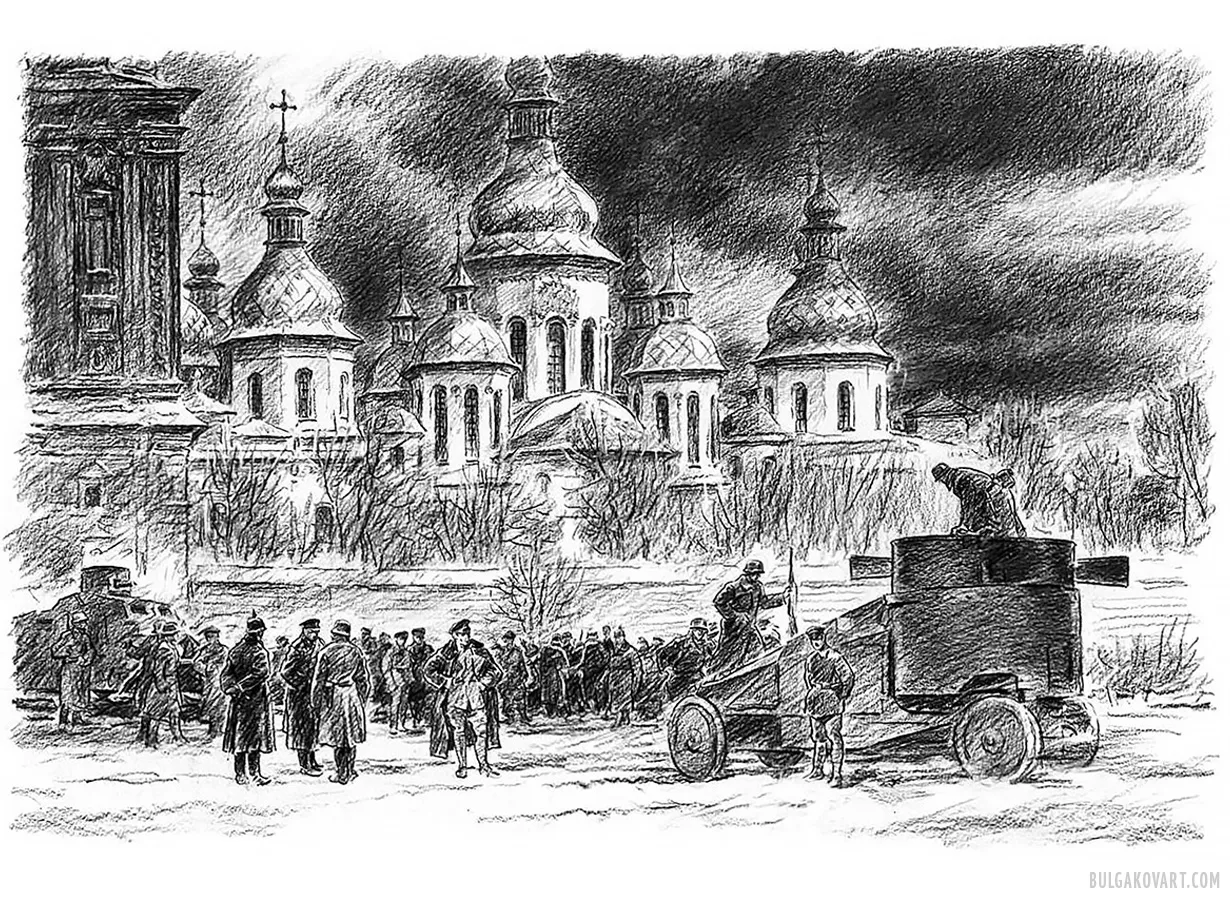
The Germans leave the City
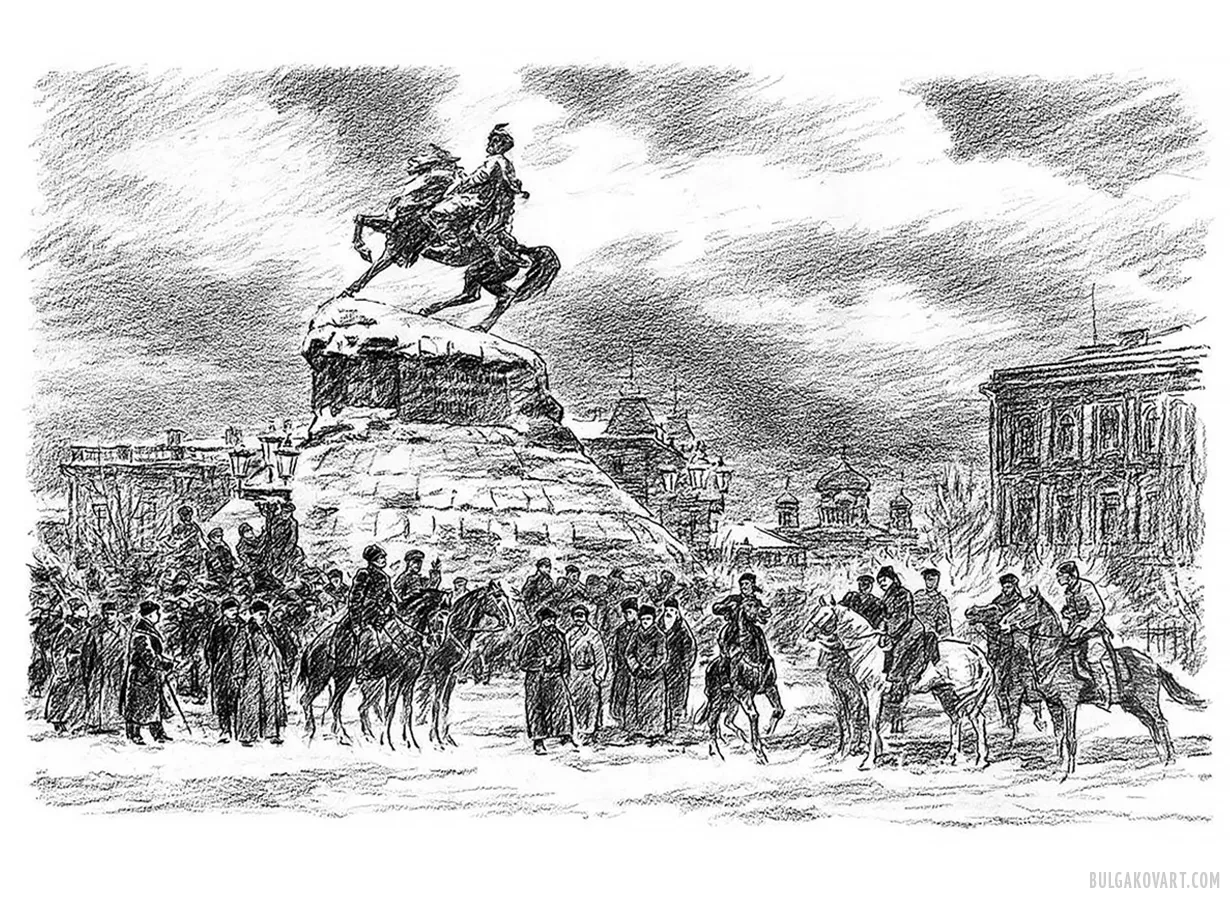
“The milling crowd, blacker still, denser still, more frantic still. And the galloping Bogdan was furiously tearing his horse off the rock, trying to fly away from those who hung like a dead weight on its hooves. His face, turned straight toward the red ball, was furious, and with his mace he still pointed into the distance.”
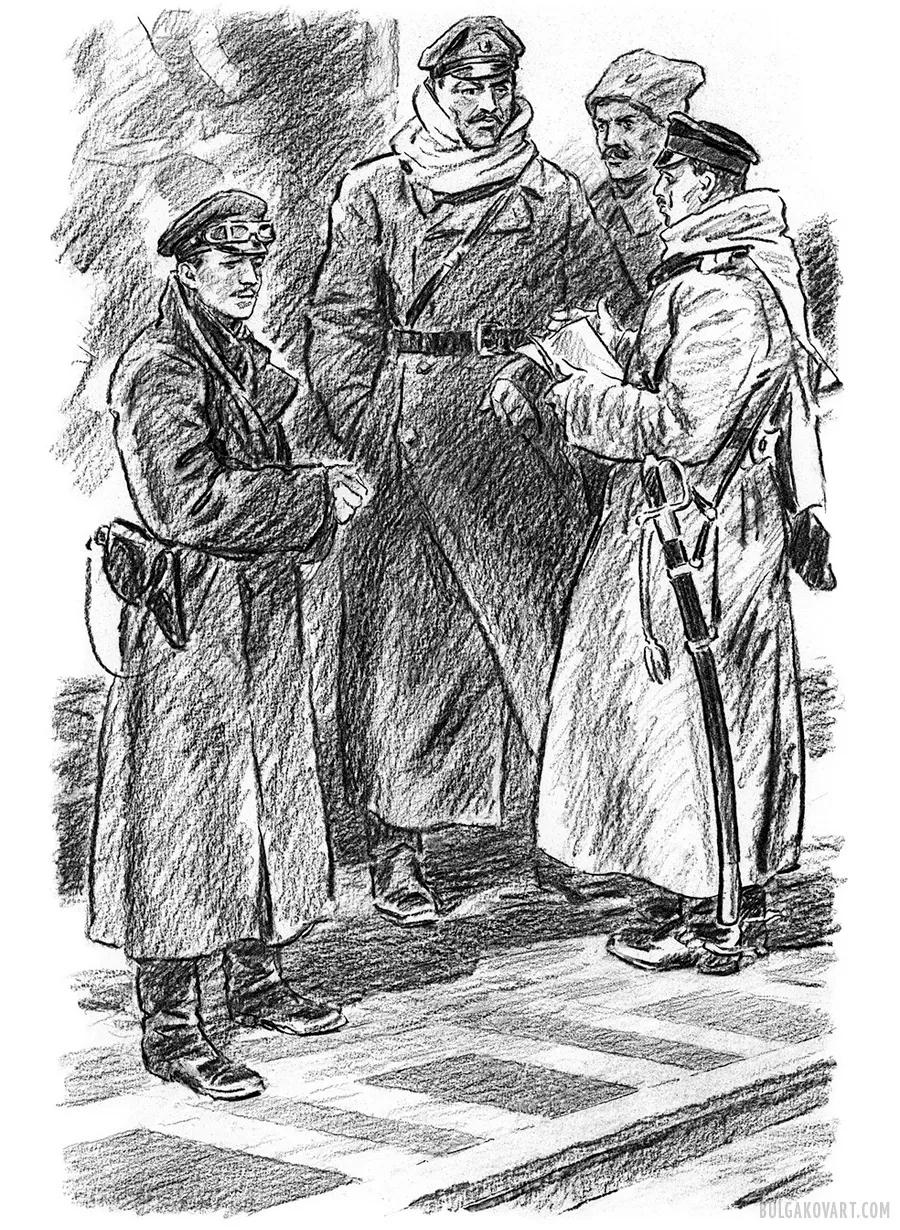
Officers
Soldiers
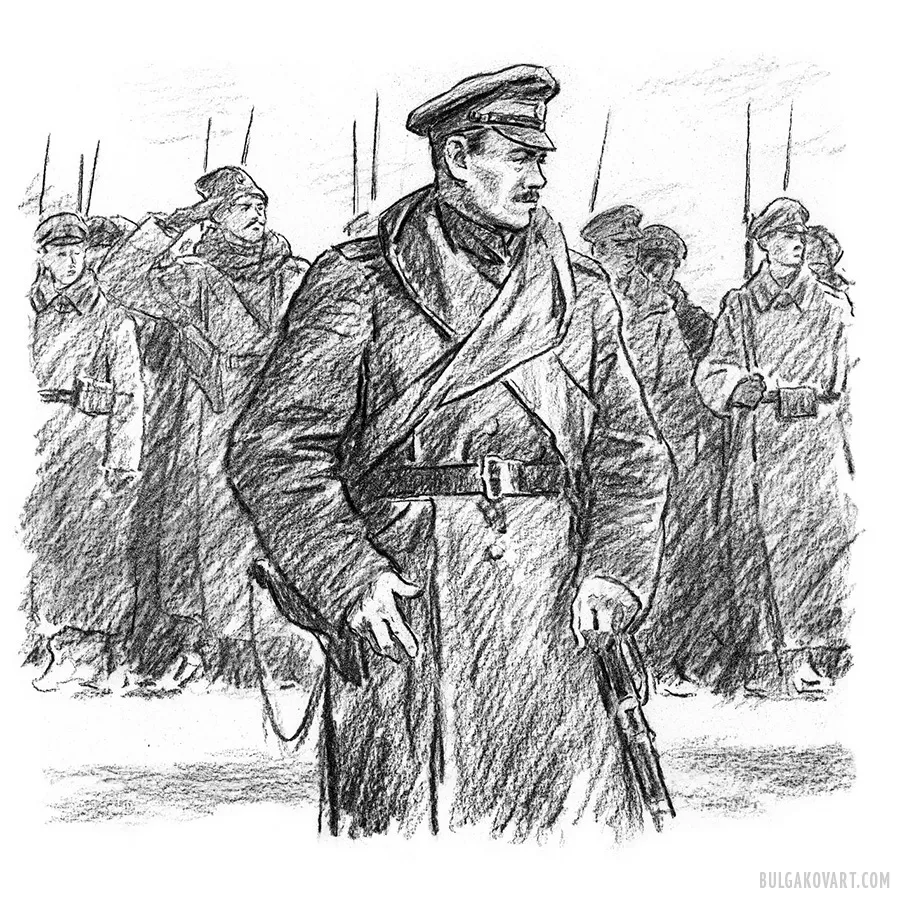
Colonel Malyshev (Alexey Turbin in the play) before the cadets
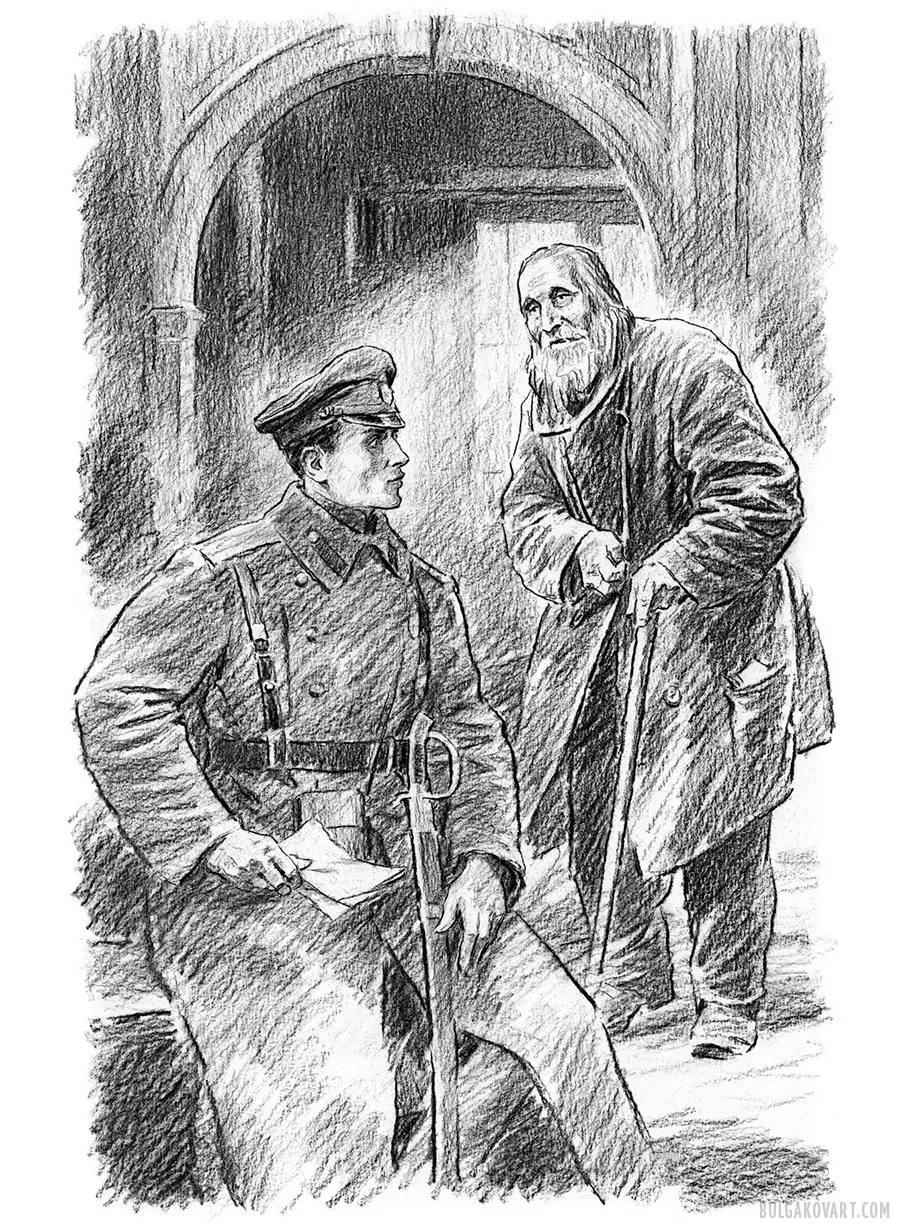
Alexey: Who are you?
Maxim: I’m the watchman here.
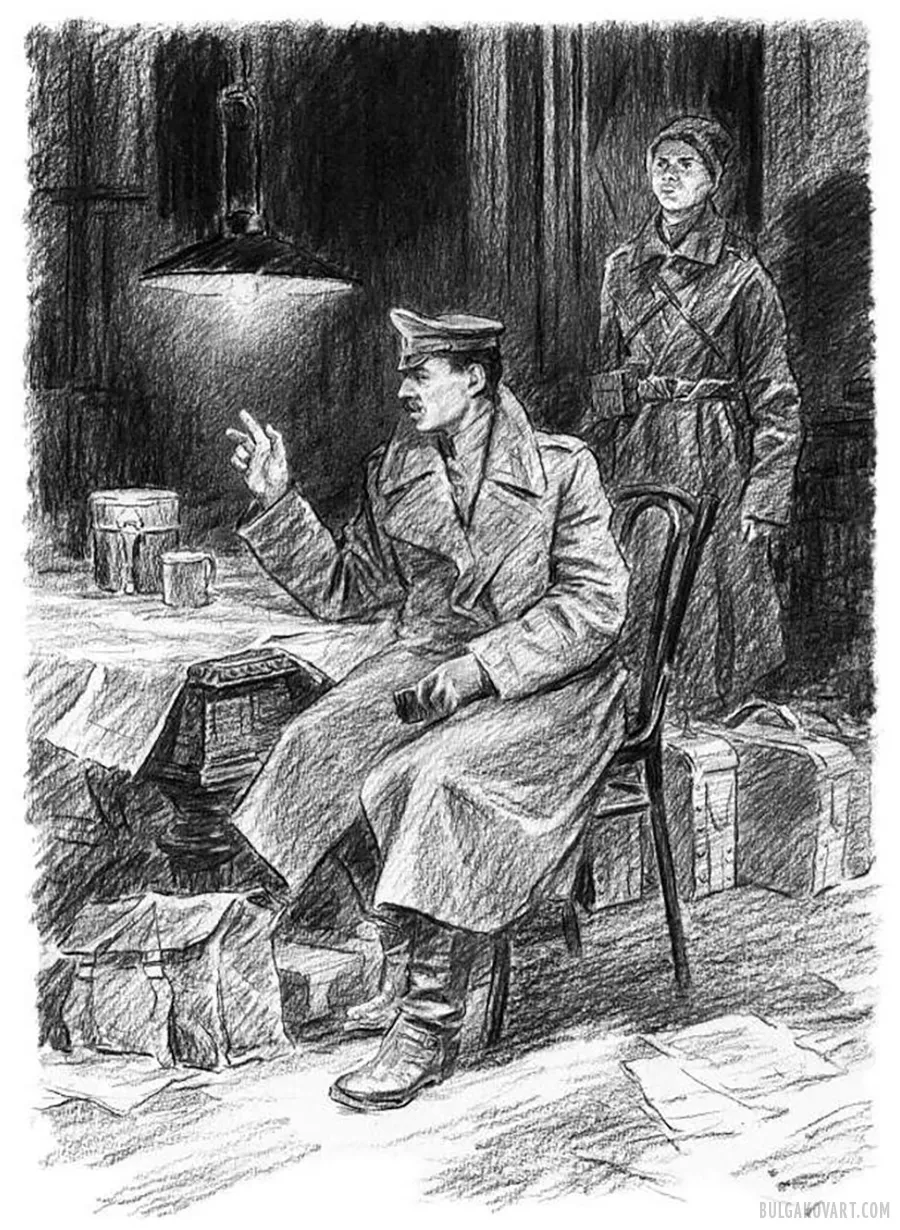
“I’ll lie down now,” said Nai-Turs, “and you wake me in thwee houws. If a telephonogwam comes thwough, wake Ensign Zhawov, and depending on its contents he’ll wake me ow not.”
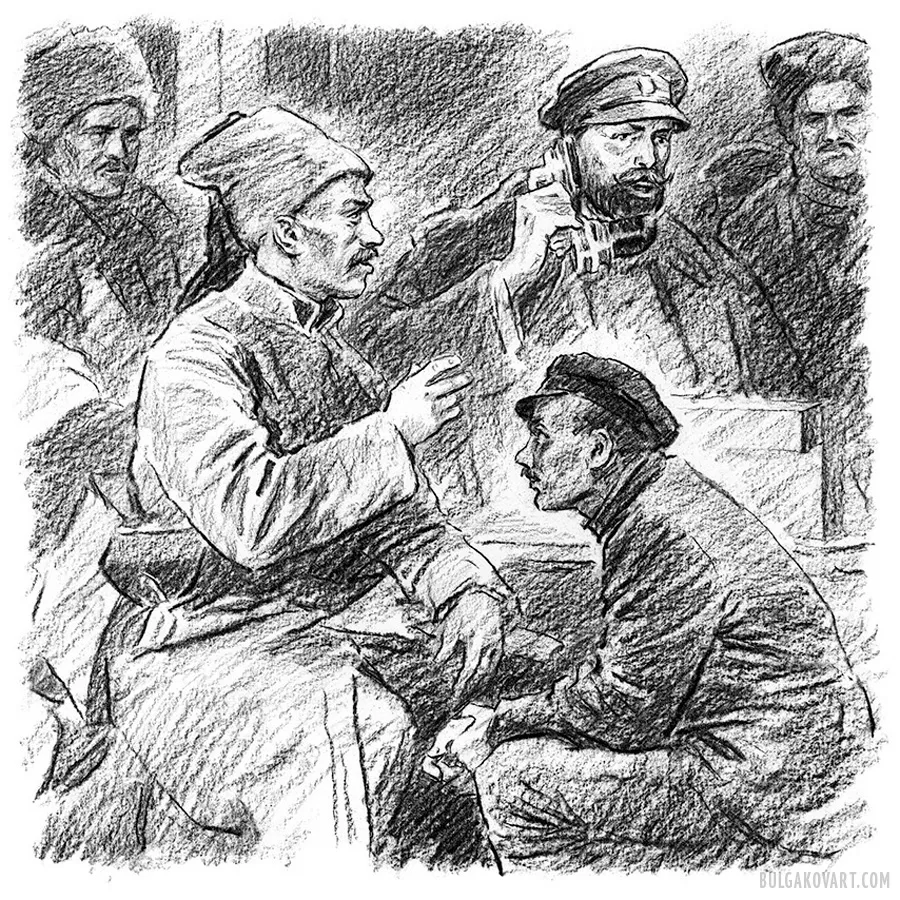
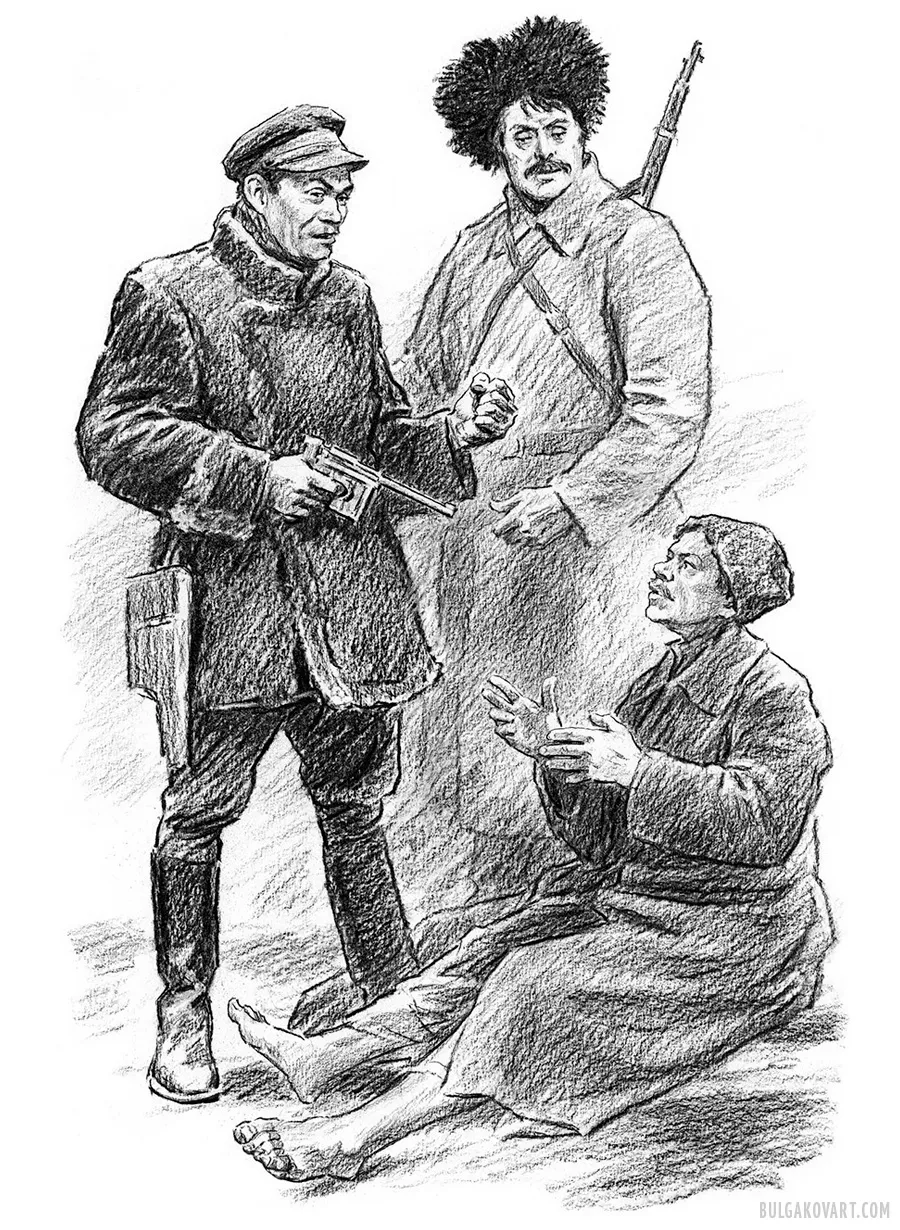
Deserter (weeping): I’m not a deserter. Have mercy, pan sotnik! I was makin’ my way to the infirmary. My feet are frostbit clean through.
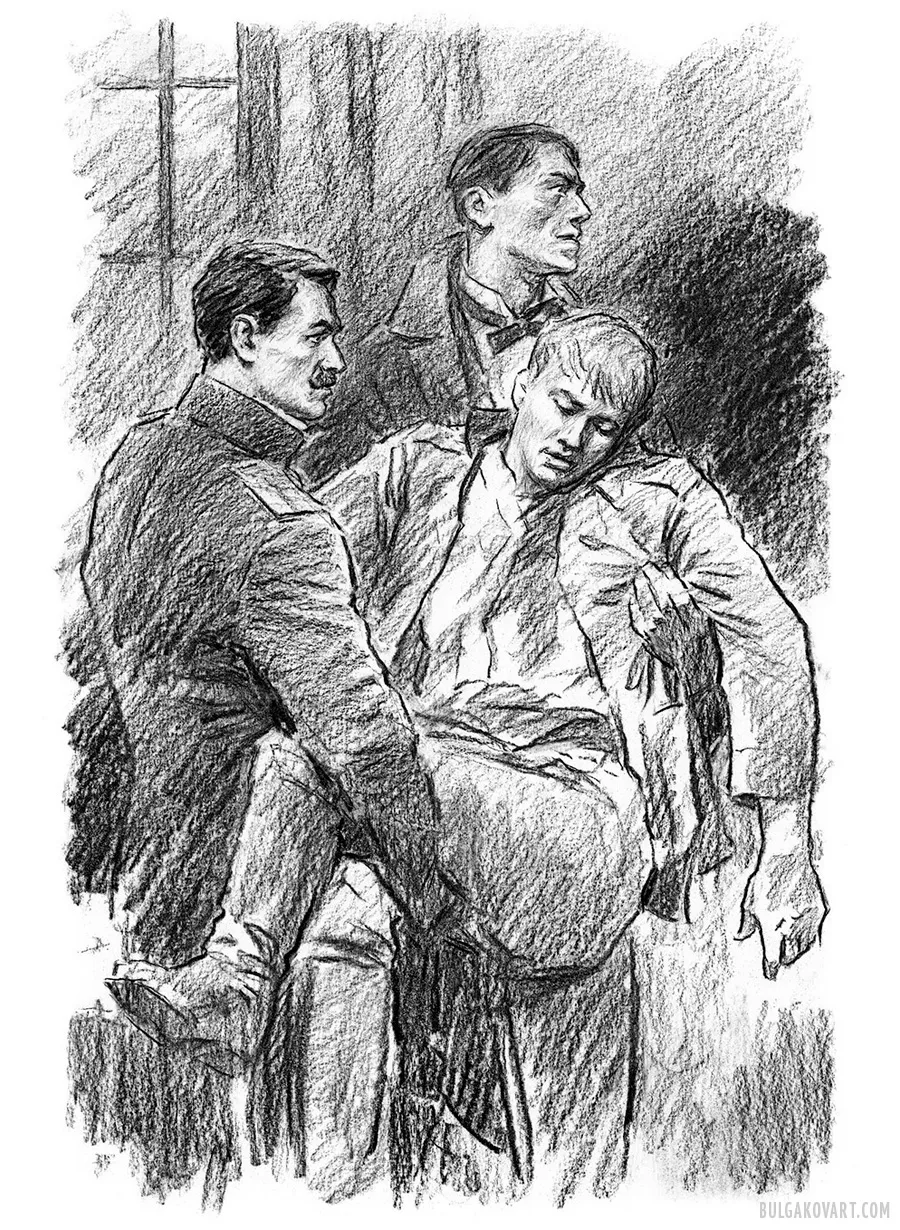
Studzinsky: Blood in his boot… Take his boots off…
Shervinsky: Let’s carry him over…
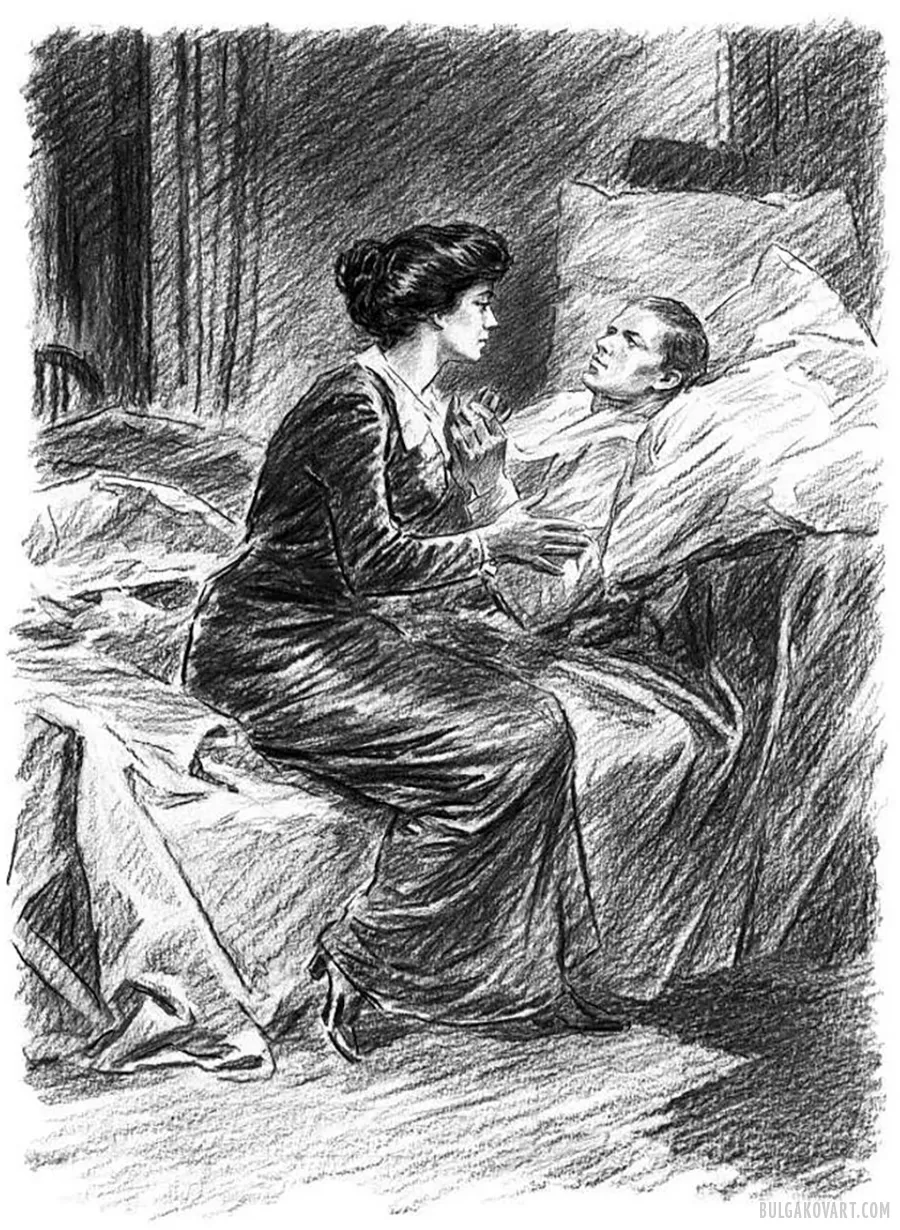
“Turbin began to die on the afternoon of the twenty-second of December.”
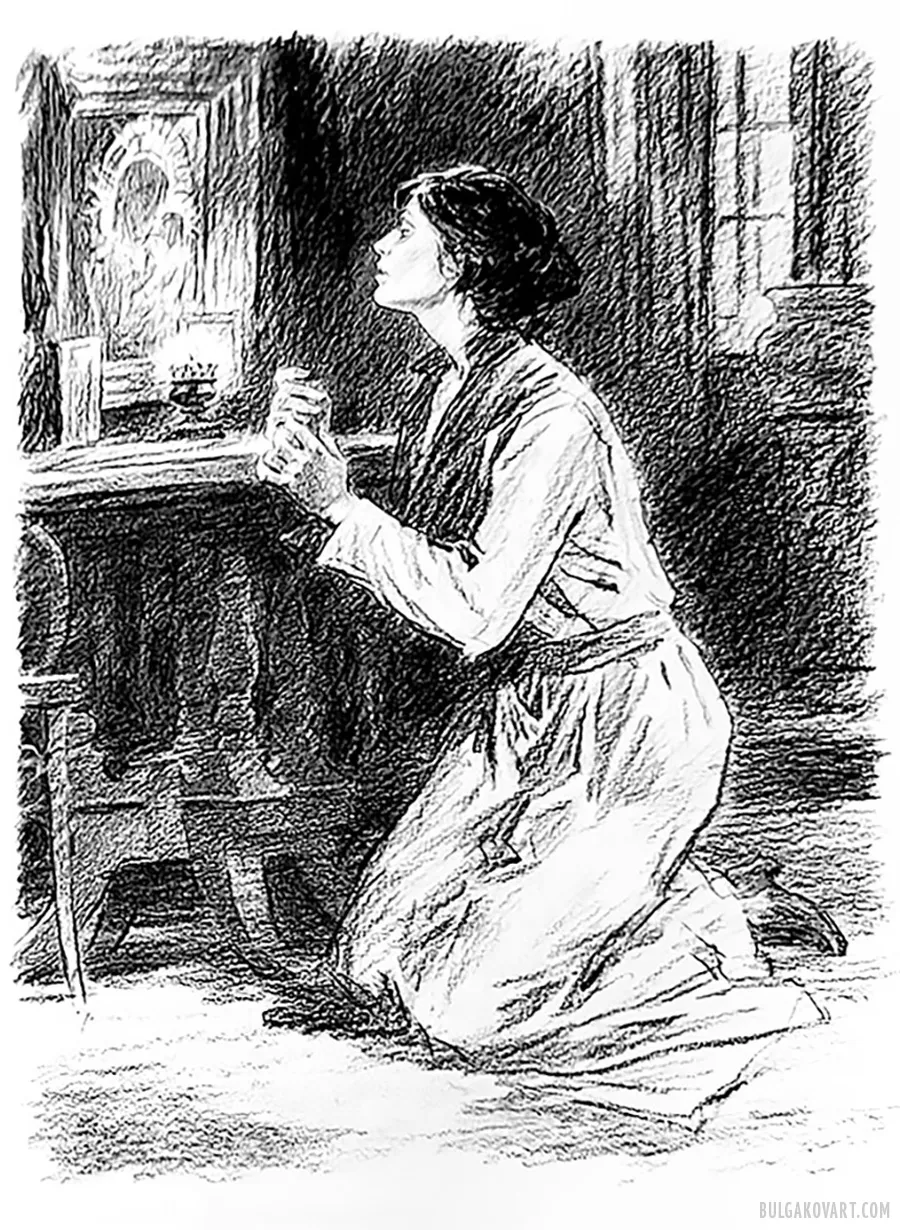
“Elena, on her knees, looked up from under her brows at the jagged crown above the blackened face with its clear eyes and, stretching out her hands, said in a whisper:
‘You send too much grief all at once, Mother Intercessor.’”
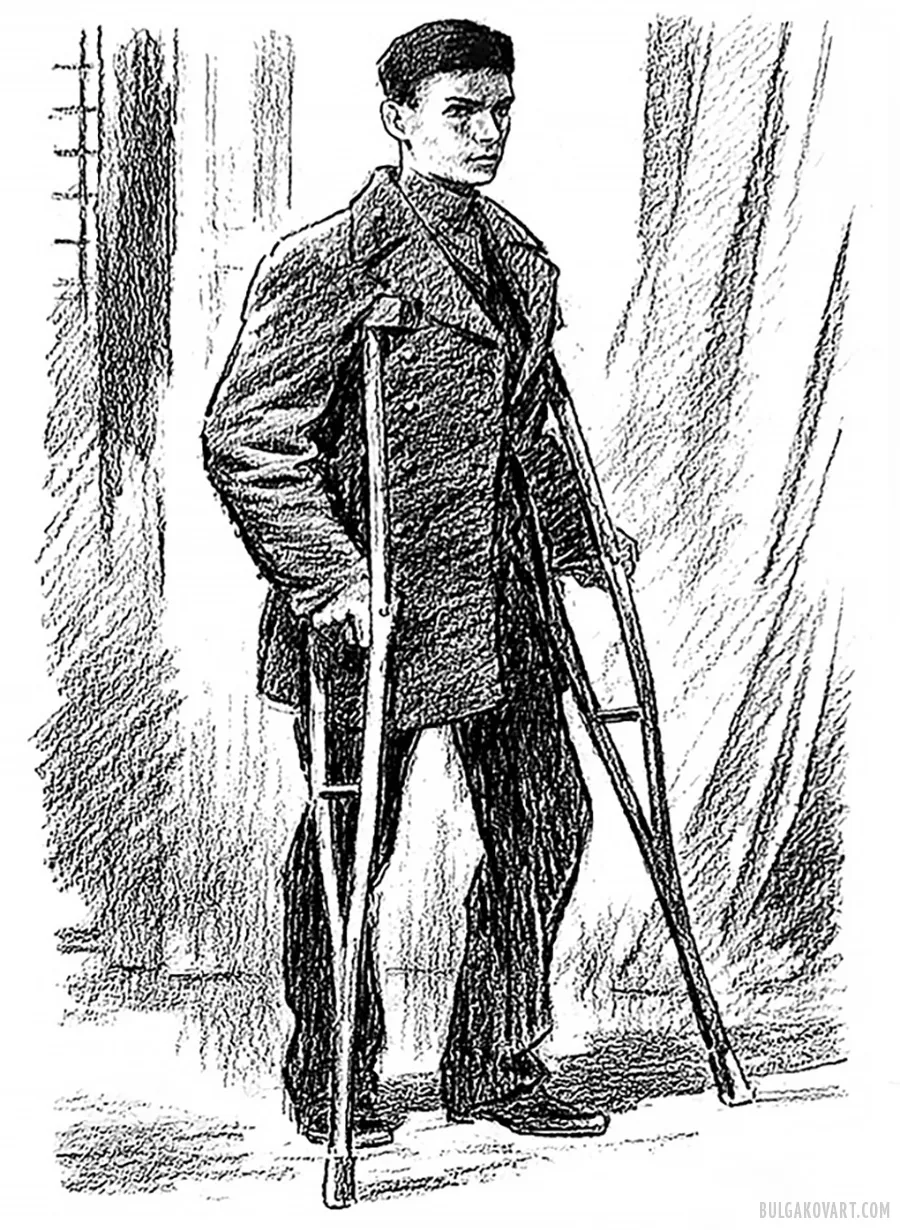
Nikolka on crutches
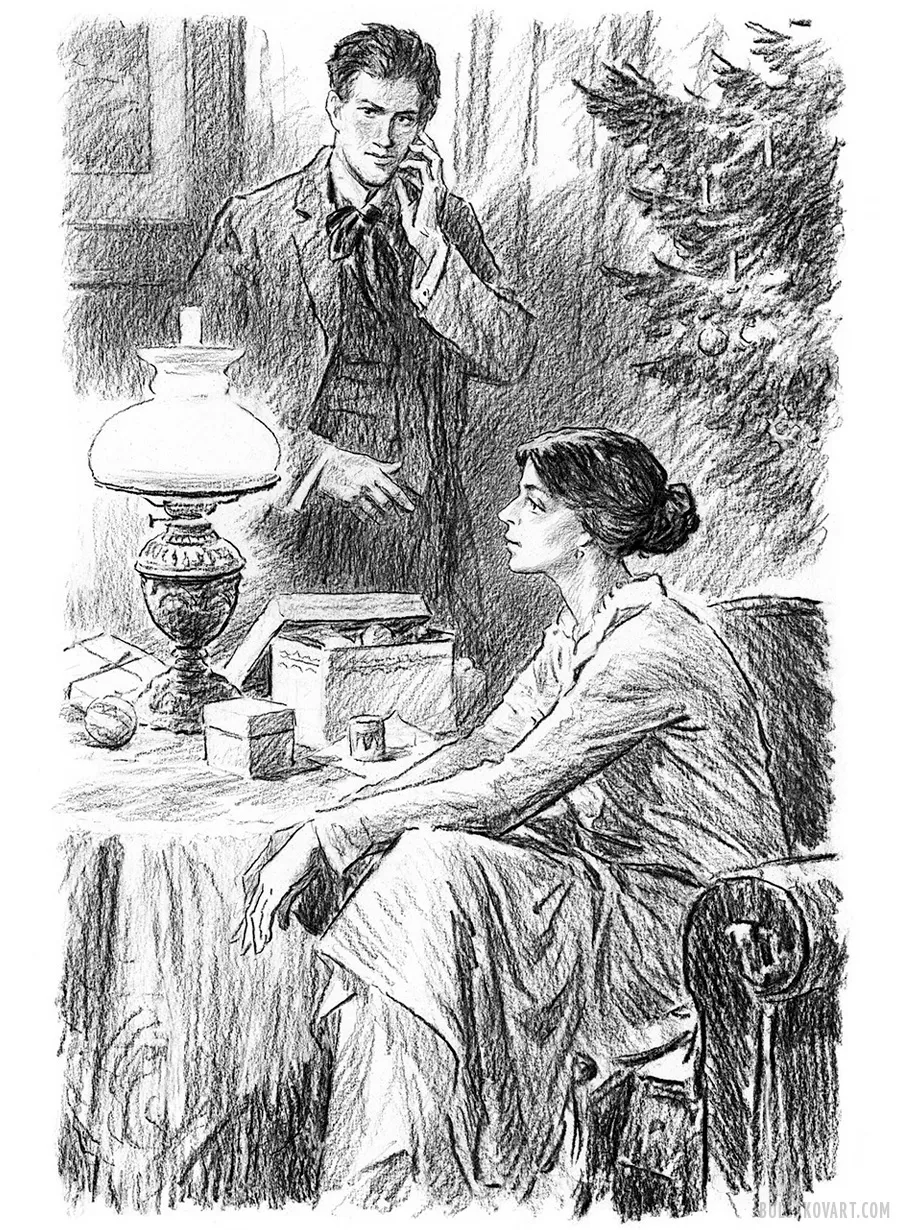
“The day was a little murky, white, and shot through with the reflected glow of Christmas, two days away. The glow could be felt especially in the gleam of the parquet floor in the drawing room, polished by the joint efforts of Anyuta, Nikolka, and Lariosik, who had shuffled about soundlessly the day before. Christmas also breathed from the little filigree frames of the icon lamps, polished by Anyuta’s hands.”
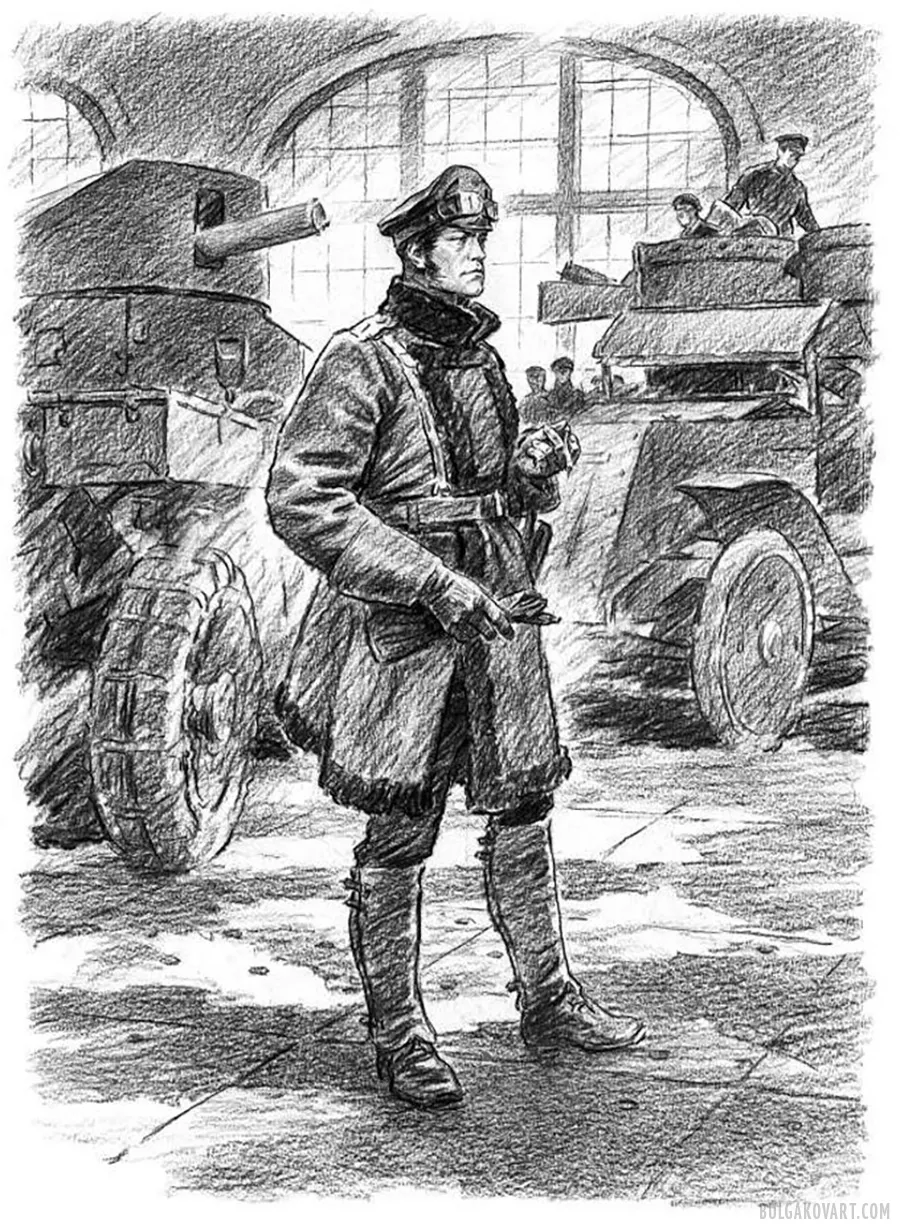
Mikhail Shpolyansky.
“The joint efforts of Mikhail Semyonovich and the mechanic to get the vehicles ready for battle produced some strange results. Three vehicles that had been perfectly sound the day before could not budge on the morning of the fourteenth of December, as if struck by paralysis.”
In the Turbins’ house
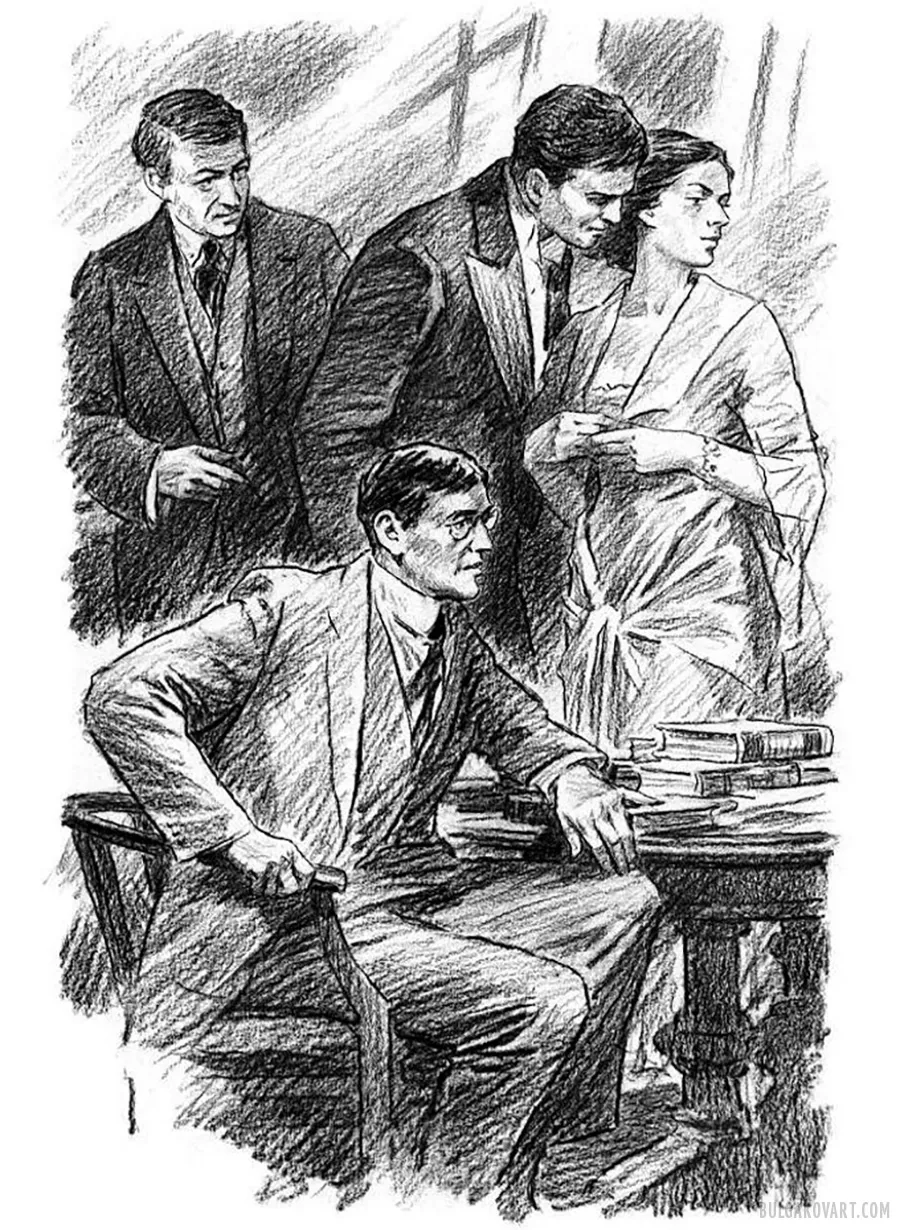
Elena: Wait, why did you shave off your sideburns?
Shervinsky: It makes stage makeup easier.
Elena: Makes it easier to disguise yourself as a Bolshevik.
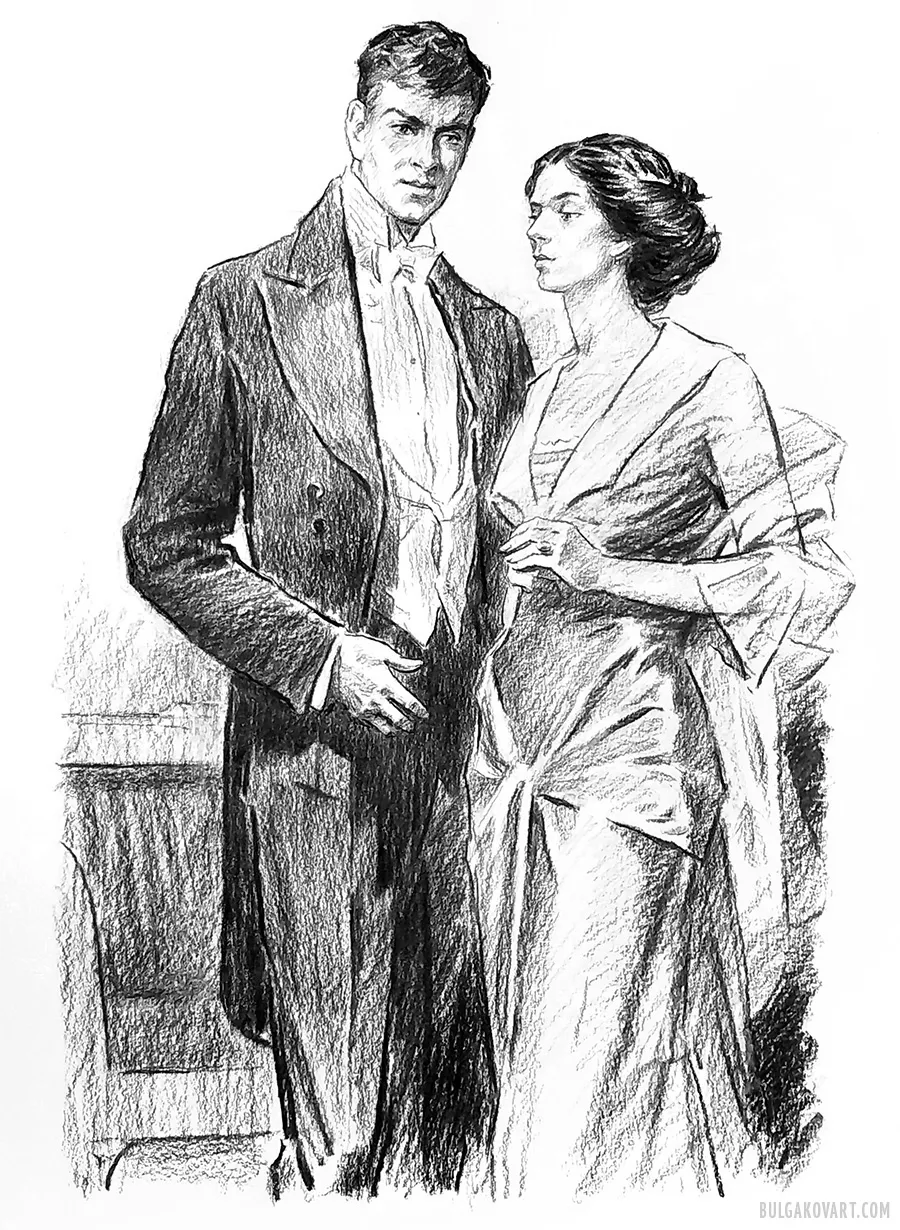
“The brothers ran into each other face to face on the lower tier of the mysterious garden, by the other little house. For some reason Nikolka was embarrassed, as if he had been caught red-handed.
‘I’ve been to see the Nai-Turses, Alyosha,’ he explained, looking as if he had been caught on a fence stealing apples.”
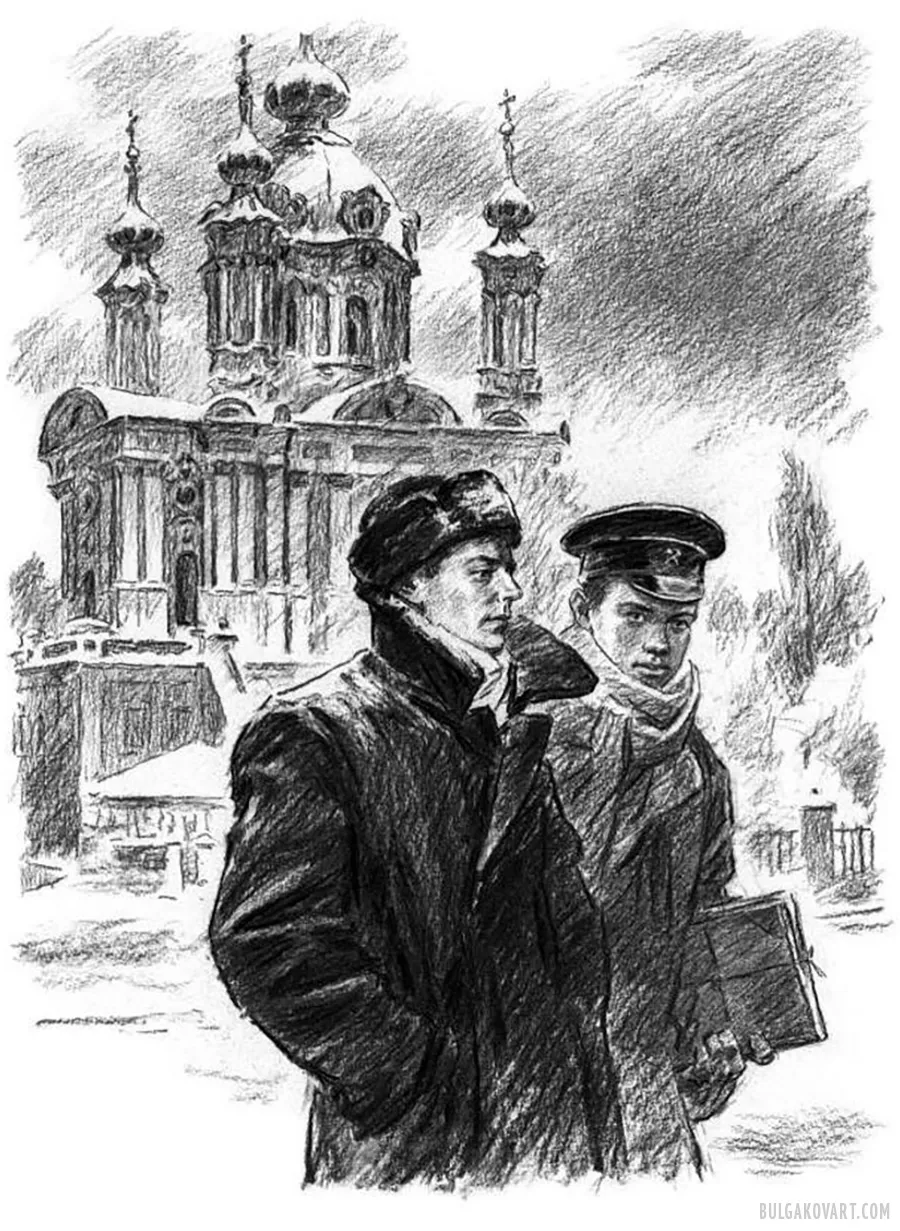
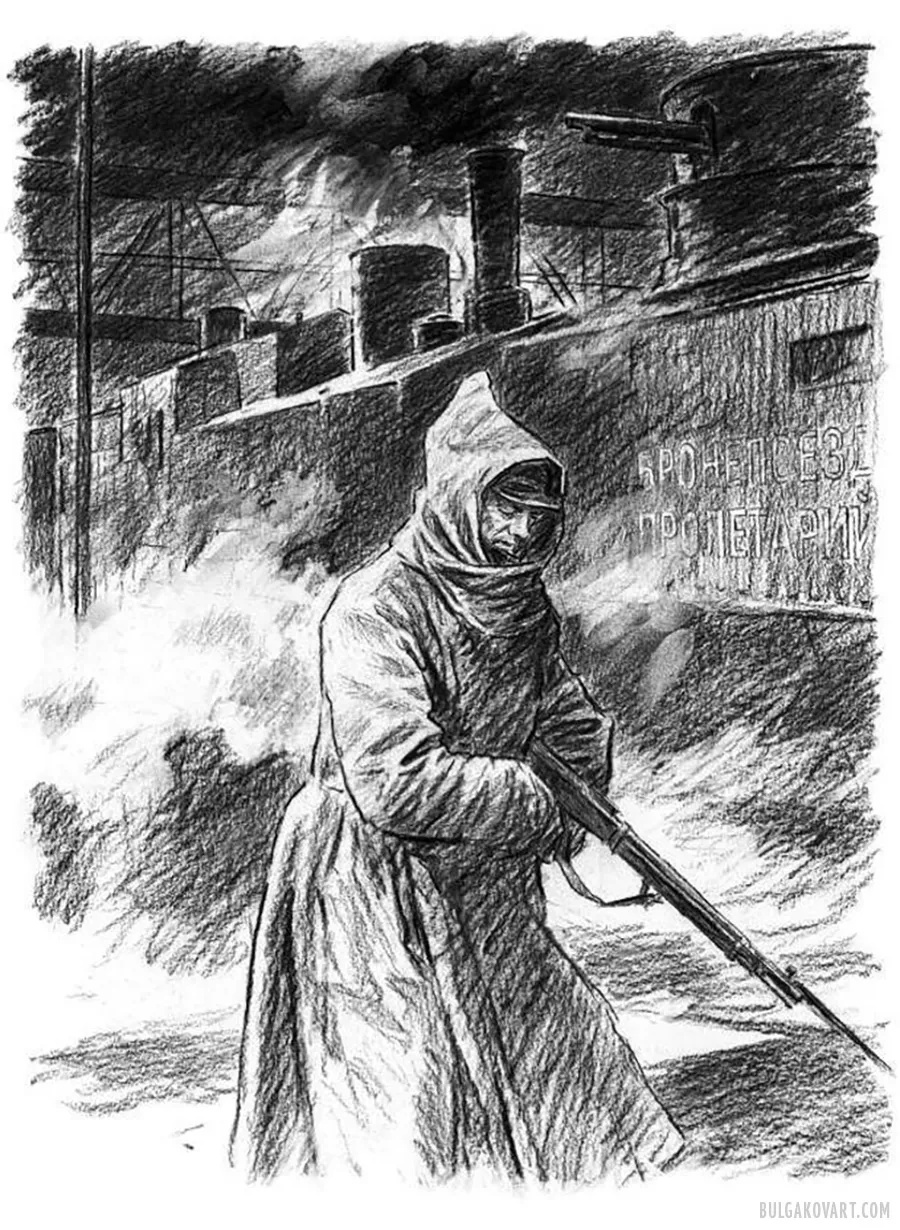
“And by the armored train, next to the locomotive and the first iron car, a man in a long greatcoat, torn felt boots, and a pointed bashlyk hood paced back and forth like a pendulum. The man and his shadow walked from the fiery flare of the armored belly to the dark wall of the first combat car, up to the place where the inscription showed black: Armored Train ‘Proletarian.’”